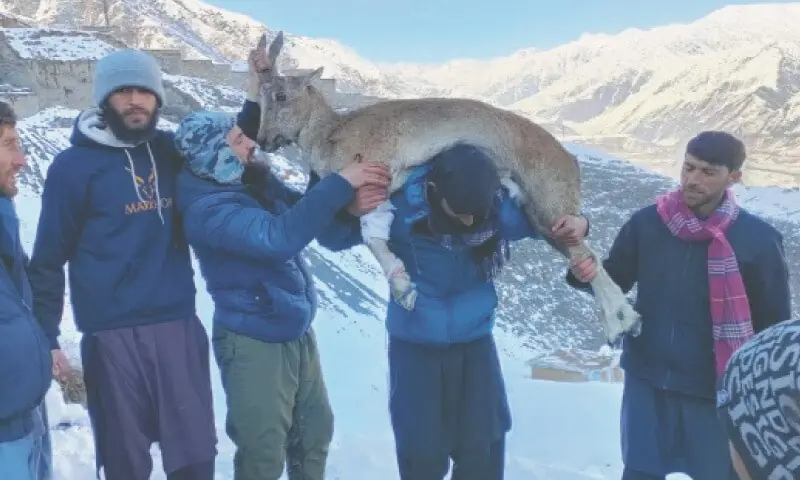
CHITRAL: The Snow Leopard Foundation (SLF) in collaboration with the Khyber Pakhtunkhwa Wildlife Department organised a one-day refresher training session on wildlife poaching prevention and crime investigation in Chitral district.
The SLF’s regional programme manager for Chitral, Jamiullah Sherazi, describing the aim of the session said that it was a follow-up of the specialised training conducted last year, which was aimed at sharpening the professional expertise of wildlife rangers in identifying and dismantling illegal hunting networks.
He said that the group of 12 rangers from the Chitral Wildlife Department would be provided practical guidance on modern investigative methods including Scientific Evidence Collection containing techniques for gathering biological and physical evidence at crime scenes.
He also mentioned the preservation principles (ensuring that crime scenes remain untampered with for legal scrutiny and chain of custody, maintaining rigorous documentation to ensure evidence is admissible in court) as well as legal requirements (building strong cases against offenders to ensure successful prosecution) as the contents of the session.
Mr Sherazi highlighted that the primary objective is to make conservation efforts more effective and remarked that better-trained rangers act as the first line of defence, leading to a direct reduction in poaching and ensuring the protection of vulnerable species like the snow leopard.
Addressing the participants, Farooq Nabi, Divisional Forest Officer of Wildlife Division Chitral, emphasized that such initiatives are vital for strengthening the capacity of field staff and improving institutional performance.
He lauded the continued cooperation of SLF and expressed the hope for future partnerships to safeguard the region’s biodiversity.
The training forms part of a broader initiative supported by the Illegal Wildlife Trade Challenge Fund (IWTCF) to enhance wildlife enforcement across Pakistan’s northern mountain ranges. Recent assessments suggest that poaching remains a significant threat, making specialised forensic and investigative skills essential for local wildlife authorities.
Published in Dawn, April 4th, 2026