Image: Department for Infrastructure and Transport
Thousands of cattle have safely crossed Cooper Creek in South Australia’s flood-affected outback, thanks to the state’s largest-ever barge operation, keeping the beef supply chain moving and protecting local jobs across the state.
Since opening to the public in early November, the Cooper Creek barge has transported more than 600 vehicles and around 12,000 cattle, providing a critical lifeline after floodwaters forced the closure of the Birdsville Track earlier this year. In total, the barge has carried 608 vehicles, including 305 heavy vehicles, along with 1,664 passengers, reconnecting pastoralists, tourism operators and essential freight routes that had been cut off for months.
The closure of the Birdsville Track in June meant cattle producers were left with limited options, either facing much longer and more expensive transport routes to Adelaide or selling stock interstate. This disruption placed significant pressure on South Australia’s beef supply and threatened jobs throughout the state’s meat processing sector.
Minister for Infrastructure and Transport Emily Bourke said the barge has already demonstrated its value in supporting key industries and regional communities. “The Cooper Creek barge has already proven incredibly valuable, transporting more than 600 vehicles and more than 12,000 cattle in its first month of operation,” she said, adding that it “has kept our beef supply chain moving and protected local jobs across South Australia’s meat processing industries.”
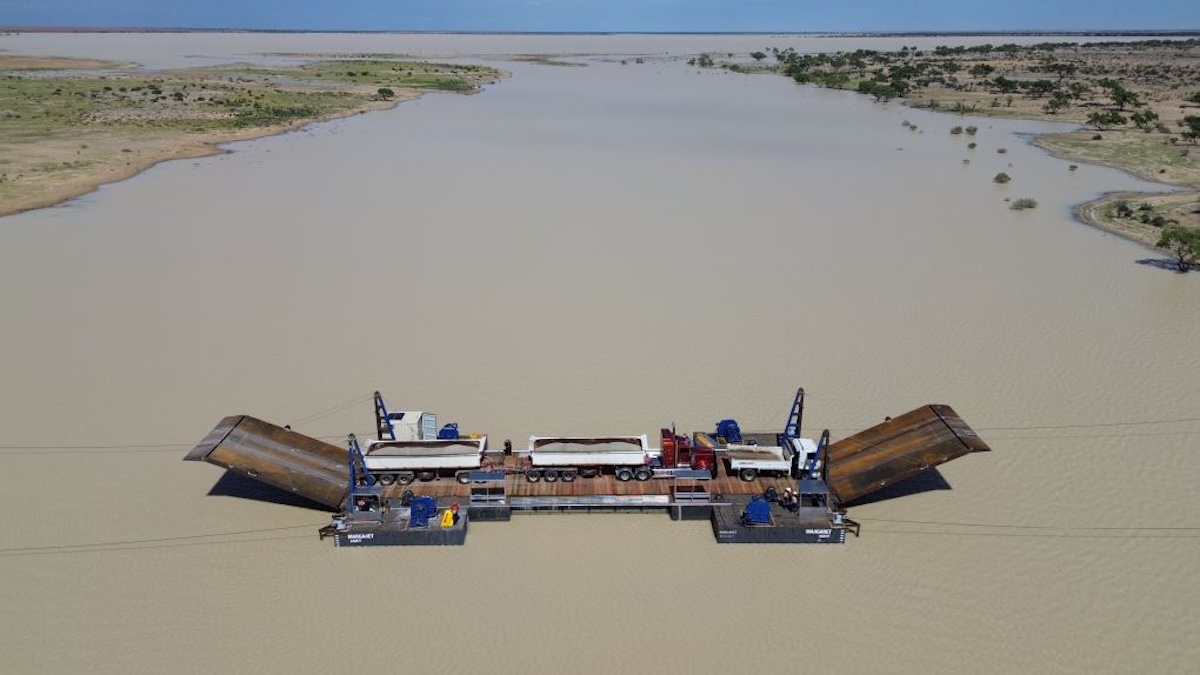
The $27.4 million barge has been jointly funded by the Albanese and Malinauskas Labor Governments under the Disaster Recovery Funding Arrangements and is fully owned by the South Australian Government as a long-term investment. Designed to operate during major flood events, the barge can transport fully loaded A-Double trucks and is the largest of its type in the state.
Built from 12 modular pontoons and assembled on site using two cranes, the barge enables safe crossings of Cooper Creek until permanent road access can be restored. It effectively reopens the Birdsville Track corridor for both freight and tourism, even while floodwaters remain.
The barge currently operates seven days a week from 7am to 5:30pm, including throughout the Christmas and New Year period, and is expected to continue running until at least January 2026. The State Government continues to work closely with pastoralists and local communities to ensure the service meets demand, including extending operating hours where needed and prioritising livestock and essential supplies.
Water levels and weather conditions are being closely monitored, with planning underway for the eventual reopening of the Birdsville Track. As the track has been inundated since June 2025, repairs will be required before it can safely reopen, and the timing will depend on further rainfall, water flowing down from Queensland and creek levels at the crossing.
Minister Bourke said the project reflects a broader approach to future-proofing regional South Australia. “This $27.4 million project represents a long-term investment in flood resilience for our outback regions,” she said. “We know significant weather events and flooding are becoming more frequent, so futureproofing the area for when the next flood event does occur allows us to act quickly and minimise disruption to important industries and supplies.”
Historically, outback flood events have often occurred in consecutive years, with similar patterns seen in 1974–75, 1989–90 and 2010–11. With the Cooper Creek barge now in place, South Australia is better prepared to respond swiftly when the next major flood hits.
For more info, click here.