Some holiday traditions are meant to evolve.
At least that’s what I told myself when I decided to make a whole fillet of salmon the centre of Easter brunch. Among classic main dishes, it requires the least amount of time to cook, but looks and tastes impressive, pink for the season and light for all the new brightness in the day.
Around the world, lamb is served for its religious significance, and because lambs are slaughtered in spring. Ham, the other common option, used to come from pigs butchered in the autumn. Their haunches were cured and ready by northern hemisphere Easter, and the cycle of that pastoral life led to ham becoming the traditional celebratory main.
Sign up to The Nightly’s newsletters.
Get the first look at the digital newspaper, curated daily stories and breaking headlines delivered to your inbox.
By continuing you agree to our Terms and Privacy Policy.
As much as I love ham and lamb, I found that preparing them well either meant eating late or missing the egg hunt. One year, to accommodate a traditionalist and a pescatarian, I cooked ham, lamb and salmon. Within that trinity, everyone raved about the salmon, so here it is, ready to grace the table.
Wild salmon works especially well with this recipe because the butter in the honey-lemon sauce glosses the lean fish with richness. (Fatty farmed salmon will simply taste even richer, not a bad thing at all.) Dill, lots of it, balances the caramelised buttery sauce with its freshness, green as cut grass.
Whether you use fresh or wild salmon, the fish benefits from a simple trick often applied to steak: salting an hour before cooking. While the seasoned salmon chills uncovered in the fridge, moisture is drawn out of its flesh and evaporates. After cooking, the fish ends up a touch firmer and more savoury. If you’re using a light, flaky salt, which is less salty, be a bit more generous with your sprinkle. For all other types of salt — coarse flakes, any grind of sea salt and fine table salt — season a little more sparingly. The salmon also tastes great if salted for up to four hours and if you’ve forgotten to salt it or run out of time, it’s still flavourful if salted just before cooking.
The same is true of the pickled cucumber topping that sits while the salted salmon does. After an hour, the cucumber slices retain a fresh crispness, the mustard seeds a tight, tiny crunch. If it hangs out longer, the slices slouch and become tangier, as do the seeds, plump from a honey-vinegar brine.
That resting time is also ideal for preparing side dishes. Rice and potatoes work well with this fish, but you can skip those and simply serve it with bread. Each time I’ve tested this recipe, I’ve thrown a sheet pan of asparagus onto the other rack in the oven because the stalks roast in the same short time the fish does. And those 15 minutes have been spent tossing rocket or other tender greens with lemon juice and olive oil.
This menu is ready in an hour and a half and, of course, can grow to more dishes with planning, but for this holiday — or any day, really — it’s a lovely meal that leaves you time to gather Easter eggs and just enjoy the afternoon.
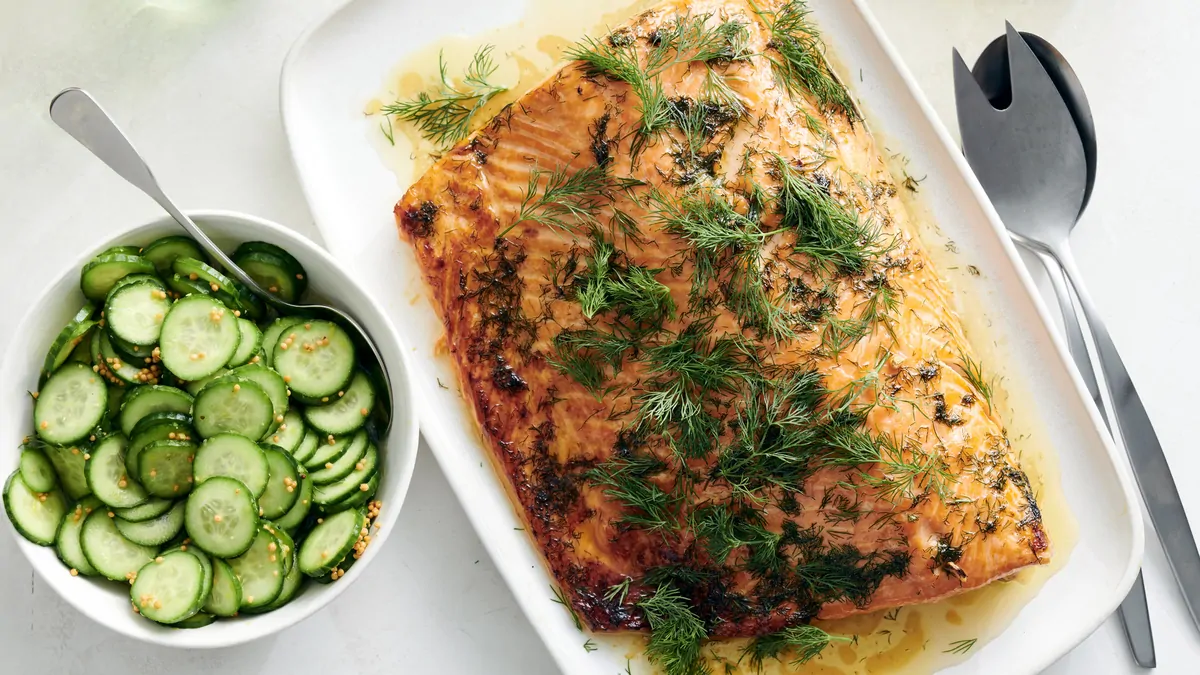
Lemon butter salmon with dill, and a pickled cucumber topping. The pickled cucumber sits as the salmon does, deepening in flavor. Food stylist: Rebecca Jurkevich. Credit: David Malosh/NYT
Lemon butter salmon with dill
Glossed with a tangy blend of honey and lemon, this salmon caramelises around the edges while staying juicy and tender. Dill, lots of it, brings freshness, green as cut grass. Wild salmon works especially well here because the butter in the sauce gives the lean fish richness. (Fatty farmed salmon will simply taste even richer, not a bad thing at all.) Quick-pickled cucumbers and mustard seeds offer a cool, crunchy pop to this dish, but the salmon is also tasty on its own. Serve this with rice, potatoes or a tray of asparagus roasted alongside the salmon.
Ingredients:
1 whole (900g-1.2kg) salmon fillet
¼ cup honey, plus 1 tbsp extra
3 tbsp rice wine vinegar or white wine vinegar
2 tsp yellow mustard seeds
3 Persian (baby) cucumbers, scrubbed and thinly sliced
¼ cup unsalted butter, melted and cooled
3 tbsp chopped fresh dill, plus fronds for garnish
Preparation:
Step 1 Place the salmon on a parchment paper-lined baking tray and sprinkle all over with salt. Refrigerate uncovered for 1 hour to draw out excess moisture and intensify its savouriness.
Step 2 Combine 1 tbsp honey, the vinegar, mustard seeds and 1 tsp salt in a medium bowl. Zest the lemon over the mixture and whisk until well combined. Add the cucumbers and stir to coat well. Let stand, stirring occasionally, for at least an hour, until ready to serve.
Step 3 Heat the oven to 220C about half an hour before you’re ready to serve. Remove the salmon from the refrigerator and pat dry with paper towels. Wipe away any excess liquid from the pan as well.
Step 4 Squeeze the juice from the zested lemon and whisk with the butter, dill and remaining ¼ cup honey until well blended. Season the salmon generously with black pepper, then spoon the lemon-butter sauce on top.
Step 5 Roast until a thin paring knife inserted into the thickest part slides in easily and comes out quite warm to the touch, 15 to 20 minutes. Spoon any sauce around the pan over the fish, which will continue to heat through just past medium-rare.
Step 6 Sprinkle with dill fronds and serve with the pickled cucumbers.
Total time: 1 hour 35 minutes
© 2025 The New York Times Company