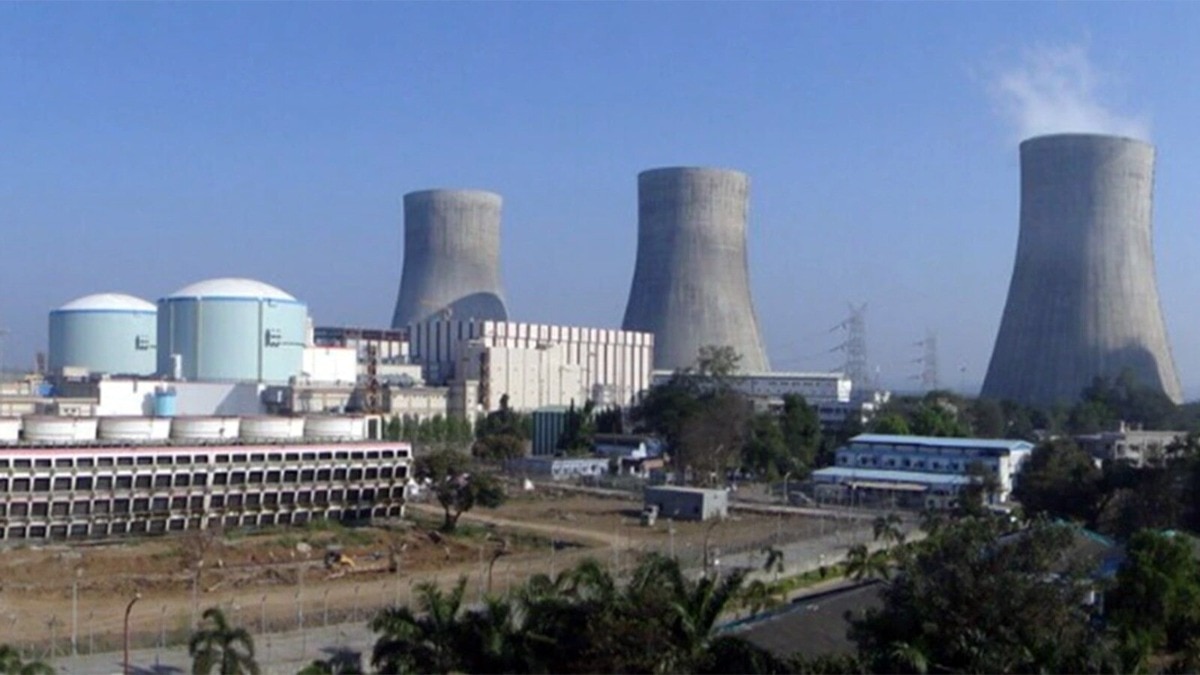
India has pulled off what some of the world’s biggest nuclear powers — the United States and France — could not, despite pumping in billions of dollars. On April 6, the 500 MWe Prototype Fast Breeder Reactor (PFBR) at Kalpakkam in Tamil Nadu achieved first criticality, which means the reactor started a self-sustaining nuclear chain reaction for the first time. We reported on the scientific achievement at Kalpakkam earlier, but here we will tell you why this feat is stunning, and why every Indian should be proud of it. We will also tell you how millions of Indians will benefit from it.
It is not just another reactor attaining criticality. With the development, India gained a capability that even the US, France and Japan failed to sustain. They surrendered. Only Russia currently operates fast breeder reactors at commercial scale. China is still taking baby steps to operationalise the technology at a commercial scale. China does have the small experimental CEFR reactor and the CFR-600 prototype.
“Once fully operational, India will become only the second country in the world after Russia to operate a commercial fast breeder reactor,” a statement by the Press Information Bureau (PIB) noted.
The achievement is crucial because India has little uranium, which is an essential fuel for nuclear reactors. However, the self-sustaining technology will help India use thorium. The country has some of the world’s largest thorium reserves, found on the sandy shores of Odisha, Kerala and Andhra Pradesh.
The Kalpakkam reactor beautifully blends the two realities of little uranium and abundant thorium reserves. The reactor, powered by uranium in the first stage, can be sustained by throium-blended fuel in the later stages. This will end India’s dependency on uranium imports.
The reactors at Kalpakkam can produce more nuclear fuel than they consume. They can also help India eventually tap thorium to power the country for centuries. That makes it a strategic win as much as a scientific one.
“India has officially entered the second stage of its three-stage nuclear power programme, a vision first conceived by Dr Homi Jehangir Bhabha, the architect of India’s nuclear programme,” added the PIB statement.
India holds limited uranium reserves but one of the largest thorium reserves in the world. (Image: DIU/ India Today)
WHAT HAPPENED AT KALPAKKAM?
The indigenous Prototype Fast Breeder Reactor (PFBR) at India’s Kalpakkam facility attained first criticality at 8.25 pm on April 6.
This means the reactor core began a controlled and self-sustaining fission chain reaction. The reactor uses mixed oxide fuel, or MOX fuel, and liquid sodium as coolant. It would now go through low-power tests before reaching full commercial operation later this year.
Prime Minister Narendra Modi called it a “defining step” in India’s civil nuclear journey. He said the Fast Breeder Reactor (FBR) reflected the country’s scientific and engineering capabilities and would help India move towards using its vast thorium reserves.
The International Energy Agency (IEA) on Wednesday congratulated India, PM Modi and Indian scientists and engineers “on this important technological achievement after many years of development”.
“This reactor will use much less nuclear fuel than other reactors and lay a pathway towards a closed fuel cycle,” the IEA posted on X.
WHY IS THE FBR SUCH A BIG DEAL FOR INDIA?
A fast breeder reactor (FBR) is different from a conventional nuclear reactor. Most reactors consume uranium fuel. An FBR produces more fissile fuel than it burns. Fissile fuel is nuclear material that can split and release energy in a chain reaction.
That is important for India because the country does not have large uranium reserves. But it does have one of the world’s biggest thorium deposits, especially along the coasts of Kerala, Andhra Pradesh, Odisha, and Tamil Nadu.
The FBR is central to India’s three-stage nuclear programme first envisioned by Bhabha in the 1950s.
In the first stage, India uses natural uranium in reactors to make electricity. Those reactors also produce plutonium.
In the second stage, reactors like the FBR use that plutonium as fuel and also create even more fuel than they consume.
This is important because it helps India move to the third stage, where it can use its huge thorium reserves to produce uranium-233 for future reactors.
India, after decades of persistence and investment, succeeded in delivering a breakthrough. But why couldn’t nuclear pioneers like the US and France give up?
WHY DID THE US, FRANCE FAIL TO FIRE FAST BREEDER REACTORS?
The US was among the first countries to try fast breeder reactors. It built the Fermi 1 reactor near Detroit in the 1960s. But in 1966, a loose plate blocked coolant flow and caused a partial meltdown in the reactor. The project never recovered.
The US later planned the bigger Clinch River Breeder Reactor. But the project was cancelled in 1983 because of high costs, technical problems and safety concerns linked to sodium coolant.
Cheap uranium at its disposal also played a role in reducing the urgency for the US to continue breeder technology.
Like the US, France also invested heavily in technology. It planned the 1,200 MW Superphenix reactor. It was meant to become the world’s first large commercial breeder reactor. Instead, it became one of the biggest failures in nuclear history.
Superphenix suffered sodium leaks, fires, corrosion problems and political opposition. It ran only for a few months in more than a decade of existence before being shut down permanently in 1998.
Japan’s Monju reactor faced similar problems. It was hit by a sodium leak and fire in 1995. When it restarted years later, another accident hit the reactor. It operated for barely 250 days across more than two decades before the Japanese government shut it down for good in 2016.
WHY KALPAKKAM SUCCESS MATTERS FOR INDIA’S ENERGY SECURITY?
India currently produces only around 8 GW of nuclear power. But it wants to reach 100 GW by 2047, in line with the Indian government’s Viksit Bharat roadmap.
The FBR strengthens India’s aim of energy security because it reduces reliance on imported uranium and fossil fuels.
It gives India the luxury of relying on clean baseload power. Once operationalised commercially, it would protect India from global fuel price shocks and disruptions like the one right now because of the war in the Middle East.
So, in short, India’s Kalpakkam reactor would generate enough electricity for nearly three million homes while producing extra fuel for future nuclear reactors, according to reports. Experts see it as a major step towards long-term nuclear self-reliance and strategic autonomy. This is why the achievement at Kalpakkam was a stunner, which every Indian should be proud of.
– Ends
Published By:
Sushim Mukul
Published On:
Apr 9, 2026 07:00 IST