South Boston History Lesson: How Henry Knox’s Cannons at Dorchester Heights Forced the British Out of Boston
If you’re celebrating Evacuation Day in South Boston, you can thank a young bookseller-turned-soldier named Henry Knox for helping make it happen.
Back in December of 1775, Knox arrived at Fort Ticonderoga with a mission from General George Washington: figure out how to move dozens of heavy cannons from upstate New York to the Continental Army camped outside Boston. The problem? Those cannons weighed nearly 60 tons combined and Boston was more than 300 miles away — across mountains, rivers, and frozen winter terrain.
Knox was only 25 years old at the time and had no formal military training. Before the Revolution, he ran a bookstore in Boston and studied military strategy on his own. But Washington recognized his intelligence and determination and trusted him with the nearly impossible task.
Knox organized what became known as the “Noble Train of Artillery.” Over the course of the winter, soldiers hauled 59 cannons, mortars, and howitzers from Ticonderoga across the Hudson Valley and through the snow-covered hills of New England. Using sleds, oxen, and sheer determination, they dragged the massive guns hundreds of miles toward Boston.
It was one of the most daring logistical feats of the American Revolution.
By late February 1776, Knox and his artillery finally reached the Boston area. Washington quickly realized exactly where they needed to go: Dorchester Heights — the high ground overlooking both Boston Harbor and the city itself.
On the night of March 4, 1776, Continental soldiers quietly hauled Knox’s cannons up the steep hills of Dorchester Heights under the cover of darkness. By morning, the British woke up to a stunning sight: powerful artillery aimed directly at their ships and troops occupying Boston. In a fitting detail for the history books, the password used by Continental soldiers during the overnight operation at Dorchester Heights was “Saint Patrick.”
The position was unbeatable.
British General William Howe knew he couldn’t stay. Within weeks, the British evacuated Boston entirely, sailing away on March 17, 1776, a day now known locally as Evacuation Day and the reason we celebrate with a parade aka the St. Patrick’s Day Parade in South Boston.
And where did it all happen? Right here in South Boston.
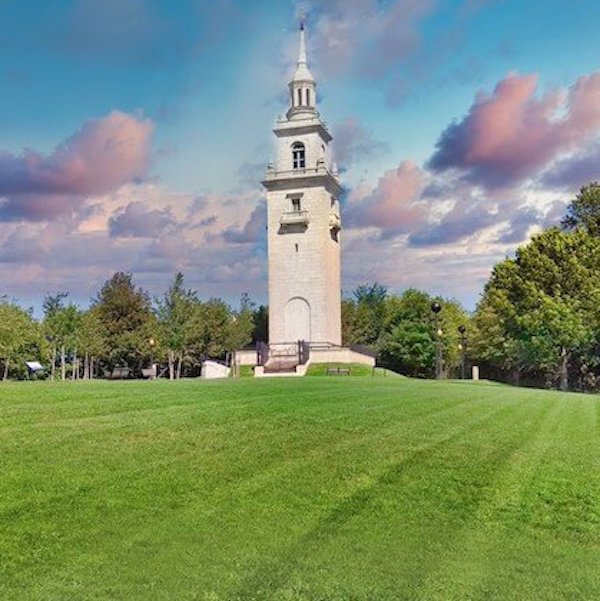
Today, Dorchester Heights remains one of the most important Revolutionary War sites in the country — and every March 17th, the neighborhood celebrates the moment when the British finally left the city. Learn more about the 250th Anniversary celebration here!
So the next time you’re standing at the top of Dorchester Heights looking out over Boston Harbor, remember:
Those views once helped end a siege… thanks in large part to a 25-year-old bookseller who figured out how to move an army’s worth of cannons through a New England winter.