

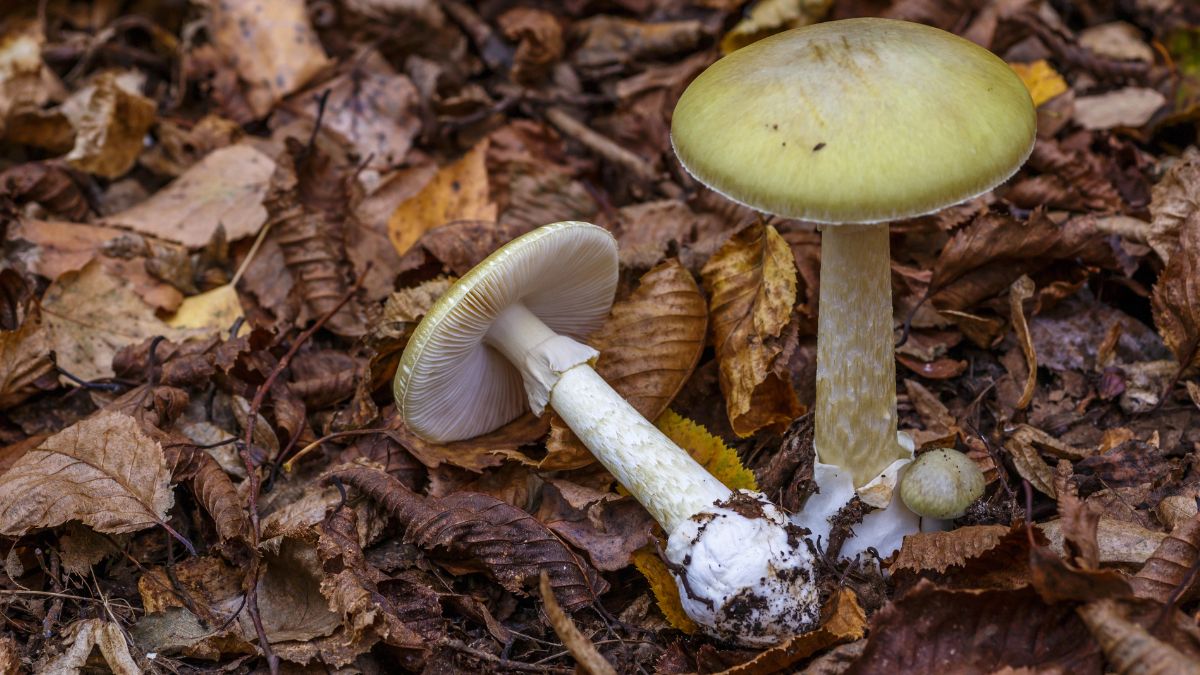
South Australians are being warned not to pick or eat wild mushrooms as potentially deadly fungi begin appearing across parts of the state.
SA Health has issued the warning as poisonous mushrooms start emerging from late summer through autumn and winter, particularly after rain. Recent detections of death cap mushrooms in parts of the Adelaide Hills have sparked renewed concern, with authorities urging people to keep a close eye on backyards, parks, playgrounds and bushland.
Death cap mushrooms, also known as Amanita phalloides, are among the most dangerous wild mushrooms in the world and can be fatal even in very small amounts. Health authorities are reminding the community that there is no safe shortcut when it comes to foraging, with visual identification alone far too risky.
Chief Public Health Officer Professor Nicola Spurrier said the message could not be more direct.
“I can’t be clearer – don’t eat wild mushrooms. Don’t risk your life or the life of your loved ones.”
Symptoms of mushroom poisoning can include severe stomach cramps, nausea, vomiting and diarrhoea, but may take several hours to appear. In some cases, poisoning can progress to life-threatening liver failure depending on the species consumed.
Professor Spurrier said one of the biggest dangers is that poisonous mushrooms can look harmless, and even experts can struggle to identify them correctly.
“There is no reliable way of identifying if a wild mushroom is safe to eat, and you can’t tell if a mushroom is poisonous by its taste or if an animal has eaten it.”
“Identifying some species can be difficult even for experts, so you should only ever eat mushrooms that have been purchased from a reliable green-grocer or supermarket.”
The warning also extends to children and pets, with SA Health urging families to remove any suspicious mushrooms from places where little ones or animals may come into contact with them. Around 33 per cent of calls made to the Poisons Information Centre last year about mushroom poisoning involved children under the age of five.
While the total number of mushroom-related calls dropped from 100 in 2024 to 39 in 2025, 12 of those cases resulted in hospital treatment or referral to hospital. SA Health noted that 2025 was one of the poorest fungi seasons in a decade due to dry conditions, meaning this year’s wetter conditions could bring higher risk.
Botanic Gardens and State Herbarium of SA Senior Botanist-Mycologist Dr Teresa Lebel said death cap mushrooms grow in association with certain trees and may be found near their root systems.
“The death cap mushroom is a mycorrhizal species, which means it can’t survive without the roots of its plant hosts. These are oaks, beeches, chestnut and hazelnut trees.”
She said if someone becomes unwell after suspected ingestion, it is important to note the surrounding environment, including nearby plants, lawn, mulch, exotic trees, pines, eucalypts or native bush, as this may help experts identify the species involved.
“If you are needing to report a concerning ingestion by a child or adult, contact the poisons information centre or call Triple 000 in an emergency, and also take note of what the nearby plants are, including lawn, mulch, exotic trees, pines, eucalypts or native bush.”
If a person or pet has eaten a wild mushroom, authorities say not to wait for symptoms to appear. Immediate medical or veterinary advice should be sought. People can contact the Poisons Information Centre on 13 11 26, call 000 in an emergency, or phone 1300 869 738 for pets.


![IPL 2026 [WATCH]: Xavier Bartlett plucks a screamer to remove steady Jos Buttler in PBKS vs GT game](https://crickettimes.com/wp-content/uploads/2026/03/Xavier-Bartlett-plucks-a-screamer-to-remove-steady-Jos-Buttler-in-PBKS-vs-GT-game.webp "IPL 2026 [WATCH]: Xavier Bartlett plucks a screamer to remove steady Jos Buttler in PBKS vs GT game")
