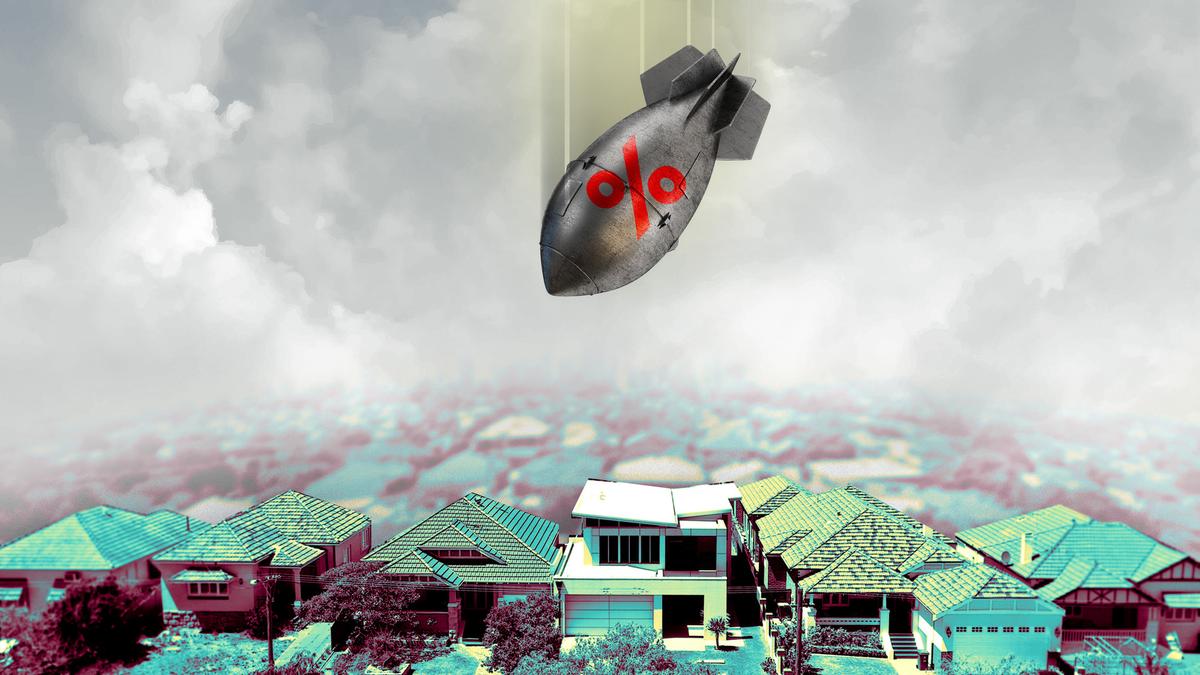
A borderline call to lift interest rates by the Reserve Bank in response to the Middle East war suggests another increase is not a done deal as early as May.
On Tuesday, the RBA lifted the cash rate 25 basis points to 4.1 per cent from 3.85 per cent, with five members of the central bank’s board voting in favour of a hike, and four against.
The split signals the bank’s board is divided about the necessary pace of rate hikes as it balances an inflation fight with worries it may tip Australia’s economy into recession if it moves too aggressively without giving itself time to assess the impact of 50 basis point increases since February 3.
Sign up to The Nightly’s newsletters.
Get the first look at the digital newspaper, curated daily stories and breaking headlines delivered to your inbox.
By continuing you agree to our Terms and Privacy Policy.
On Tuesday, the desire to respond to surging energy prices and already high headline inflation only just won the day, rather than a decision to look through the Middle East shock as a likely short-term issue beyond the central bank’s control.
“Higher petrol prices will add to inflation, but they’re not the reason for today’s decision,” RBA Governor Michele Bullock told the media. “Inflation is already too high, reflecting the fact that demand is outstripping supply. Higher fuel costs will not slow demand enough on their own to address this, if we do not act these price pressures will spread and the eventual adjustment would be harder.”
Board’s composition
The split decision surprised markets and the big four banks who were betting heavily on a rate increase this month.
The RBA’s board is made up of just two bank members in Governor Bullock and Deputy Governor Andrew Hauser, with seven non-bank members including the Secretary to the Treasury and six non-executive members, who are appointed by the Treasurer.
Economists quickly speculated that Ms Bullock and Mr Hauser likely voted to raise rates and attack inflation, but only three of the seven independent board members joined them.
Betashares’ chief economist David Bassanese suggested Tuesday’s lineball call had a hint of a politics as some members effectively voted for the politically popular option, despite headline inflation soaring to 3.8 per cent in the December quarter.
“The split decision reflects the tensions associated with raising rates in the face of a global energy price shock,” he said. “This shock both puts upward pressure on inflation and poses downside risks to economic growth.
“Some Board members clearly felt the mixed economic effects of the energy shock warranted keeping rates on hold, while others, likely including the RBA Governor and Deputy Governor, were more concerned about the upside inflation risks, especially given recent solid GDP and employment reports along with the lift in consumer inflation expectations.”
Split thinking on future
Investors and mortgage holders are now left to grapple with the uncertain chances of another interest rate increase in May against an unpredictable backdrop of a major regional war in the Middle East that may spiral into a prolonged closure of the Strait of Hormuz and ballooning energy prices.
Westpac’s chief economist and former senior RBA staff member, Luci Ellis, said the board’s split thinking means a consecutive rate increase in May now looks less certain than before.
“But all members agreed that a hike was needed and the question was more about timing [between March and May},” Ms Ellis wrote. “We therefore retain a May hike as our base case. Whether the conflict in the Middle East is still ongoing and how it evolves from here will be crucial.”
The other big driver affecting the likelihood of another rate increase in May is inflation data for the March quarter that the central bank board is set to receive on April 29.
“The best-case scenario is a quick resolution to the hostilities and a pleasingly low Q1 CPI (inflation read), which obviates the need for the RBA to hike again in May,” said Mr Bassanese. “That said, my view is that this would not be enough to stop the RBA hiking again in May, given the prospect of a further uncomfortably high inflation result for the March quarter, not helped by the elevation in energy costs.”
Governor Bullock acknowledged on Tuesday that a worst case type scenario would include Australia’s economy falling into a recession over an unspecified time frame, but probably towards the end of 2026 when defined by two consecutive quarters of negative growth.
Although Governor Bullock didn’t want to spell it out on Tuesday afternoon, the recession scenario could include a horror cocktail of a jobless rate jumping above 5 per cent, a rapid round of interest rate increases hammering house prices, and consumer demand for goods and services falling off a cliff.
Avoiding this gloomy picture may require a relatively quick end to the Middle East war and the impact of the last two rate increases starting to cap inflation and slow the economy, without sinking it.