ISLAMABAD: The National Price Monitoring Committee (NPMC) on Saturday reviewed the prices of essential commodities, transport fares and directed the Sindh government to take corrective measures regarding rising fares in Karachi, according to an official statement.
On April 5, Sindh Chief Minister Murad Ali Shah had announced that the government had secured a province-wide fare freeze after successful negotiations with transporters, even as fuel prices rose amid a global crunch caused by the now-paused US-Israeli war on Iran.
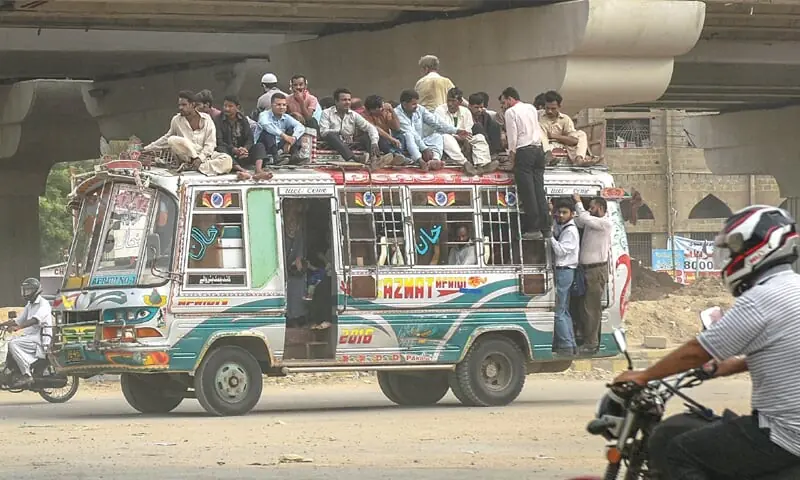
However, citizens using public transport in Karachi continue to pay inflated fares while the government announced a reduction in fuel prices on Friday after falling oil prices in the international market.
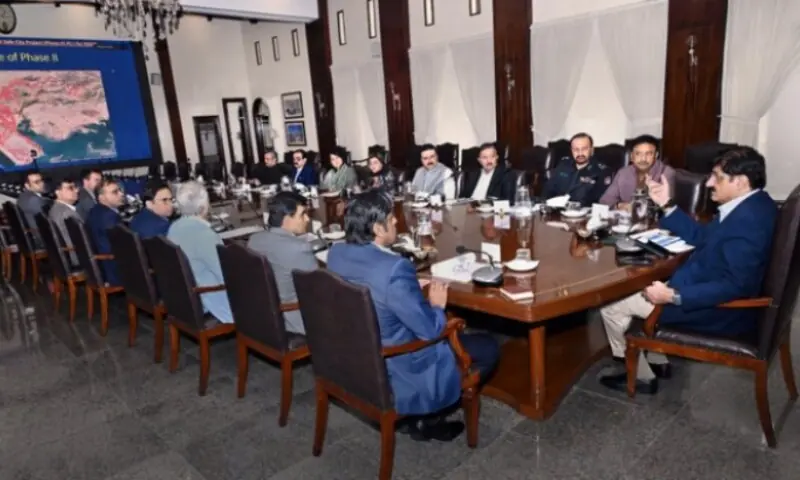
A meeting, chaired by Planning Minister Ahsan Iqbal, examined the trend in food prices across the country on Saturday, where officials from the Pakistan Bureau of Statistics (PBS) briefed the NPMC on prevailing price trends and market conditions.
According to the official statement issued after the meeting, the participants were informed that government subsidies had led to a notable reduction in transportation costs, with fare decreases ranging between 20 per cent and 30pc in several cities.
The overall trend in transport fares across the country remained downward. However, an increase in Karachi was noted.
Taking notice of rising transport fares in Karachi, the NPMC directed the Sindh government to take immediate corrective action, the statement said.
It added that the meeting also expressed concern over the substantial gap between wholesale and retail prices in certain cities, particularly Karachi, where differences of up to 142pc for tomatoes and 117pc for potatoes were recorded.
The NPMC directed the provincial government to ensure better alignment between wholesale and retail pricing.
According to official data, prices of eight essential commodities declined over the past week, while 28 items registered an increase.
Prices of garlic, bananas, chicken, and flour fell by 3.78pc, 3.39pc, 1.05pc, and 0.73pc, respectively. In contrast, significant increases were observed in the prices of diesel, petrol, tomatoes, liquified petroleum gas (LPG), and potatoes.
PBS officials further informed the committee that overall stability in the Sensitive Price Index (SPI), which increased by 1.93pc in comparison to the previous week. Prices of ghee and edible oil also remained stable, while domestic fertiliser prices were kept under control despite rising trends in the global market.
The planning minister directed relevant authorities to take strict action against profiteering and hoarding, ensure uninterrupted supply of fertilisers, and maintain adequate availability in view of the upcoming crop sowing, the statement said.
He also emphasised the need for close monitoring of price fluctuations and strengthening of the price monitoring system, it added.
The minister stated that Prime Minister Shehbaz Sharif had issued special directives to provide maximum relief to the public and to prevent abnormal increases in food prices.
He further expressed satisfaction that transporters were demonstrating responsibility and that the benefits of government subsidies were reaching the public. The minister added that conditions had not yet fully normalised, and sustained, coordinated, and serious efforts were necessary to ensure price stability.
A day earlier, the government marginally reduced petrol prices by Rs12 per litre and diesel by Rs135 per litre. However, the rates remained significantly higher than pre-Middle East conflict levels. In addition, despite provinces announcing billions of rupees in subsidies for transporters, the benefits have yet to be effectively passed on to end consumers.