
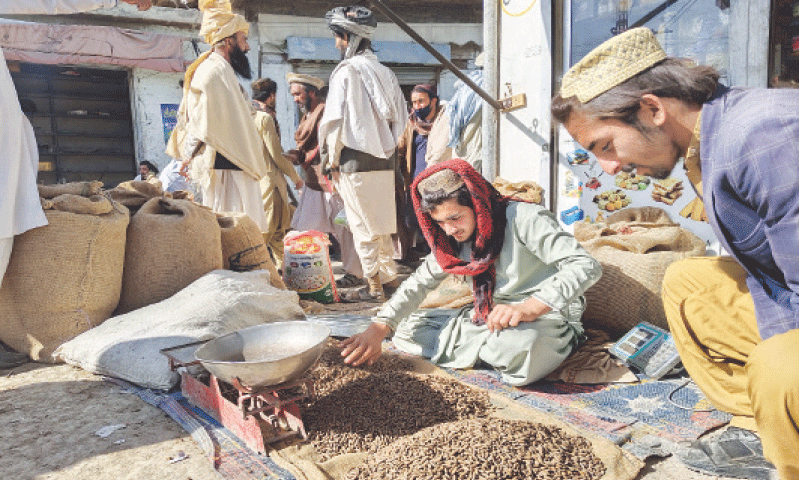
SOUTH WAZIRISTAN: The price of pine nut (chilgoza) in Lower South Waziristan have witnessed an unprecedented decline in the current season, dropping from last year’s Rs10,000 per kilogram to the current Rs3,000 per kilogram.
Traders say that the steep fall in price of pine nut has created financial distress for thousands of families linked with the region’s most valuable dry fruit economy.
Commission agent Imran Wazir told this scribe that the dramatic price drop in price of pine nut was result of three major factors. “These factors include exceptionally high production, a slowdown in international demand and systematic harassment of pine nut traders by customs and police personnel in Lahore, Rawalpindi and other major cities,” he added.
He said that pine nut production in South Waziristan Lower surged sharply in the current year, resultantly it was supplied in a larger quantity to market. “Farmers and traders were optimistic that a good harvest would bring better earnings. Instead, the reverse happened. Oversupply pushed price down faster than anyone expected,” he said.
Traders cite high production, shrinking demand and harassment by police and customs officials as main reasons
Mr Wazir said that the new price level, less than one-third of last year’s, alarmed local growers, who invested heavily in labour, transport and processing of pine nut. He added that the situation was aggravated by repeated interference from customs and police authorities outside the district.
“In Lahore, Rawalpindi and several other cities, official teams stop trucks without reason, re-check documents unnecessarily and pressurise traders,” he alleged. Those practices increased transportation costs, delayed deliveries and ultimately reduced the product’s freshness and market value, he added.
“Chilgoza is not an ordinary commodity. It is sensitive, expensive and highly perishable. Even small delays affect its worth. When trucks are stopped for hours or a whole day, its price drops instantly,” said Mr Wazir.
Local traders said that that last year, customs authorities in Lahore sealed pine nut market of Waziristan traders that caused huge losses to them. “We had barely recovered from last year’s shock. This season has pushed the market into another crisis,” a trader told this scribe.
Traders said that people of Waziristan dealt in chilgoza trade peacefully and lawfully. They described the work as one of the most labour-intensive seasonal trades in the region. “From harvesting the cones in high mountains to shelling, cleaning, drying and storing, every step requires hard work. But after all this effort, we are humiliated in other cities through unjustified checking and harassment,” they said.
They said that they regularly paid the mandatory Rs5 per kilogram duty to forest department, fulfilling all legal requirements of the trade. “When all dues are paid, then why traders are stopped repeatedly on highways” questioned a trader.
Javed Wazir, a grower, said that yield of pine nut in the current year increased nearly threefold, placing enormous pressure on market. “When the quantity triples, the price is naturally going to fall. It is basic market economics,” he said.
He said that international market, especially in Gulf and East Asian countries, had seen a noticeable decline in demand, leading to fewer export orders. “Buyers abroad are purchasing less. When global demand drops, local prices immediately feel the impact,” he explained.
However, he said that the ‘most damaging’ factor was interference by customs and police officials in Punjab’s major cities. “Vehicles carrying pine nut are stopped again and again. Trucks are forced to wait at multiple checkpoints. Documents are reviewed repeatedly as if the intention is only to delay the consignment,” he alleged.
Traders fear that if official interference continues, pine nut exports may also decline sharply, harming Pakistan’s position in international market. “Chilgoza from Waziristan is among the finest in the world. But policy-level neglect and unnecessary obstruction are threatening its reputation,” said a trader.
Local traders urged government to intervene immediately, abolish unnecessary checkpoints and instruct customs and police departments not to overstep their authority. “Ensuring smooth transportation of pine nut is crucial. The income of thousands of families in South Waziristan Lower depends on this trade. Timely government action is essential to stabilise the market before the next harvest season,” said a trader.
Published in Dawn, November 21st, 2025