Multiple Authors
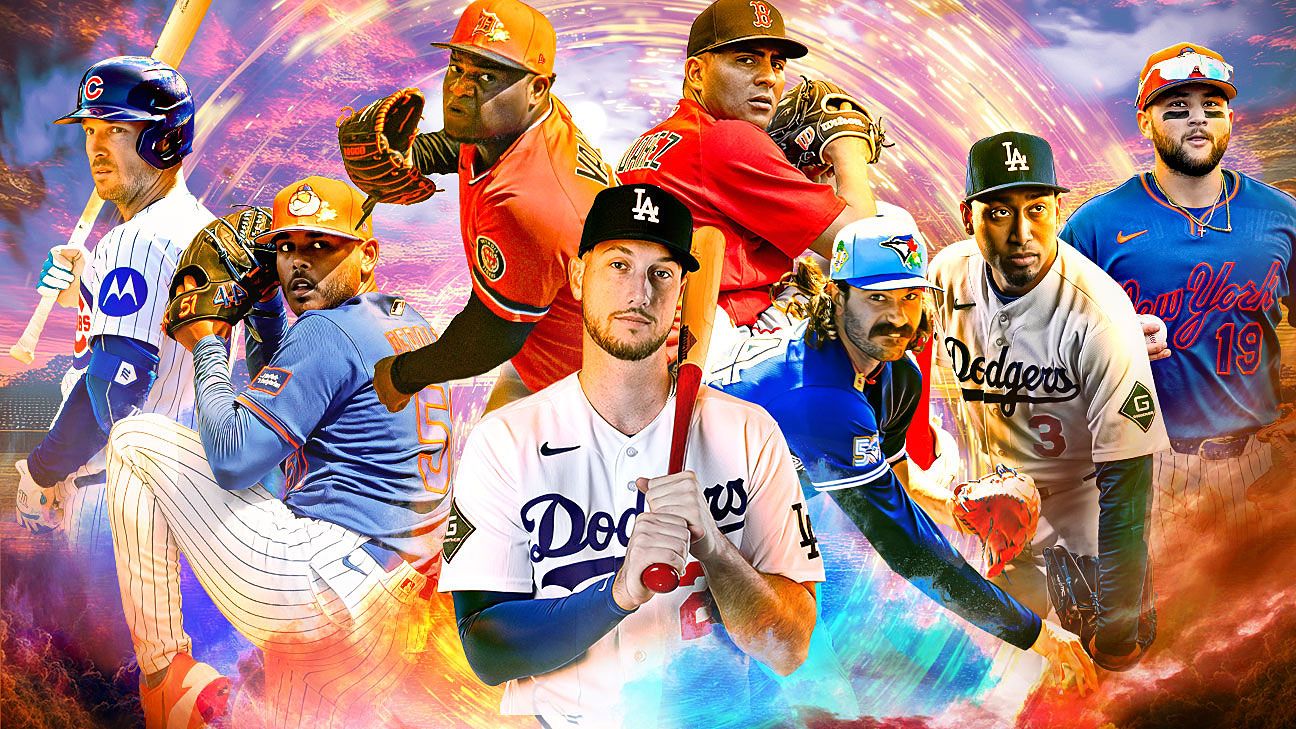
Opening week of the 2026 MLB season has arrived — after an offseason when chaos reigned supreme.
Not long after their historic late-season collapse, the New York Mets started an offseason overhaul that continued throughout the winter. Fresh off their 2025 World Series appearance, the Toronto Blue Jays added an ace to their rotation, the Baltimore Orioles brought in a slugging bat to anchor their lineup, and the Chicago Cubs finally made the big-name free agent signing their fans had been craving.
But in the end, it was the two-time reigning champion Los Angeles Dodgers who sent shock waves through the sport by signing the offseason’s No. 1 free agent to a record deal.
Whether you are just realizing that Pete Alonso left the Mets for the AL East or the Dodgers spent … well, let’s just say it was a lot of money per year to add to their loaded lineup — or you know every signing and trade and still aren’t quite sure what to make of the chaos, we’ve got you covered for Opening Day.
ESPN MLB experts Jorge Castillo, Bradford Doolittle, Alden Gonzalez, Jesse Rogers and David Schoenfield break down all the moves that rocked the winter, what they mean for the teams involved — and how they’ll impact the season ahead.
Passan’s season preview | Opening Day schedule
Mets start their makeover with swap of vets
AP Photo/Jeff Roberson
Date of the deal: Nov. 23 — Mets trade Nimmo to Rangers for Semien
What it means for the team(s): The Mets were expected to make changes after missing the postseason — an unacceptable showing for a roster with the second-highest payroll in the majors and World Series aspirations. President of baseball operations David Stearns said as much during his end-of-season news conference. But trading Brandon Nimmo was a stunning move that signaled Stearns was open to a major overhaul.
Nimmo was the Mets’ longest-tenured player with a no-trade clause in his contract. He was part of the team core and has remained productive. Stearns wasn’t intent on moving him, but Marcus Semien, though three years older, has a shorter contract and is a Gold Glove second baseman. Stearns valued the increased financial flexibility and prioritized bolstering the defense. So when the Texas Rangers presented a rare one-for-one deal of veterans, he accepted and brought it to Nimmo, who waived his no-trade clause. It was the start of a transformative offseason in Queens.
Editor’s Picks
2 Related
How it will shape the 2026 season: Semien is 35. He is coming off the worst offensive season of his 13-year career, batting .230 with 15 home runs and a .669 OPS in 127 games. He has three years and $72 million left on his contract. But he remains an elite defensive second baseman and is widely considered a positive clubhouse presence — two attributes that should help a team that struggled in the field and did not produce good vibes off the field. Maybe Semien rebounds some at the plate — he posted an .826 OPS and 6.5 fWAR in 2023 — but the Mets don’t need him to carry a lineup headlined by Juan Soto, Francisco Lindor … and the All-Star they would sign in January.
Dominoes: Second base wasn’t a glaring need for the Mets with Jeff McNeil and Luisangel Acuna still on the roster. Adding Semien made McNeil and Acuña expendable, and they were soon out the door. Trading Nimmo opened an outfield spot that the Mets would eventually attempt to fill with the top free agent on the market before deciding to move Juan Soto from right field to left field and create a competition for playing time in right field. — Castillo
Red Sox get in on the early trade fun
Maddie Malhotra/Boston Red Sox/Getty Images
Date of the deal: Nov. 25 – Red Sox acquire Sonny Gray from the Cardinals
What it means for the Red Sox: Boston’s rotation was fine in 2025, finishing 12th in the majors in ERA — or, should we say, Garrett Crochet was outstanding and the rest of the rotation was mediocre. With Lucas Giolito a free agent, the Red Sox needed some veteran stability and had a deep arsenal of young pitchers to deal from. They sent Richard Fitts and lefty Brandon Clarke to the Cardinals for Sonny Gray (and $20 million to help pay Gray’s $31 million salary for 2026).
Ahh, but the Red Sox weren’t done. In early December, they acquired right-hander Johan Oviedo from the Pirates for outfielder Jhostynxon Garcia. On Dec. 22, Craig Breslow went back to the Cardinals and acquired first baseman Willson Contreras for Hunter Dobbins and two prospects. Then, after failing to re-sign Alex Bregman, the team put that money into signing former Phillies left-hander Ranger Suarez to a five-year, $130 million deal, and then traded two more pitchers (Kyle Harrison and Shane Drohan) to the Brewers for Caleb Durbin to plug the hole at third base.
Sign up for free fantasy baseball
The 2026 fantasy baseball season is here! Get the group together, or start a brand-new tradition.
Join or start a league for free >>
In all, the Red Sox upgraded the rotation and the infield. Contreras and Durbin, who was third in the NL Rookie of the Year voting, both hit right-handed, creating more balance to what was a lefty-heavy lineup. Breslow did all that without increasing the team’s payroll — John Henry approves — and while keeping the team’s two top pitching prospects, Payton Tolle and Connelly Early.
How it will shape the 2026 season: With one of the few true No. 1 aces leading the way in Crochet, the Red Sox should have one of the top rotations in the majors. Gray has ranked sixth in strikeouts and 11th in innings over the past three seasons, and Suarez has a 3.59 ERA over the past four years. Bello and Oviedo round out the group with Tolle and Early providing additional depth. The Red Sox are chasing the Blue Jays and Yankees, but with the improved rotation — and if outfielder Roman Anthony emerges as a huge star, as many believe — watch out.
Dominoes: The Gray trade was the first indicator that it was going to be a busy offseason in the AL East, as it felt like each team would counter each other’s latest move. The Blue Jays and Orioles would eventually match the Red Sox with a series of trades and signings and it’s possible, after three AL East teams made the playoffs in 2025, that four playoff teams could emerge from the division in 2026. — Schoenfield
The AL champs add an ace to their rotation
AP Photo/John Raoux
Date of the deal: Nov. 26 — Blue Jays sign Cease for $210 million
What it means for the team(s): The Blue Jays agreed to a deal with Dylan Cease in the same calendar month that they dropped Game 7 of the World Series to the Dodgers. Toronto, and everyone else watching the postseason, saw firsthand that in this age of bullpen-heavy postseason pitching strategies, having a deep well of quality starting pitchers remains a viable path to a title.
The Blue Jays had Kevin Gausman, Shane Bieber and Trey Yesavage in hand, along with Jose Berrios and depth options such as Eric Lauer, but it was clear that Toronto needed to make a splash in the rotation department. They jumped the market with Cease, whose seven-year, $210 million pact ended up far outstripping the total value of any other free agent contract signed by a starting pitcher this winter.
Ranking baseball’s top 100 players
We rank and make predictions for the best players in baseball right now. MLB Rank 2026 »
How it will shape the 2026 season: If Cease’s every-other-season pattern of dominance continues, the first year of his deal with the Blue Jays should be a high point. As good as Cease’s stuff is, his success has vacillated in direct correlation with his consistency of command. For Toronto, an average Cease season will do fine in helping them get back to the playoffs. But they need a dominant Cease to show up once October arrives. That’s why the Blue Jays gave him the big bucks.
Dominoes: The rotation depth chart just kept iterating deeper as the winter progressed. Right after the World Series, the Blue Jays had Max Scherzer hitting the free agent market and figured to watch Bieber join him. Instead, in a mild surprise, Bieber picked up his option. The Blue Jays went hard after Cease, then added KBO MVP Cody Ponce. And when Bieber’s early-season health outlook became uncertain, they ended up retaining Scherzer, too. Now the Blue Jays have the high-level depth you want to navigate the regular season with the top-of-rotation star power you want in the playoffs. And they won’t have to push Yesavage too hard in his second season after his helium-like rise in 2025. — Doolittle
World champion Dodgers take the Mets’ star closer
Chris Coduto/Getty Images
Date of the deal: Dec. 9. — Diaz signs three-year deal with Dodgers
What it means for the Dodgers: There was a time when president of baseball operations Andrew Friedman was categorically against the idea of signing relievers to expensive multiyear contracts. That has since changed dramatically. During the prior offseason, Friedman signed Tanner Scott to a four-year, $72 million contract. In this one, he reeled in Edwin Diaz on a three-year, $69 million deal. Scott was a disaster in his first year in L.A., posting a 4.74 ERA and then did not factor into the postseason. His struggles made obtaining Diaz a necessity.
How it will shape the 2026 season: Twelve different pitchers converted saves for the Dodgers during the 2025 regular season. When the playoffs rolled around, young starting pitcher Roki Sasaki had to make an accelerated bullpen transition to close out games. And when everything was on the line in World Series Game 7, manager Dave Roberts basically trusted only the members of his rotation — even the one who started the prior game — to record big outs. The Dodgers won a second consecutive championship despite having a major hole in the ninth inning. Shoring that up with one of the game’s best closers — who has recorded the third-most saves in the majors since 2017 despite missing an entire season in that stretch — made them seem unbeatable.
Dominoes: Even after signing reliever Devin Williams to a three-year, $51 million deal, the Mets maintained hope in bringing Diaz back. Ideally, Williams would be the setup man. Diaz and his iconic trumpets would continue to shut down the ninth inning in Queens. The Dodgers swooping in not only allowed L.A. to shore up its biggest hole; it weakened one of its biggest threats in the National League. — Gonzalez
Schwarber returns to Philly
AP Photo/Matt Slocum
Date of the deal: Dec. 9 — Phillies bring back Schwarber on $150 million deal
What it means for the team(s): Schwarber’s return to Philadelphia can’t be overstated. He was the key to their entire offseason. There’s just no substitute for his power on a team desperately trying to win a ring before many of its players age out of production. If Schwarber can come close to repeating his production, it’ll go a long way toward a postseason return. His performance against left-handed pitching, in particular, elevated Philadelphia’s offense. His OPS against lefties (.964) was actually higher than against righties (.904). Bryce Harper is a dangerous hitter, but Schwarber is the straw that stirs the Phillies’ lineup.
ESPN is now the home of MLB.TV
All MLB out-of-market games. Live or On Demand. All in one place. Get access
How it will shape the 2026 season: Keeping Schwarber in Philadelphia means the balance of power in the NL East remains there. Remember, the Phillies won the division by 13 games, and with the Mets resetting their roster this offseason and the Braves coming off an injury-riddled season, there’s less certainty with those clubs. Schwarber provides the opposite: He’s a consistent power threat and leader in the clubhouse. His makes one thing clear the NL East: The division goes through Philadelphia until further notice.
Dominoes: Schwarber’s signing led directly to Pete Alonso inking his deal with Baltimore a day later — for $5 million more — and eventually to Eugenio Suarez signing on with Cincinnati. The Reds wanted Schwarber, a Cincinnati-area native, but had to shift focus after he spurned them. The Mets’ pursuit of Kyle Tucker — whom they lost to the Dodgers — might not have been a direct result of Schwarber signing, but it would have helped them keep pace with the division’s top offense. — Rogers
O’s sign Alonso, add to Mets fans’ growing frustration
Cliff Welch/Icon Sportswire
Date of the deal: Dec. 10 — Orioles sign Alonso to $155 million deal
What it means for the teams: Finally, the Orioles have exacted revenge on the Mets for the 1969 World Series. In addition, they spent the offseason infusing their befuddling lineup with much more power certainty than they had a year ago. The Orioles were just a shade under the AL average in team homers in 2025, but they were dead last with just 14 dingers coming from first basemen. That’s not likely going to happen again, at least for a few years.
How it will shape the 2026 season: Pete Alonso joins a proud lineage of first baseman in the history of the franchise, a group that stretches from George Sisler to Boog Powell to Eddie Murray to Rafael Palmeiro to Chris Davis. His age — 31 — also might cause some anxiety. That’s because the Orioles have seen 30-something, power-hitting first basemen (the aforementioned Chris Davis and another Davis, this one Glenn) hit career walls at that stage under their watch. In the short term, at least, Alonso is a good bet to take another run at the 40-or-more homer mark during his Baltimore debut.
Dominoes: Alonso’s big personality might do as much to give the Orioles an identity as his bat will boost them in the home run department. He should take a little of the spotlight off the still-young talents around him, allowing Gunnar Henderson and the backward-trending Adley Rutschman, among others, to do their thing. As for the Mets, they signed Jorge Polanco a few days after Alonso landed with the Orioles. — Doolittle
Wait, the Pirates made this timeline?
Julio Aguilar/Getty Images
Date of the deal: Dec. 19 — Pirates land Lowe in three-team trade
What it means for the team(s): In landing Brandon Lowe, outfielder Jake Mangum and reliever Mason Montgomery, it signaled the Pirates were serious about trying to upgrade their offense enough to take advantage of one of the game’s most exciting starting rotations. It more of a wading into the pool than a true splash, but relative to the Pirates’ past level of proactiveness, it felt like a tidal wave.
Konnor Griffin, MLB’s next teenage superstar
The No. 1 prospect in baseball has a chance to join exclusive company on Opening Day — if the Pirates are willing to let him. Jeff Passan »
How it will shape the 2026 season: This deal by itself would have looked odd had the Pirates not followed it up with further additions, but they did. It was a couple of weeks after they had dealt starter Johan Oviedo and prospects to the Red Sox for OF Jhostynxon Garcia, but it was this trade that really gave the Pittsburgh hot stove season some momentum. If the Pirates make a run in the wild-card or NL Central races this season, we’ll point to this trade as when the excitement began. Well, other than when Pittsburgh drafted Paul Skenes.
Dominoes: The Pirates went on to add Ryan O’Hearn and Marcell Ozuna later in the offseason, creating their deepest lineup in years. But it also continued a pattern of heavily weighting the offensive considerations of a move over the defensive fit. That’s worth watching. But all of this laid the groundwork for a scenario in which an early promotion for budding star shortstop Konnor Griffin actually makes sense. — Doolittle
Japanese free agents land in surprising places
Rick Scuteri-Imagn Images
Date of the deals: Dec. 21 — White Sox sign slugger Murakami; Jan. 1 — Astros sign starter Imai; Jan. 4 — Blue Jays sign 3B Okamoto
What it means for the teams: Munetaka Murakami was the most heralded player of the three Japanese stars, a 26-year-old who once hit 56 home runs for the Yakult Swallows. Given his age, contract predictions ranged as high as $180 million. Instead, with concerns about his swing-and-miss and defense at third, he had to settle for a two-year, $34 million deal from the White Sox.
Given the lack of power in the Chicago lineup and the need for a first baseman, it’s a worthy roll of the dice for the White Sox. There’s a chance he’s a Kyle Schwarber-like hitter with lots of home runs, walks and strikeouts, and the White Sox get a middle-of-the-order hitter to anchor a young lineup. And if the strikeouts pile up? Fine, the two-year commitment means there’s no long-term risk here. It was a surprise move given the White Sox lost 102 games in 2025, but they took advantage of the soft market for Murakami and can be interpreted as a sign the organization thinks it can compete for the division soon — if not 2026, then 2027.
The 2026 Fantasy Baseball Draft Guide
Rankings, tips, stats, strategy and more. Everything you need for the 2026 fantasy baseball season is here!
Check out the Draft Guide today! >>
Tatsuya Imai going to the Astros on a three-year deal (with player opt-outs) was another surprise considering the Astros had never signed a significant Japanese free agent before. With Framber Valdez a free agent and several other starters coming off injuries or already set to miss the 2026 season, the Astros needed rotation depth and Imai was coming off a standout season with the Seibu Lions with a 1.92 ERA. An undersized righty with big stuff, Imai improved his control in 2025 to have his best season.
Okamoto to the Blue Jays on a four-year, $64 million contract also came out of left field and effectively put the final period on Bo Bichette’s career in Toronto. Okamoto topped 30 home runs six times in Japan and then hit a career-high .322 in 2025. His improved contact rates in recent seasons will fit right in with the Blue Jays, and while he might not hit .300 like Bichette did in two of the past three seasons, Okamoto might come close to Bichette’s overall production — at a lower salary.
How it will shape the 2026 season: The White Sox remain extreme long shots, even in the AL Central, but Murakami will be one of the most intriguing players of the season, with a wide range in his potential outcomes. The Astros added Imai and traded for Mike Burrows and will have Cristian Javier for a full season to help out ace Hunter Brown, so don’t overlook what might be a sneaky good rotation, especially if Imai’s improved control carries over. Okamoto should be a key player for the Blue Jays as they defend their AL title, and their already stellar defense will improve with Andres Gimenez sliding over to shortstop to replace Bichette.
Dominoes: Nobody really expected Valdez to return to the Astros, and the Imai signing just cemented that belief. Meanwhile, Bichette remained a free agent with Toronto now locked in with Okamoto, Gimenez and Ernie Clement at the three infield positions. With their willingness to increase payroll, it also suggested the Blue Jays were now the favorite to land Kyle Tucker. Bichette? One deep-pocketed team was no longer in the picture. Did anyone want him to play shortstop? Or did some other big-market team envision a new position for him? — Schoenfield
Cubs get their star free agent
AP Photo/Ross D. Franklin
Date of the deal: Jan. 10 — Bregman joins Cubs on $175 million deal
What it means for the team(s): The Cubs needed an offensive replacement after moving on from Kyle Tucker — and Alex Bregman fits the bill, assuming age doesn’t catch up with him anytime soon. He has long been a favorite of Cubs exec Jed Hoyer, who pursued him last winter as well.
Bregman’s leadership will come in handy on a team that might need another glue guy after employing Justin Turner on the roster last year. On the field, Bregman rounds out one of the best defensive infields in baseball, pushing Gold Glove finalist Matt Shaw to the outfield. But when Bregman needs a day at DH, the Cubs won’t lose anything on defense moving Shaw back to the dirt. Bregman adds front-line production while making the deepest Cubs team in nearly a decade.
Why didn’t your favorite team get a _____?
What some non-moves mean for each MLB team’s playoff forecast this season. Bradford Doolittle »
How it will shape the 2026 season: It’s now or never for the Cubs in the NL Central. Beaten out by Milwaukee the past several years, Chicago has built its most complete roster since the one that won the 2016 World Series. Bregman’s addition should push them over the top, but then again, many thought that of last year’s squad after adding Kyle Tucker: The Cubs couldn’t match the run Milwaukee made last year after being atop the division for the first two months. Signing Bregman should signal a changing of the guard in the NL Central, but the Brewers have earned the benefit of the doubt — at least at this moment.
Dominoes: Not long after Bregman chose the Cubs over the Red Sox, his old team pivoted to pitching for its marquee offseason signing. Then Boston traded for infielder Caleb Durbin to fill the third-base void. He’s not going to replace the production Bregman provided, but at least his arrival from Milwaukee covers his new team at the hot corner.
The biggest domino for Boston might have come via media and fans — they weren’t happy with how Bregman’s departure went down. If Boston struggles early, criticism directed toward the front office will only grow. — Rogers
Dodgers rock the offseason with Tucker deal
Jayne Kamin-Oncea-Imagn Images
Date of the deal: Jan. 15. — Tucker signs $240 million contract with Dodgers
What it means for the Dodgers: The Dodgers went into the offseason thinking they had only a slim chance to land Edwin Diaz — and basically no chance to land Kyle Tucker. They were willing to offer only a short-term deal, the type a 29-year-old five-tool player at the top of a free agent class never takes. Then Tucker did, signing a four-year, $240 million deal — with deferrals and opt-outs — that solidified the Dodgers as the best team in the sport and the envy of an entire industry.
Two years earlier, the Dodgers landed Shohei Ohtani, Yoshinobu Yamamoto and Tyler Glasnow in the same month. A year after that, it was Blake Snell, Tanner Scott and Roki Sasaki. With Diaz and Tucker, they had completed a third consecutive offseason in which they landed the best players at their targeted positions.
Breaking News from Jeff Passan
Download the ESPN app and enable Jeff Passan’s news alerts to receive push notifications for the latest updates first. Opt in by tapping the alerts bell in the top right corner. For more information, click here.
How it will shape the 2026 season: There was only one real way to upgrade the Dodgers’ lineup — through a left-handed-hitting outfielder who could also improve their defense. Tucker does that, bringing Gold Glove-caliber defense to right field and allowing Teoscar Hernandez to shift to left. But he will have a much bigger impact on their lineup.
Tucker has put up 23.4 FanGraphs wins above replacement and 143 weighted runs created plus since 2021, and yet there are many who believe he still has more upside offensively. Hitting between Ohtani and Mookie Betts, while residing in a star-studded lineup that alleviates a lot of the pressure, could unlock that. And if it does, this Dodgers lineup — with Freddie Freeman batting cleanup and Max Muncy, Tommy Edman, Andy Pages and Hernandez making up the bottom half — has the makings of one of history’s greatest.
Dominoes: The Blue Jays offered Tucker the type of long-term deal he sought, but he declined, preventing the reigning American League champions from adding the additional big bat many believed they needed. The Mets offered a deal similar to that of the Dodgers. That yet another free agent spurned them to go to L.A. left Mets fans up in arms. By this point, their team had said goodbye to core players such as Diaz, Pete Alonso and Brandon Nimmo and still had holes throughout the roster. The Mets’ front office needed an answer. — Gonzalez
Mets counter with Bichette signing
AP Photo/Jeff Roberson
Date of the deal: Jan. 16 — Mets land Bichette for $126 million
What it means for the team(s): The Mets quickly moved on from Tucker’s rejection, reaching an agreement with Bichette about 12 hours later. The move was surprising for two reasons: The Mets were never considered a likely destination for Bichette, and they signed him to play third base, a position he has never played as a professional. But Stearns later revealed the Mets had multiple meetings with Bichette beginning in November. While it’s a three-year, $126 million contract, it’s really a one-year deal if Bichette stays healthy and produces since there are player opt-outs after the first and second seasons.
How it will shape the 2026 season: Offensively, Bichette fits as the right-handed run producer behind Soto to replace Alonso. Defensively, well, that remains a very real question. Bichette played shortstop in his seven seasons with the Blue Jays until he returned from a knee injury to play second base in the World Series, but his decline in recent years was enough for prospective teams to consider for second or third base. Bichette said he hasn’t played third base since travel ball in high school. There will be pressure to learn the position while producing behind Lindor and Soto.
Dominoes: The Mets snatched Bichette from their NL East rival Phillies, who believed they were going to sign him to a seven-year, $200 million deal to play second base. Bichette instead chose the Mets’ short-term, high AAV offer to play third and left Philadelphia scrambling. The Phillies quickly diverted some of that money to re-sign catcher J.T. Realmuto to a three-year, $45 million contract. And earlier this month they gave left-hander Jesus Luzardo a five-year, $135 million extension. The Blue Jays, Bichette’s former team, chose to move defensive wizard Andrés Gimenez from second base to shortstop and make playoff hero Ernie Clement their every-day second baseman. — Castillo
Yankees finally do something
Kim Klement Neitzel-Imagn Images
Date of the deal: Jan. 26 — Bellinger returns to New York on five-year deal
What it means for the team(s): Bellinger was the Yankees’ top priority all offseason. He was a seamless fit with the Yankees last season. He provided good defense at multiple positions, a strong year at the plate and was quickly well-liked in the clubhouse. But negotiations reached a monthslong stalemate when the Yankees refused to budge from their five-year offer while the outfielder sought seven years. The Yankees won the staring contest with Bellinger agreeing to a five-year, $162.5 million deal to complete New York’s run-it-back winter.
Does ‘running it back’ work?
What to expect from all 30 MLB teams based on how busy — or not busy — they were this winter. Bradford Doolittle »
How it will shape the 2026 season: Bellinger is projected to primarily play left field with the occasional start at the two other outfield spots. He’ll likely bat behind Aaron Judge again, so he should see plenty of pitches to hit with Judge on base. With his addition, the Yankees will have 24 of the 26 players they carried on their ALDS roster. General manager Brian Cashman said he didn’t set out to bring most everybody back while emphasizing the team that lost in the postseason was the result of a significant overhaul at the trade deadline. The Yankees are banking on an entire season together — with the expected addition of Gerrit Cole in June — producing a different result.
Dominoes: Re-signing Bellinger pushed Jasson Domínguez off the Yankees’ projected starting lineup — and likely to Triple A. Cashman has indicated that will be the result, saying that he wants Domínguez to play every day. That won’t happen at the major league level unless an injury surfaces. Spencer Jones’ fate is more secure: The slugging center fielder is headed to the Triple A for his age-25 season after clubbing 35 home runs between Double A and Triple A last year. Jones’ whiff rate, however, remains a concern. He compiled 179 strikeouts in 116 games in 2025. — Castillo
The final starting pitching dominoes fall
Morgan Tencza-Imagn Images
Date of the deals: Jan 14 — Red Sox sign Suarez to five-year deal; Jan. 21 –Mets acquire Peralta from the Brewers; Jan. 22 — Rangers acquire Gore from Nationals; Feb. 4 — Tigers sign Valdez to three-year contract
What it means for the teams: Well into mid-January two of the top three starting pitcher free agents remained unsigned; the Mets had yet to do anything to improve a rotation that ranked 18th in ERA; the Rangers hadn’t done anything to fill a rotation that was thin behind Nathan Eovaldi, Jacob deGrom and Jack Leiter; and the Tigers still had Tarik Skubal but had yet to make any major offseason moves. With spring training closing in, it was time to finalize something big. And you know what they say: You can never have too much starting pitching.
Boston pivoted from missing out on Bregman by reallocating money they were willing to pay him to Ranger Suarez and making its third offseason rotation addition. The Mets traded two top prospects in Jett Williams and Brandon Sproat to get Freddy Peralta, who has one season left until he hits free agency. The Rangers traded five prospects for MacKenzie Gore. Then came one of the most shocking signings of the offseason, Framber Valdez to the Tigers at an AAV of $36.5 million. This was a team that had just lowballed Skubal in arbitration and now gave Valdez nearly double the salary it had offered Skubal (Skubal won his case and will make $32 million).
On paper, all four teams improved, with all four showing an urgency to win in 2026.
How it will shape the 2026 season: Check back in October.
Dominoes: With Suarez signed, the Red Sox used their pitching depth to acquire Caleb Durbin from the Brewers, and you can argue Suarez/Durbin will provide the Red Sox more value than Bregman. Of course, the Brewers needed some pitching help after trading away Peralta. But the biggest domino won’t be known until next offseason. Signing a No. 1-type starter in Valdez feels like the Tigers admitted they won’t be re-signing Skubal. But hopefully it also means they’ll keep him all season and make a run at the World Series with the Skubal/Valdez duo leading the rotation. — Schoenfield