A two-week ceasefire was agreed early on Wednesday morning between the US and Iran on the condition that “safe passage” through the narrow waterway of Hormuz is guaranteed – but since then only a few vessels have crossed.
While the strait has not been totally closed to shipping, it has been substantially disrupted and transit has effectively slowed to a trickle. The strait is economically and strategically unique due to the access it provides to the Persian Gulf from which there is no exit point. All shipping passes in and out a single waterway.
Previously, Iran had funnelled vessels through the Qeshm–Larak corridor, a clear deviation from the pre-war shipping route and effectively turning that stretch of water into a closely managed corridor. The arrangement gave the Islamic Revolutionary Guard Corps(IRGC) discretion to clear ships from friendly nations while including the prospect of transit fees, or what critics described as a de facto toll system.
Now, even with a fragile truce in place, the future of the Strait of Hormuz remains uncertain, with no clarity yet on whether this vital chokepoint will resume normal operations or continue to function on Tehran’s terms.
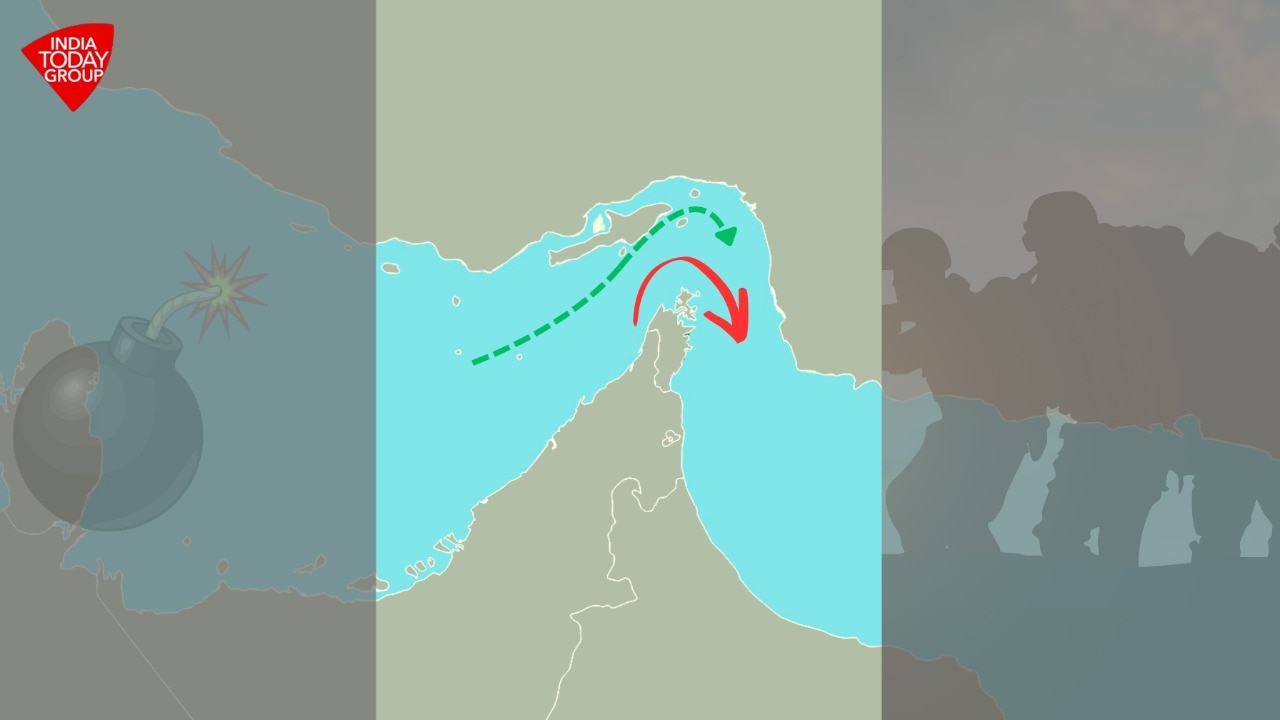
Vessels entering from the Sea of Oman should travel north to Larak Island, while ships departing from the Persian Gulf is to pass south of Larak Island and continue towards the Sea of Oman
The Iranian media has published a rough sketch of the newly announced route through the Strait of Hormuz, approved and recommended by the IRGC. Iran says there exists the possibility of presence of various “anti-ship mines” in the traffic of the main zone of the Strait of Hormuz, and that vessels should follow a new route in order to “avoid possible collisions with naval mines”.
The new route still brushes past Larak Island at both entry and exit. But the traffic geometry appears to have changed. The funnel near the Qeshm–Larak channel, which had previously guided ships out of the Persian Gulf toward the Gulf of Oman, now appears to have been recast as the formal exit route. In the sketch shared by the IRGC, a new lane also appears to have opened, suggesting that vessels leaving the Gulf would no longer use the main channel but instead pass through Hormuz along a narrower corridor skirting Larak.
Ships planning to pass through the Strait of Hormuz should take alternative routes
While Iran has marked parts of the traditional sea route as a danger zone over the possible presence of sea mines, a review of the newly released map by India Today’s OSINT team shows the picture is still unclear. It is not known whether mines have actually been laid there, or whether the warning is meant to push vessels into using the new corridor instead. The traditional route runs roughly through the middle of the waters between Oman and Iran, making it harder for the IRGC to physically control. The new passage, by contrast, hugs the Iranian coastline.
The key navigational chokepoint lies between Iran and Oman and is just 29 nautical miles, or about 54 kilometres, wide at its narrowest point. It is structured around two-mile-wide or about three kilometres of inbound and outbound shipping lanes, separated by a two-mile buffer zone, with traffic passing through the territorial waters of both countries.
Like the earlier route, the new corridor appears to preserve Iran’s ability, through the IRGC, to verify ships and decide which vessels may proceed. Analysts at Lloyd’s List have called this system “Tehran’s toll booth,” arguing that it gives Iran an effective lever over commercial traffic through the Strait.
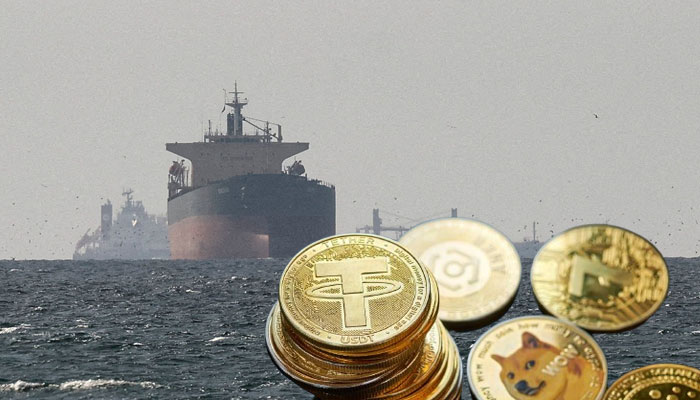
It is unclear at this stage whether Iran is requiring payment for safe passage. As per Lloyd’s List, at least two vessels have paid to transit the strait, with one of the payments reportedly as high as $2 million dollars or about 18.51 crore for a VLCC (very large crude carrier).
Indian Ships at Hormuz
At least 20 Indian-flagged vessels, including 2 LPG tankers and 4 crude oil tankers are still in the west of the Hormuz, as tracked by India Today.
Vessel paths showing movement relative to their previously observed positions on March 12
Comparing positions from March 12 to April 8, several Indian vessels appear to have shifted eastward towards Hormuz and are now clustered off Khasab, likely awaiting transit clearance.
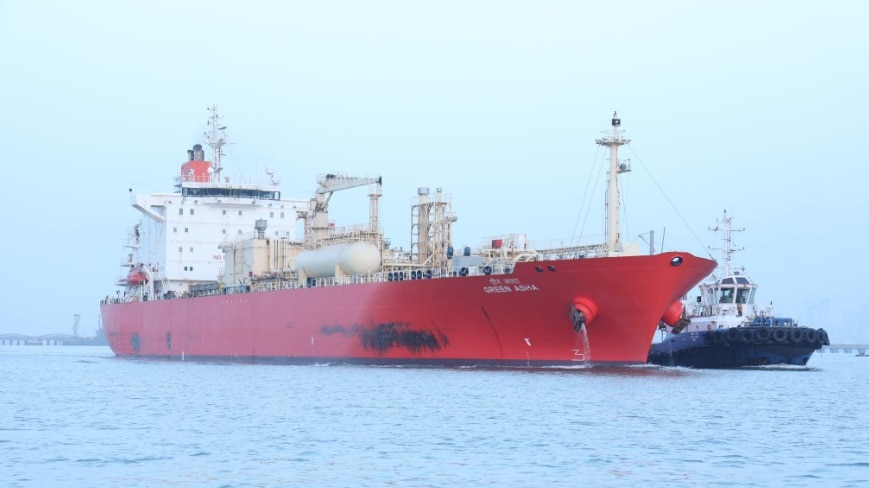
A total of eight Indian LPG tankers — Nanda Devi, Jag Vasant, BW Elm, Shivalik, Green Sanvi, BW Tyr, Pine Gas and Green Asha — have already transited the chokepoint after negotiations between the Indian government and its Iranian counterpart. In addition, at least three crude oil tankers and three other vessels have also crossed the Strait.
– Ends
Published By:
bidisha saha
Published On:
Apr 9, 2026 17:35 IST
Tune In