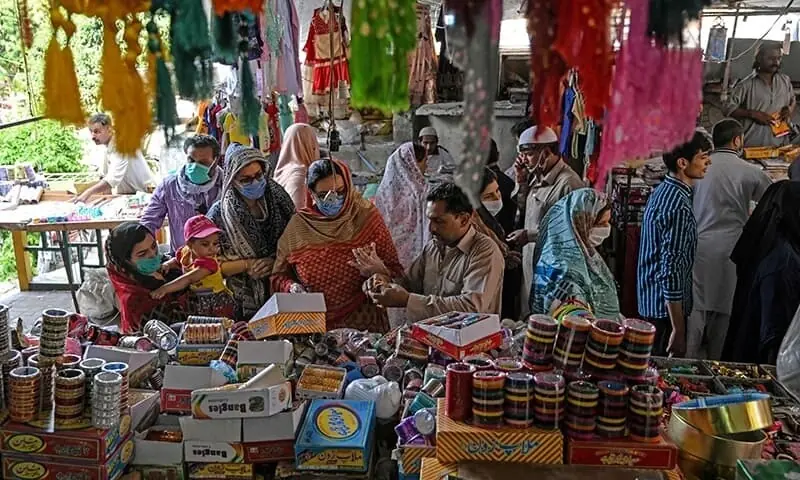
ISLAMABAD: The government decided on Monday that markets and shopping malls in the country, barring those in Sindh, would close by 8pm as part of energy conservation measures.
The decision was taken during a meeting chaired by Prime Minister Shehbaz Sharif in Islamabad, a statement by the PM’s Office said.
It added that markets in divisional headquarters in KP would be allowed to remain open till 9pm and consultations were under way regarding business hours for markets in Sindh.
Meanwhile, the meeting decided that markets and shopping malls in the rest of KP, Punjab, Balochistan, Islamabad, Gilgit-Baltistan and Azad Jammu and Kashmir would close by 8pm, the statement said.
Regarding the decision to allow markets in divisional headquarters in KP, the statement said it was taken in consultation with the provincial government. The statement added that shops selling daily-use items and departmental stores would also close by 8pm.
It said it had also been decided that bakeries, restaurants, tandoors and shops selling food items would close by 10pm and marriage halls, marquees and other commercial entities used for hosting wedding ceremonies would also close by this time.
There would also be a restriction on hosting wedding ceremonies at private properties and houses beyond 10pm, the statement added.
However, medical stores and pharmacies were being given exemptions from timing restrictions, it said, adding that the new timings will be effective from April 7 (Tuesday).
The decisions come a day after the Balochistan and KP governments announced business hours for their respective provinces, which align with those taken at Monday’s meeting.
According to the PMO statement, the meeting chaired by the premier reviewed fuel and energy-conservation measures, as well as austerity measures, taken against the backdrop of an ongoing war in the Middle East.
The conflict began with the launch of US-Israeli strikes on Iran on February 28, during which the disruption of traffic in the Strait of Hormuz — a strategic maritime corridor through which nearly 25 per cent of the world’s oil used to pass before the war — has driven up fuel prices and caused supply disruptions.
The PMO statement said a transaction of Rs100,000 had been made under the government’s digital wallet subsidy initiative — one among several steps taken by the government to deal with the fuel crisis. The provision of this relief on the purchase of petroleum products was ongoing, the statement said.
The statement said PM expressed gratitude to the chief ministers of Punjab, KP, Balochistan and GB, as well as to the AJK PM, for reaching a decision with consensus on a matter of “national importance”.
It further quoted the PM as saying that he was hopeful that, after consultations between the Sindh government and stakeholders, the former would also join others in implementing energy conservation measures.
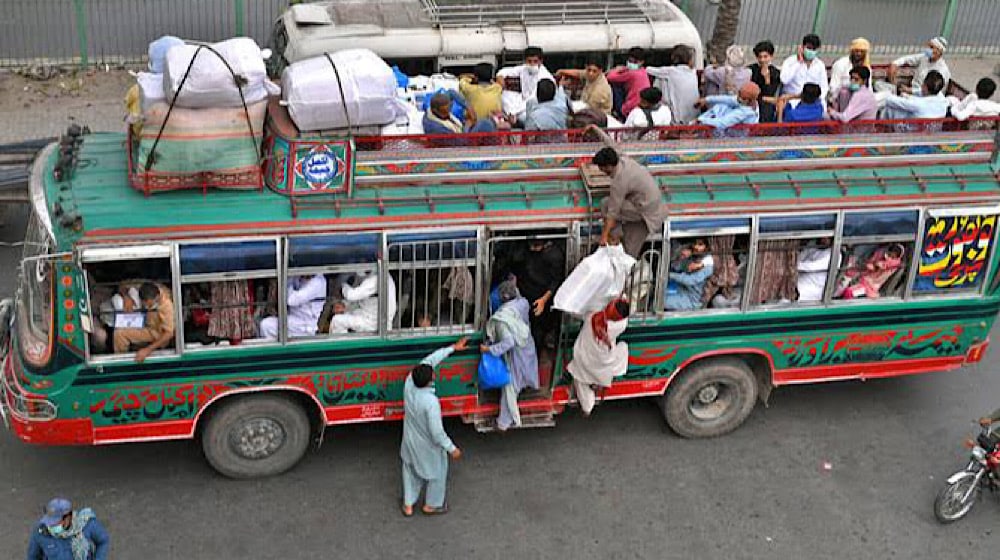
He also said that inter-city public transport services would be provided for free in Gilgit and Muzaffarabad for a month, and the federal government would bear all the expenses on this account during this duration.
Deputy Prime Minister and Foreign Minister Ishaq Dar, Economic Affairs Minister Ahad Cheema and relevant senior officials and officers were among those who attended the meeting, the PMO statement said.
Sindh CM meets business community representatives
Meanwhile, a statement issued by the Sindh CM’s Office said the provincial chief executive, Murad Ali Shah, held a meeting with the representatives of the business community on Monday.
The meeting was attended by representatives from the Karachi Chamber of Commerce and Industry, Korangi Association of Trade and Industry, and representatives of other businesses.
The statement quoted Murad as saying that “all of us will have to play our roles in view of the country’s situation” and that the Sindh government wanted to take measures for energy conservation.
He said the government was simultaneously taking steps to ensure that the minimum burden was passed on to the poor.
The statement said he assured the business community that market timings would be determined after consultations with them, adding that its representatives had been invited to the meeting for the same purpose.
He said that traders’ associations had given their recommendations regarding market timings and the premier would be informed after those suggestions were reviewed.
Additional input from Tahir Siddiqui