India makes me smile every time.
Between smiles there are many moments of shaking my head in disbelief, and times of bracing myself for what might be about to happen.
Last week I stepped off the plane in Chennai and within minutes, I was reminded why India is unlike anywhere else on earth. The wall of humidity hits you first, then the noise.
Sign up to The Nightly’s newsletters.
Get the first look at the digital newspaper, curated daily stories and breaking headlines delivered to your inbox.
By continuing you agree to our Terms and Privacy Policy.
Car horns blaring from every direction, motorbikes weaving through traffic with three or four passengers clinging on without a care in the world, tuk-tuks darting in and out of lanes that don’t really exist, and stray dogs wandering the streets like they own the place.
Then there are the cows drifting through the streets like pedestrians.
The daily chaos of traffic in Delhi. Credit: Nikada/Getty Images
Only, in their case, they are treated with reverence, slowly walking and minding their own business like they are more important than any other living soul within the vicinity.
In Chennai for a training camp with the Lucknow Super Giants (the team I coach in the Indian Premier League), I was reminded that every time I come to India, I fall in love with the place.
There is magic in the organised, disorganised, beautiful chaos. I can’t think of another way to describe it.
Driving through the streets of Chennai, there are open cooking stations on almost every corner, the smell of spices filling the air.
Fruit and vegetable stalls are everywhere, piled high with mangoes, bananas, coconuts and things I can’t always identify.
School buses, packed to the brim, weave through the chaos alongside trucks, auto-rickshaws, and those cows, wandering across the road without a care in the world.
The energy is relentless, unyielding, electrifying. There is always noise, always movement, always life.
Then I arrive back in Perth. Our beautiful, quiet, pristine Perth.
Wide open spaces, clean streets, the Swan River and Indian Ocean glistening in the afternoon sun. You can drive down the freeway and barely see another car. The beaches are empty by comparison. The pace of life is measured, calm, and predictable in the best possible way.
India is a far cry from the beautiful, quiet, pristine Perth. Pictured: Leighton Beach. Credit: Kelsey Reid/The West Australian
When I’m home in Perth and tell my mates what India is actually like, I can see their curious, disbelieving eyes processing the scenes that I am trying to set.
They nod politely, but unless you’ve been there, unless you’ve felt the sensory overload, tasted the food from a street stall, heard the symphony of car horns from dawn ‘til dusk, you just can’t really grasp it.
And it works the other way too.
My Indian friends struggle to comprehend the vast emptiness of Western Australia, the silence of a Sunday morning in the suburbs, or the fact that you can walk for kilometres along a beach and not see another soul.
When I explain that a beeping horn is usually a sign of road rage, they just laugh like I have lost my marbles.
Both countries are extraordinary places, and I feel incredibly fortunate to have a foot in each world. I love them both. I really do. But trying to explain one from another is almost impossible.
Beyond the sights and sounds and culture, what strikes me most about India is the sheer enormity of their cricket.
Indian cricket is a giant, and I don’t think people back home fully understand just how big it is. They often dominate world cricket on the field. Australia v India is becoming a box office hit.
Off the field, Indian private owners are buying cricket franchises all around the globe.
They own teams in South Africa, the Caribbean, the United States, UAE and England. It seems inevitable that the Big Bash teams in Australian will be next.
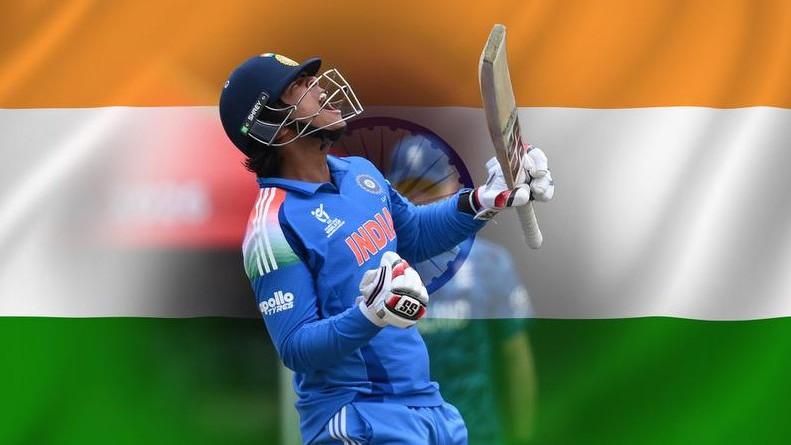
India’s Vaibhav Sooryavanshi poses for a photo with the U19 World Cup trophy after India win the ICC U19 Men’s Cricket World Cup 2026 Final. Credit: Ashley Allen-ICC/ICC via Getty Images
The IPL has become the most powerful league in world sport, and it is the engine room that drives the global game.
Without Indian cricket, the financial landscape of our sport would look completely different. There is no question that the players have the earning capacity they do today because of Indian cricket.
Apart from the money, what strikes me the most is the breathtaking depth of talent being produced in the world’s most cricket loving country.
The gulf between their young players, ours, and every other cricket playing country is becoming startlingly clear.
Take Vaibhav Suryavanshi as an example. This kid was born in 2011. Let that sink in for a moment. He was born three years after the IPL started in 2008.
At 13 years of age, he was bought by the Rajasthan Royals for 1.1 crore rupees ($40,000). At 14, he made his IPL debut against my team the Lucknow Super Giants. Opening the batting, he hit his first ball for a six. My jaw hit the table.
Just nine days later he smashed a 38-ball century — the second fastest in IPL history behind Chris Gayle, arguably the world’s greatest T20 batter — and the fastest ever by an Indian.
Last month he scored 175 off 80 balls in the Under-19 World Cup final against England and was named player of the tournament. He is still 14.
In Australia, most kids that age are still trying to make their school’s First XI or decide whether they like footy, soccer, basketball or surfing better.
Scarily, the production line of Indian cricket talent is extraordinary, and I saw it up close in Chennai.
Rajasthan Royals’ Vaibhav Suryavanshi, aged 14, celebrates after scoring a 35-ball century. (AP PHOTO) Credit: AAP
During my time there, we trained at Bharat Arun’s cricket academy called Coaching Beyond.
Bharat, the former Indian bowling coach, co-founded this place with Ravi Shastri and Ramakrishnan Sridhar, and what they have built is remarkable.
The academy has 65 boys and 25 girls training full time. They are supported by 18 full-time coaches, four throw-down specialists, eight ground staff, and three admin staff. This is not a national academy. This is a private cricket school, one of hundreds across the country.
The facility sits alongside the Heartfulness Foundation’s Omega International School, which has 6500 students.
Cricket is woven into the fabric of the place. The pitches are immaculate, the coaching is world class, and the kids are hungry. They train with an intensity and purpose that must be seen to be believed.
Bharat, who is now our esteemed bowling coach at the LSG, told me on Monday that India has 54 million registered cricketers between the ages of 14 and 18. Yep, 54 million. That is the number that should keep every other cricket nation awake at night.
Let me put that in perspective. The best figures I could find tell me that Australia’s seven major team sports combined, soccer, netball, basketball, AFL, rugby league cricket, and rugby union have an estimated 570,000–795,000 registered players aged 14–18.
Even at the top end of those estimates, the entire pool of teenage, registered athletes across all seven sports is roughly one per cent of India’s 54 million registered cricketers in the same age bracket.
Now, before the sports administrators around the country come at me with their exact numbers, don’t worry, I am sure you get the picture of what I am talking about.
Put simply, it’s a staggering illustration of the sheer scale difference: India produces teenage cricketers from a talent pool nearly 100 times larger than Australia’s entire multi-sport teenage base.
The competition to make it in Indian cricket is beyond anything we can imagine. For every Vaibhav Suryavanshi who breaks through, there are millions of kids working just as hard, dreaming the same dream, but who will never get the chance. That is the depth of the talent pool. That is why India is rising the way they are.
People are crowded along the track waiting for a train at the Train Station of Chennai Photo by Bernardo Ricci Armani Credit: Photo by Bernardo Ricci Armani/Getty Images
When you walk through the academy, you see kids bowling with perfect actions, batting with techniques that would make your jaw drop, and fielding with an athleticism that defies their age. These kids are not just talented. They are driven by a desperation to represent their country, that comes from knowing how fierce the competition is.
At one point I asked our tearaway quick Mayank Yadav about our new recruit, 22-year-old Akshat Raghuwanshi.
“Have you seen him bat before?” I asked Mayank.
“Yes coach, he is very good, very aggressive. But coach, since the IPL started, all the young players are like this. They smash the ball all over the place. It is not fun for us bowlers”, he replied with a shake of the head and a beaming smile.
India is a world away from Perth, where a kid who shows a bit of promise might have a relatively clear pathway to State cricket.
In India, showing promise is barely the beginning. You must be exceptional, resilient, and utterly relentless just to be noticed.
As I sat on the plane flying home on Tuesday, buzzing from the camp and already missing the chaos of Chennai, I thought about how lucky I am.
Lucky to call Perth home, with its beauty, its peace, and its quality of life. And lucky to spend time in India, with its colour, its passion, its energy, and its extraordinary cricket.
India is no longer the sleeping giant. India IS the giant, and there is no sign of that changing in cricket, business and global politics.