The Treasurer has played down warnings from a former secretary of his department who has predicted Australia is “staring into the risk of stagflation”, a crippling economic scenario of both rapidly rising prices and mounting unemployment due to the oil crisis.
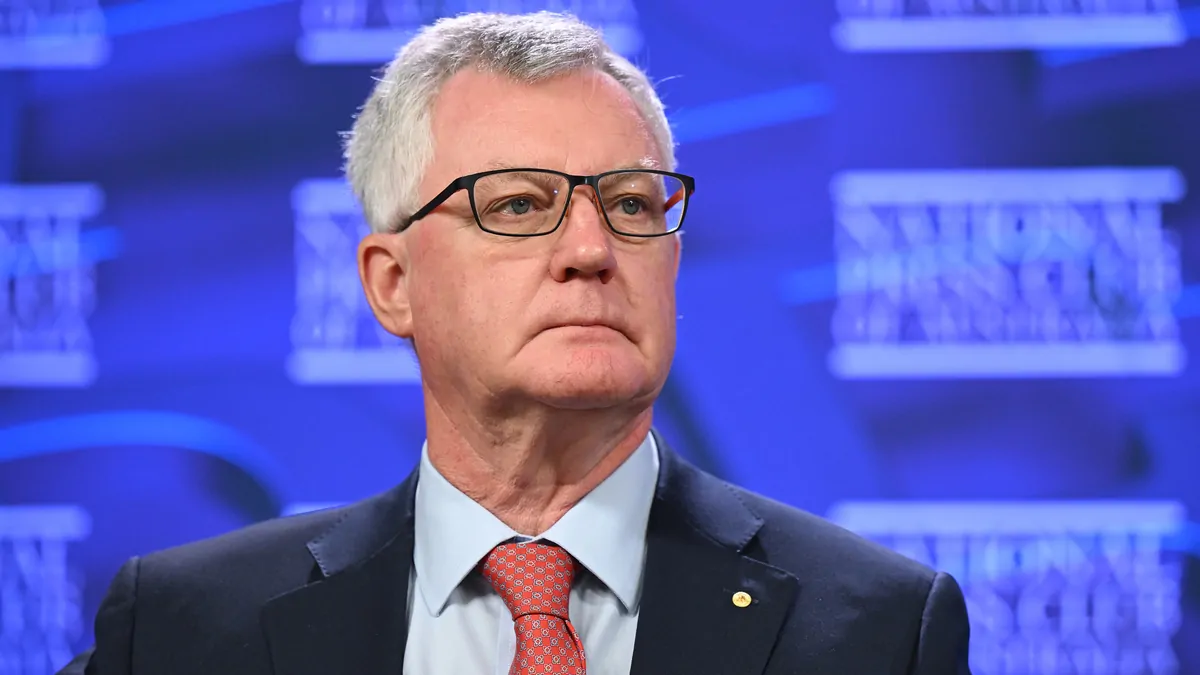
Doctor Martin Parkinson, who served as Treasury boss during the Gillard and Abbott governments, gave the startling assessment during a National Press Club address where he called for broader more efficient taxes, or a cut to expenditure.
“We need to incentivise innovation and investment to raise the speed limits to our growth rate, and we need either a larger working age population or a far more productive working age population,” he told the forum focused on skilled migration.
Sign up to The Nightly’s newsletters.
Get the first look at the digital newspaper, curated daily stories and breaking headlines delivered to your inbox.
By continuing you agree to our Terms and Privacy Policy.
“This is particularly so as we stare into the risk of stagflation, our existing poor productivity performance being at risk of being exacerbated by higher inflation, particularly higher fuel prices due to the war in the Middle East.”
“We need a broader tax base, with better targeted, more efficient taxes, or we need to cut expenditure to deliver a more sustainable fiscal position,” Dr Parkinson said, as he argued economic reform was urgent.
When later pressed on his stagflation warning, the former Treasury boss emphasised the scenario was a risk but not guaranteed to occur in Australia.
“There is a risk that we could find ourselves in that situation, and that risk goes up the longer the conflict goes on, and depending on how the conflict is resolved, then that could have really big, quite different impacts on supply and price going forward.”
Asked about the warnings, Treasurer Jim Chalmers played down the prospect of looming stagflation in Australia and reiterated his earlier assurances cost-of-living measures would not crowd out reform in next month’s budget.
“I’ve got a lot of respect for him. I’ve worked closely with him formally and informally for a really long time now. But I think that that description of our economy doesn’t accurately capture our strengths, particularly in the labour market,” Dr Chalmers said.
“Having unemployment in the low fours, with labour force participation at two thirds, wages growing above three per cent for the last 14 or 15 quarters, real wages growing for eight of the last nine. I think that more accurately captures the strengths in our economy as we face this uncertain period.”
Dr Chalmers noted there was “more than the usual” amount of global economic uncertainty, and suggested Dr Parkinson’s comments were addressing that situation.
“We understand there’s extreme pressures on growth, substantial pressures on inflation, and that’s why we’re working so hard to do the best we can to get Australia through a difficult period.
“We will get through this together if everyone does their bit and what today is about is everyone doing their bit.”
Dr Parkinson, who was joined by Settlement Services International chief executive Violet Roumeliotis at the National Press Club, called for the government to address the under-utilisation of skilled migrant workers in Australia.
About 620,000 people in Australia were not working in their trained professions, while the nation faced skills shortages in those fields, because their qualifications were not recognised, Ms Roumeliotis said.
“There is … a waiting room of wasted talent,” she said.
“Doctors, nurses, aged care workers, tradespeople, engineers. But they’re not waiting because they lack skills. They are waiting because of slow, expensive and unfair processes, just simply to recognise their credentials.”
Dr Parkinson said short-term cost-of-living measures could go hand in hand with steps towards genuine reform in the budget.
He said it was unrealistic to expect the government would do nothing to ease consumer pressures, such as its decision to halve the fuel excise, despite economists warning it would exacerbate demand and inflation.