TEHRAN – Iran has announced a $1 per barrel tax on oil passing through the Strait of Hormuz.
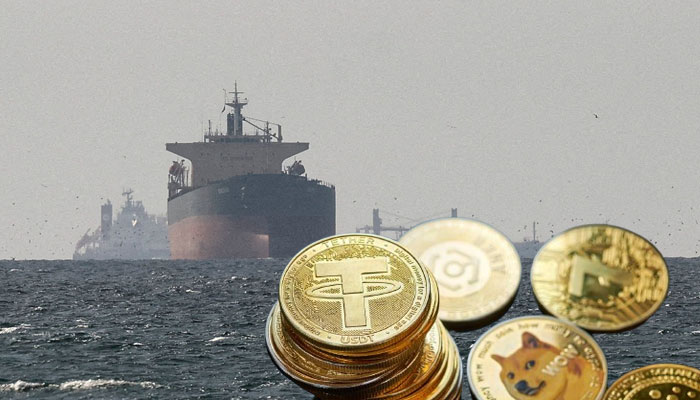
According to a British newspaper, Hamid Hosseini, spokesperson for the Iranian Petroleum Exporters Union, said that Iran will collect toll tax from oil tankers transiting the strait in cryptocurrency.
Hosseini stated that Iran intends to inspect every vessel passing through the Strait of Hormuz and charge a fee. He added that it is essential for Iran to monitor what is entering and leaving the strait to prevent the transfer of weapons during the current period.
He explained that all vessels will be required to submit cargo details via email to Iranian authorities, after which they will be informed of the applicable fee. Oil tankers will be charged $1 per barrel, while empty ships will be allowed to pass free of cost.
He further said that once the email is received and inspection is completed, ships will be required to make payment in Bitcoin within seconds.
According to a news agency, under the ceasefire arrangement, Iran and Oman will collect revenues from ships passing through the Strait of Hormuz. Iran plans to use these funds for reconstruction, while Oman’s plans remain unclear.
It is worth noting that decisions regarding passage through the Strait of Hormuz are made by Iran’s Supreme National Security Council.
Foreign media reported that vessels in the الخليج were warned on Wednesday that any attempt to pass without permission from Iranian authorities could result in an attack. Ships attempting unauthorized passage may be destroyed.
Meanwhile, oil tanker movement through the Strait of Hormuz has been restricted. Although ship traffic had resumed following a ceasefire agreement between the United States and Iran—with two vessels from Greece and Liberia passing through—Iran later announced it would halt tanker traffic in response to Israeli attacks on Lebanon.
Reports indicate that around 187 ships carrying 175 million barrels of oil and petroleum products are currently in the Gulf and may depart once conditions improve. Experts estimate that 300 to 400 vessels are waiting to exit the الخليج.
Analysts believe that in the coming days, only a limited number of ships permitted by Iran will be able to pass, compared to around 135 ships daily before the conflict.