

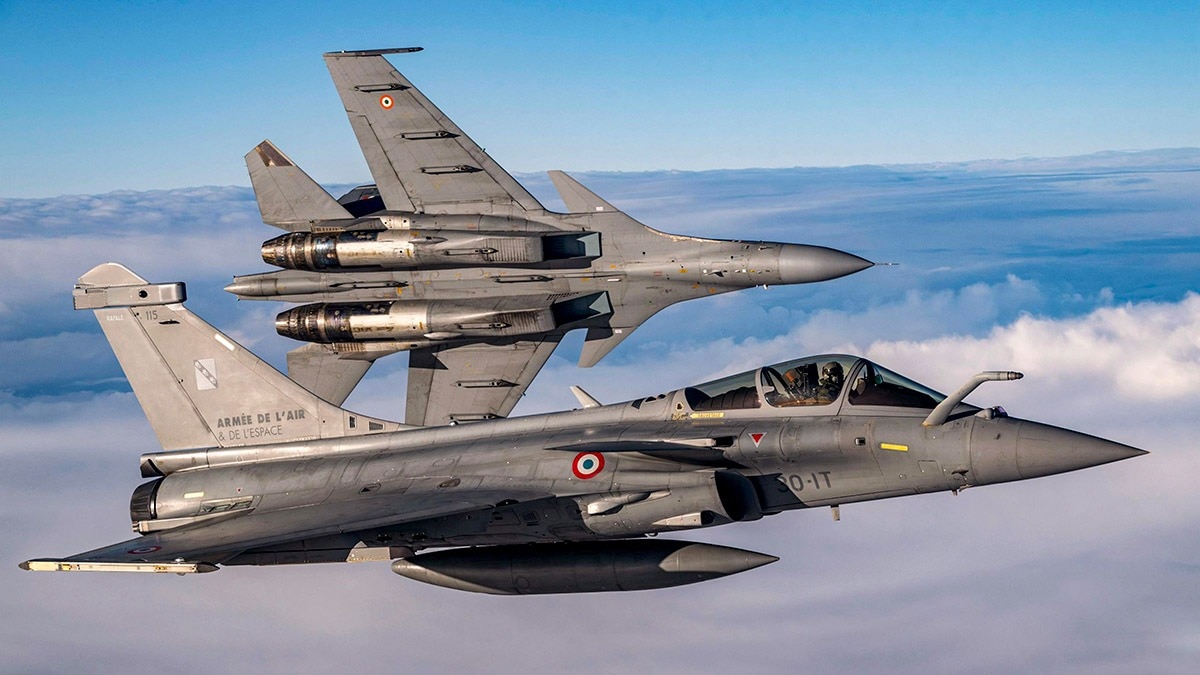
India continues to rank among the world’s top arms importers, emerging as the second-largest importer of major weapons with an 8.2 per cent share of global arms imports, according to the latest data released by the Stockholm International Peace Research Institute (SIPRI). Only war-torn Ukraine, with a 9.7 per cent share, imported more weapons globally during the latest assessment period.
Although India continues to modernise its military capabilities amid evolving regional and global security challenges, the latest data also reflect a gradual decline in defence imports and rise in domestic and indigenous production. Between 2019 and 2023, India accounted for around 9.8% of global arms imports, placing it at the top of the list. However, recent assessments show that the share has fallen to about 8.3 per cent.
Read Full Story
The SIPRI data also points to changing sourcing patterns of India’s military purchases. While Russia remains the largest supplier, accounting for about 40 per cent of India’s arms imports. Meanwhile, France has emerged as the second-largest supplier with around 29 per cent share.
France’s rise has been driven by major deals like the acquisition of Rafale fighter jets. With India and France already working on a deal to procure 114 more Rafales for the Indian Air Force, the percentage of defence procurement from France is all set to go up in the near future.
Israel is a distant third, comprising roughly 15 per cent of India’s import mix. It is worth noting that India and Israel have ramped up their defence co-operation for missiles, drones and surveillance systems.
The rise of France and Israel in India’s import mix has led to Russia losing its pre-dominant position. Previous SIPRI analyses show that Russia’s share of India’s arms imports has been steadily declining from over 70 per cent in the early 2010s, as New Delhi diversified procurement and expanded partnerships with multiple countries.
The latest data reflects India’s balancing act of modernising its armed forces and achieving self-reliance in defence production through indigenous manufacturing and technology partnerships.
Globally, the arms trade landscape has shifted significantly due to geopolitical tensions. Ukraine’s sharp rise to the top position has been driven by massive military assistance from Western countries following its ongoing conflict with Russia.
– Ends
Published By:
Aprameya Rao
Published On:
Mar 9, 2026 16:31 IST
Tune In


