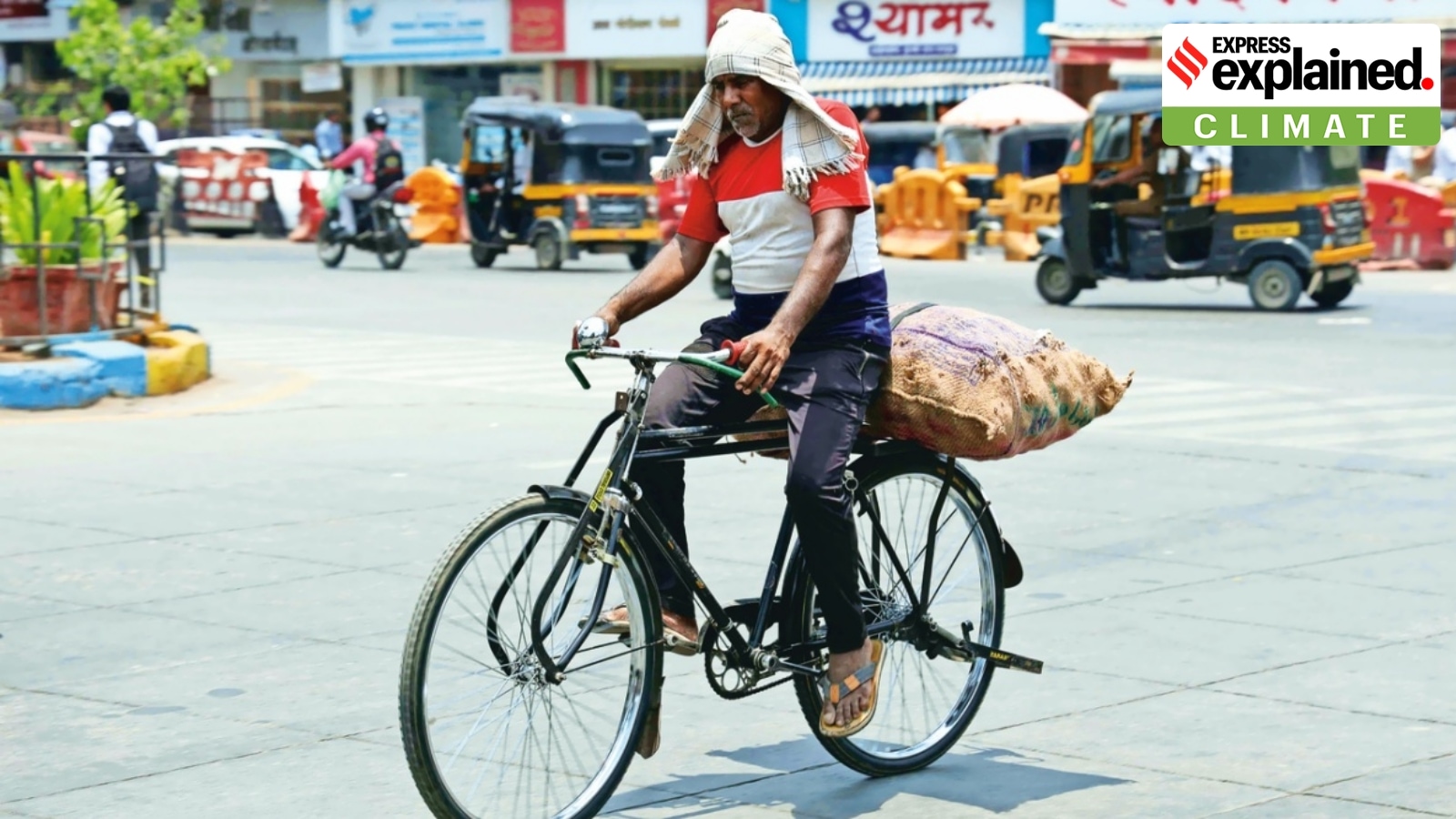
The India Meteorological Department (IMD) has forecast “above-normal” number of heatwave days over “parts of east, central, northwest India and southeast Peninsula” in the period between April and June this year. However, the maximum temperatures are likely to be “normal to below-normal” over most parts, even as the minimum temperatures are set to be “above-normal”.
In its summer forecast issued on Tuesday, the IMD said the maximum temperatures are likely to be normal to below-normal over many parts of the country, “except most parts of east and northeast India, as well as eastern parts of central India and adjoining peninsular regions”. Above-normal maximum temperatures will affect Jammu and Kashmir, Uttarakhand, Uttar Pradesh, Bihar, West Bengal, Assam, Meghalaya, Manipur, Mizoram, Nagaland, Tripura, Sikkim, Odisha and Andhra Pradesh and along the west coast regions, it said.
On the other hand, the nights may be warmer, with the minimum temperatures expected to be above-normal across the country, except Telangana and neighbouring Maharashtra and some pockets of west Madhya Pradesh and adjoining Rajasthan.
Additionally, the months of May and June will see more heatwave days, particularly in the east, many parts of the southeast, peninsular and some parts of the northwest regions. Rajasthan, Gujarat, Haryana, Punjab, Maharashtra, Uttar Pradesh, Bihar, Jharkhand, West Bengal, Odisha, Chhattisgarh, Telangana, Andhra Pradesh, coastal Tamil Nadu and northern parts of Karnataka will likely be among the areas affected, it said.
“We expect western disturbances to continue affecting various parts of the country in April. In addition, thunderstorms, above-average rainfall and the prevalence of cloudy sky conditions will keep the maximum temperatures range between normal and below this summer season,” IMD Director General Mrutyunjay Mohapatra said.
Climatologically, April and May are the peak summer months for east, northeast, south peninsular India along with some areas of central and northwest India.
In its monthly forecast for April, the IMD said the maximum temperatures would remain normal or below-normal over most parts. However, above-normal maximum temperatures are expected over many parts of “east and northeast India and some parts of northwest India and southern peninsular India”.
Story continues below this ad
During the month, above-normal minimum temperatures are likely over most parts of India, except some isolated pockets over south peninsula. Rajasthan, Gujarat, Himachal Pradesh, southern Uttar Pradesh, Bihar and Jharkhand are likely to see extremely warm nights.
March, too, saw record-breaking night temperatures. It was the second warmest March (with respect to minimum temperature) in 126 years.
The IMD said hot conditions will affect the north, east and northeast India regions, spanning across Jammu and Kashmir, Ladakh, west Rajasthan, Jharkhand, north Odisha, Chhattisgarh, Marathwada and Vidarbha in Maharashtra, north Karnataka and Andhra Pradesh during April.
“Some of these areas will also experience above-average heatwave days, with spells longer by 2-4 days from normal,” Mohapatra said.
Story continues below this ad
The climatological average of a heatwave spell ranges from 3 to 5 days. This April, heatwave spells can extend up to nine days. Heatwaves are forecast over north Tamil Nadu, coastal and interior Andhra Pradesh, Odisha and West Bengal, interior Gujarat and Kutch-Saurashtra, central Maharashtra, north Karnataka and along the southern pockets of Himachal Pradesh, Uttarakhand and the Indo-Gangetic plains.
The rainfall during April, averaged over the country as a whole, is most likely to be above normal. “Normal to above-normal rainfall is likely over most parts of the country except Northeast India. Below-normal rainfall is expected over many parts of northeastern India,” it said.
El Nino
Multiple global weather models have confirmed the emergence of El Nino conditions during late July-early August, which will coincide with India’s southwest monsoon season. June-September is India’s main monsoon season, when the country receives more than 70 per cent of its annual rainfall.
El Nino, neutral and La Nina are the three phases of the El Nino Southern Oscillation (ENSO) — a global ocean-atmosphere phenomenon that interferes with weather. In the past, El Nino years have resulted in India recording below-average rainfall during the southwest monsoon season.
Story continues below this ad
The latest sea surface temperatures along the equatorial Pacific Ocean have confirmed the transition from La Nina to the ENSO neutral phase. IMD officials said that ENSO neutral conditions are likely to continue until July.