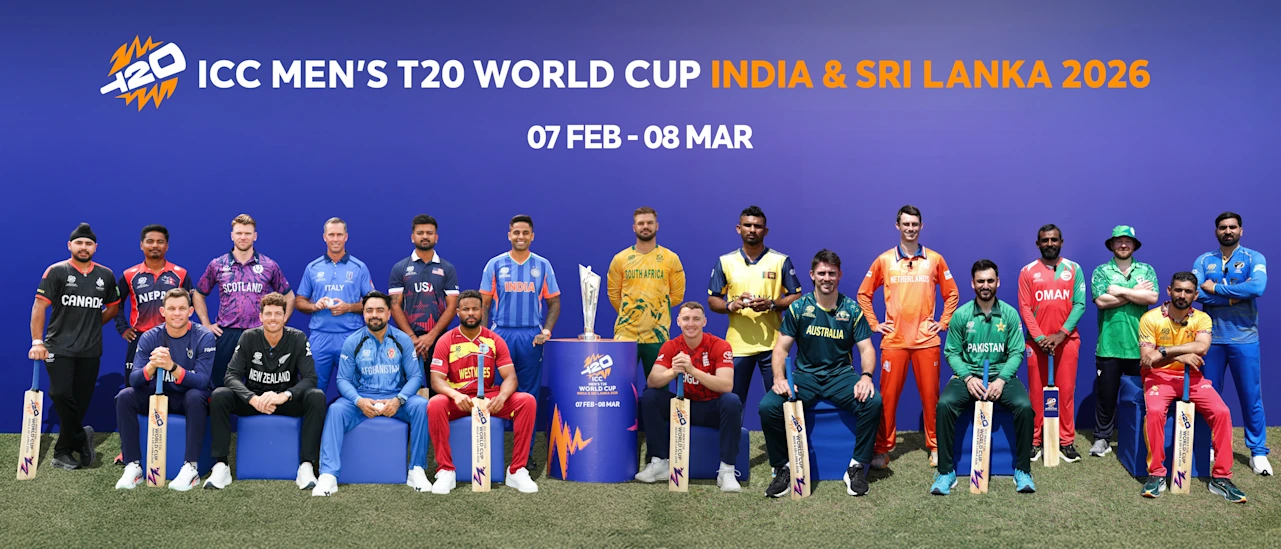
There is a certain kind of drama that only T20 cricket can deliver. A chase that looks comfortable can tighten in two overs. A batter can dominate for 45 balls, then a slower delivery changes everything. Captains have to make decisions at speed, and teams must execute under pressure with almost no time to recover from a mistake.
That is exactly why the ICC Men’s T20 World Cup has become one of the biggest fixtures in the global sporting calendar. The 2026 edition takes place across India and Sri Lanka, running from 7 February to 8 March 2026, with 20 teams competing across 55 matches. It is a tournament designed for momentum swings, tactical gambles, and unforgettable atmospheres in some of cricket’s most famous grounds.
This guide breaks down the key dates, how the competition works, where matches will be played, which groups to watch, and how to plan your viewing or travel in a way that keeps things simple.
Key dates and headline facts
If you want a quick overview before you dive into the details, these are the essentials:
- Hosts: India and Sri Lanka
- Tournament dates: 7 February to 8 March 2026
- Teams: 20
- Total matches: 55
- Super 8 begins: 21 February 2026
- Semi-finals: 4 March and 5 March 2026
- Final: 8 March 2026 (final venue to be confirmed)
Those headline dates are useful whether you are booking time off, planning a trip, or simply deciding when you want to focus your viewing time.
How the tournament format works
T20 World Cups move quickly, and the structure is a big part of the intensity. There is no long runway in the opening stage, and there is very little margin for a slow start.
Group stage
- 20 teams are split into four groups of five
- Each team plays four group matches
- The top two in each group advance to the Super 8
With only four matches, teams often talk about “winning the moments” rather than building slowly through the group. One poor game can put qualification at risk. Net run rate can also matter, so teams frequently keep pushing even when a match looks comfortable.
Super 8
- Eight teams progress into two groups of four
- The top two in each Super 8 group reach the semi-finals
- Each team plays three matches in the Super 8 phase
This stage tends to reward flexibility. Squads that can adjust their pace options, line-ups, and match-ups quickly usually thrive here.
Knockouts
- Two semi-finals lead into the final
- One off day ends the run, regardless of reputation
By the time the tournament reaches the semi-finals, every decision becomes magnified. Captains often hold overs back for specific match-ups, and teams are usually tighter on selection, batting roles, and death-overs planning.
Groups for the 2026 tournament
The group draw helps you understand the shape of the opening stage, even if you do not have the full fixture list in front of you.
Group A
India
Pakistan
United States
Netherlands
Namibia
Group B
Australia
Sri Lanka
Zimbabwe
Ireland
Oman
Group C
England
West Indies
Scotland
Italy
Nepal
Group D
South Africa
New Zealand
Afghanistan
Canada
United Arab Emirates
A few broad themes usually show up in the group stage:
- Fast starts matter. With four games, one slip changes the pressure profile immediately.
- Every over counts. Teams often keep pushing for extra runs and wickets because net run rate can shape the table.
- Upsets carry real weight. Associates and emerging sides tend to arrive better prepared each cycle, and short formats reward brave execution.
If you want variety and the widest mix of teams, the group stage is the best place to start. If you want the strongest matchups, the Super 8 and knockouts tend to concentrate quality into fewer, higher-stakes games.
Venues: where the World Cup will be played
The 2026 T20 World Cup uses eight venues, with five in India and three in Sri Lanka. Two of Sri Lanka’s venues are in Colombo, which is helpful for fans who want multiple matchdays without constant domestic travel.
India
- Narendra Modi Stadium, Ahmedabad
- Eden Gardens, Kolkata
- Arun Jaitley Stadium, New Delhi
- Wankhede Stadium, Mumbai
- M. A. Chidambaram Stadium, Chennai
Sri Lanka
- R. Premadasa Stadium, Colombo
- Sinhalese Sports Club Ground, Colombo
- Pallekele International Cricket Stadium, Kandy
This venue mix creates variety. The big city grounds bring scale and noise. Some venues are known for wicket behaviour that rewards skill and adaptation across phases. It is the kind of set-up that keeps teams thinking from match to match.
What tends to decide a T20 World Cup
Fans often focus on star names, and those players do define moments. Over a full tournament, though, the winners usually share a few repeatable strengths.
1) Powerplay clarity
The first six overs are a scoring window, and they are also a trap. Teams that strike a balance between intent and risk management often set themselves up for stronger endings. A frantic start that costs wickets can leave the middle overs exposed.
2) Middle-overs control
This is where captains earn their keep. The best teams know which bowlers they want against which batters, and they manage the pace of the innings with smart match-ups. A quiet phase can be a win if it forces a batter to take risks against the wrong option.
3) Death-overs execution
The last four overs separate teams with clear roles from teams still improvising. In successful sides, bowlers have a simple plan under pressure, and batters understand which deliveries they are targeting. That shared clarity often decides tight games.
4) Fielding standards
In a short format, fielding is a multiplier. A saved boundary, a sharp catch in the deep, or a quick run-out can be worth more than a cameo with the bat. When games are decided by small margins, clean fielding becomes a competitive advantage.
5) Adaptability across conditions
World Cups are rarely won with one template. Teams need to win chasing and defending, on different surfaces, with different match timings. Squads that can shift their approach without losing their identity often go deeper.
What makes the 2026 edition worth the attention
A World Cup always carries its own weight, yet 2026 has a few qualities that stand out.
- Two cricket-mad hosts. India and Sri Lanka both bring crowds that lift the atmosphere.
- A venue list full of character. From massive stadium scale to intimate grounds with strong local identity, each setting changes the feeling of a match.
- A format that punishes complacency. Four group games leave very little room for drift.
- A global field of 20 teams. The spread of quality keeps the early stage unpredictable, which suits T20 perfectly.
Join the ES‑Sport community and stay connected to the biggest cricket tournaments across the Middle East and South Asia.