

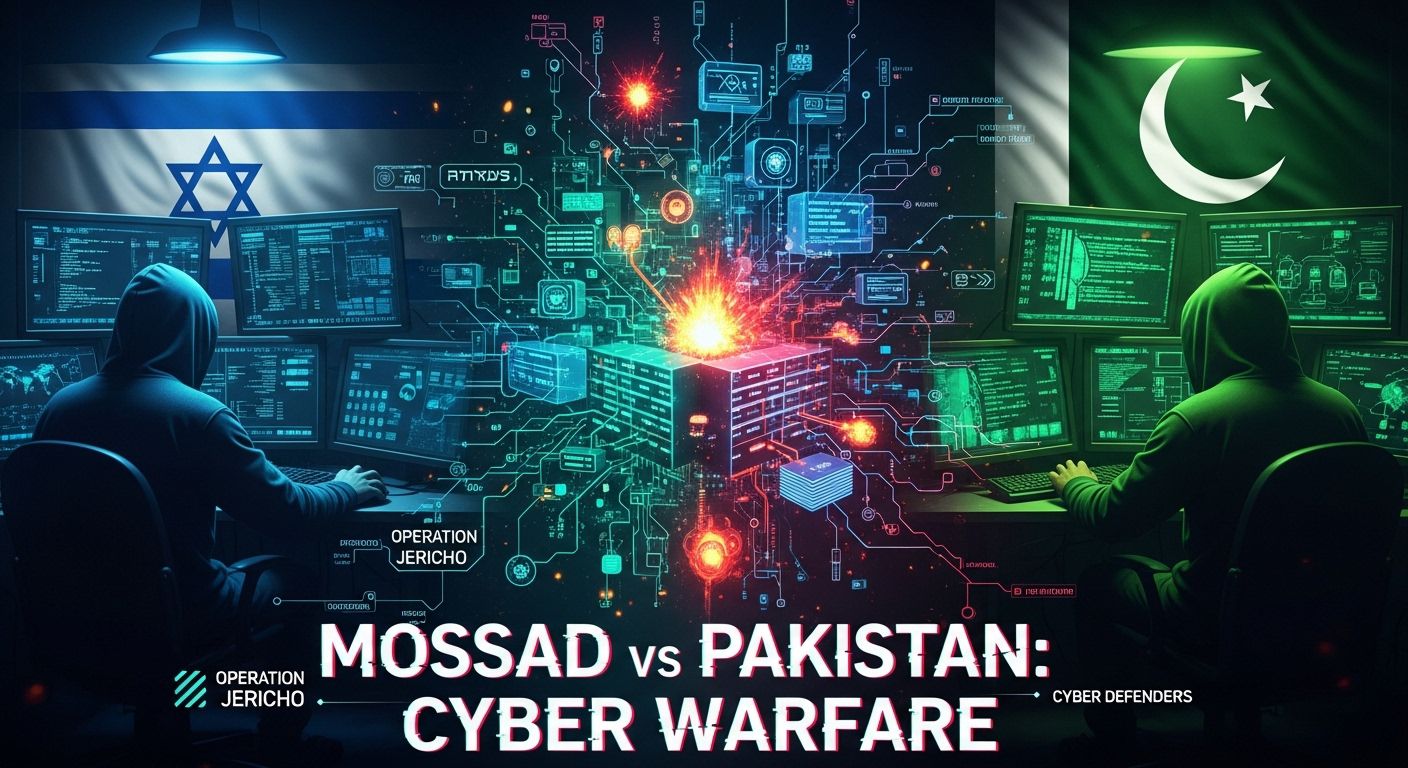
As a cybersecurity researcher, I spend my life staring at network logs, threat patterns, and systemic vulnerabilities. I am used to digital skirmishes taking place silently in the shadows of server racks. But on the night Geo TV and the Tamasha streaming app were simultaneously hijacked, the vulnerability wasn’t hidden behind a corporate firewall—it was playing out live on millions of television and smartphone screens. Watching this synchronised cyber-takeover unfold wasn’t just a moment of technical failure; it was a front-row seat to modern, weaponised information warfare.
To the average viewer, the sudden blanking of screens and the forced broadcasting of an anti-army banner was a moment of shock and confusion. To a security analyst, however, it was a textbook Psychological Operation (PsyOp). The primary objective of these massive media intrusions is rarely just digital vandalism. It is deeply calculated and profoundly malicious. The orchestrators sought to weaponise prime screen real estate to manufacture a perception of chaos, provoke the public, and intentionally incite hostility against the Pakistan Army. By attempting to fracture the relationship between the people and the military, the hackers were attacking our internal national cohesion.
But who has the resources to synchronise a takeover of both a major television broadcast and a digital streaming platform simultaneously, and exactly how is such a breach executed?
Let’s begin with the Tamasha app takeover. The digital footprint for the web takeover strongly correlated with sophisticated commercial web-ad injection capabilities. We identified patterns heavily utilizing specialized ad-bidding intrusion methods pointing toward the involvement of Israeli intelligence apparatus, Mossad. It is well known within the global cybersecurity community that state-sponsored groups operating under Mossad possess highly advanced cyber-intrusion technologies capable of exploiting civilian web networks almost at will.
However, compromising a live, televised television transmission requires a fundamentally different and more aggressive internal breach. The public witnessed an anti-army banner visually display over the active Geo TV feed. How does this actually happen?
A modern news channel does not just transmit a raw camera feed; it runs through heavily computerized broadcast playout servers and Character Generators (CGs). These are automated graphics engines responsible for rendering tickers, breaking news alerts, and lower-third banners. The hackers bypassed standard perimeter defenses—likely via a highly targeted spear-phishing attack on an employee, exploiting exposed remote-access (RDP) tools, or penetrating poorly segmented internal IT networks.
Once inside the corporate IT side, these threat actors pivoted deeply into the specialized Operations Technology (OT) network governing the live broadcast desk. Without needing to be in the country, they virtually took the helm of Geo’s live broadcast switchers and character generators. From a keyboard halfway across the world, they manually triggered an unvetted text graphic, superimposing a malicious banner directly onto the live visual output before the signal was even sent to the roof for transmission. Because they inserted it deep into the hardware’s automated workflow, local monitoring teams experienced latency; standard broadcast switchers did not instantly recognize an anomaly, which delayed the localized “kill switch” that eventually blanked out the compromised screen.
Yet, for all their highly sophisticated, multi-tiered infiltration capabilities, these elite foreign actors failed a profoundly basic human test: the cultural and linguistic nuance of the Urdu language.
Every digital adversary leaves a behavioral fingerprint. Forensically reviewing the rogue banners flashed across the screens, the grammatical syntax was structurally broken. The text utilized phrasing like “kharay hojao” intertwined awkwardly with “kharay hojaye”—a rigid, disjointed syntax reeking of automated, digital translation tools. No native Urdu speaker, and certainly no local broadcasting insider operating a domestic playout desk, would script such fundamentally flawed language errors for a national transmission. This distinct linguistic blunder shatters the myth of a localized “inside job” and provides the smoking gun: a foreign intelligence actor desperately trying—and failing—to convincingly mimic our regional dialect.
Following the event, widespread speculation claimed a “Pakistani satellite had been hacked.” As a professional, I must immediately put this cinematic myth to rest. Breaching the encrypted, multi-layered telemetry and command controls of a satellite in orbit is typically an impossible feat for standard attack vectors. In real-world attacks, the breach happens entirely on the ground. The threat actors seized the broadcast studio infrastructure on earth; the satellite simply—and faithfully—relayed the hijacked signal it was being handed by Geo’s compromised ground network.
Our media houses implement standard corporate IT security—basic firewalls and regular software updates. But defending a national broadcast network as if it were a local corporate office is like bringing a knife to a gunfight against an Advanced Persistent Threat (APT). General IT personnel are not equipped to repel military-grade foreign cyber incursions.
This event is a glaring wake-up call. In a digital era, our terrestrial cyber networks are just as critical as our geographic borders. If foreign entities can penetrate our internal playout systems to broadcast enemy propaganda into our living rooms, our perimeter defense philosophy has failed. We must mandate zero-trust network architectures to prevent lateral movement between office IT networks and live-broadcast server environments. It is time we enlist genuine cybersecurity threat-hunters capable of implementing absolute hardware air-gaps and optical edge-defense AI that will automatically sever hacked broadcast lines in fractions of a second.
The actors who hijacked our screens succeeded in exposing a technical vulnerability, but their ignorance of our language ultimately exposed them. We cannot, however, rely on our adversary’s bad grammar to defend us next time. Our digital armor must become as resilient as the national resolve they unsuccessfully sought to break.
