Germany has accused Russia of a cyber-attack on air traffic control and attempted electoral interference, and summoned the Russian ambassador.
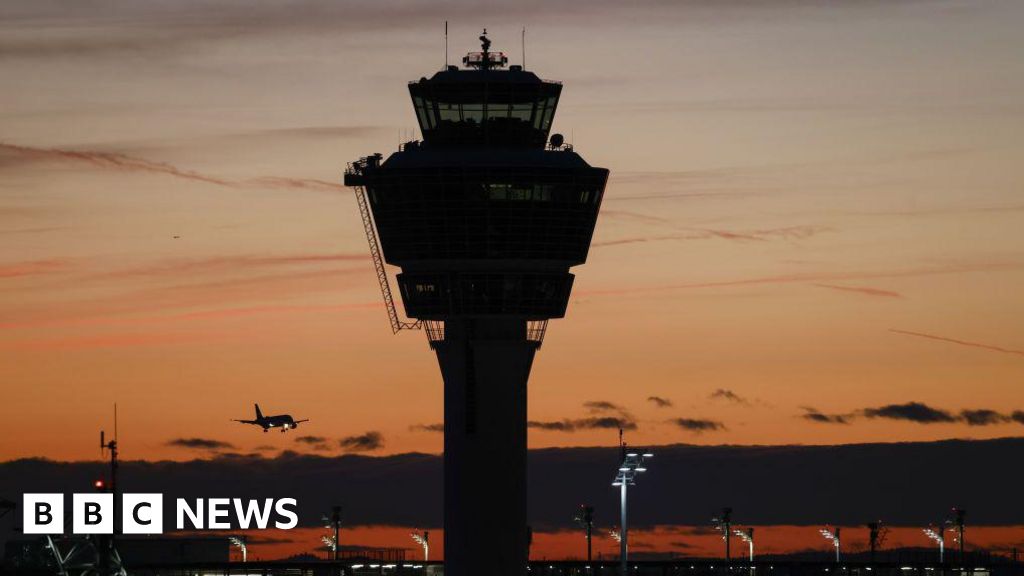
A foreign ministry spokesman said Russian military intelligence was behind a “cyber-attack against German air traffic control in August 2024”.
The spokesman also accused Russia of seeking to influence and destabilise the country’s federal election in February this year.
The latest accusations come amid heightened concern in Europe over suspected Russian cyber-attacks since Moscow launched its full-scale invasion of Ukraine in 2022.
There was no immediate response from Russia.
The foreign ministry added that Germany – in close co-ordination with its European partners – would respond with counter-measures to make Russia “pay a price for its hybrid actions”.
In the last year, both the UK and Romania have accused Russia of meddling in their domestic affairs, including targeting organisations that deliver foreign assistance to Ukraine and presidential elections.
The spokesman said the August 2024 cyber-attack on Germany could be attributed to the Fancy Bear Russian hacker group.
“Our intelligence findings prove that the Russian military intelligence service GRU bears responsibility for this attack,” he added.
The ministry spokesman added it was now certain that Moscow had attempted to “influence and destabilise both the last federal election and the ongoing internal affairs of the Federal Republic of Germany” through a disinformation campaign called Storm 1516.
The campaign, it said, had focused in part on lead Green Party candidate Robert Habeck and lead CDU candidate Friedrich Merz, who is now chancellor.
The German government said security agencies had identified fake videos alleging ballot manipulation as part of a Russian disinformation effort just days before the election.
Its air navigation service provider confirmed that its office communication had been hacked in August 2024. It said flights had not been affected.
Fancy Bear is said to have previously leaked World Anti-Doping Agency data, and played a key role in the 2016 cyber-attack on the US Democratic National Committee, according to security experts.
Russia’s full-scale invasion of Ukraine has led to a major deterioration in relations between Berlin and Moscow.
Germany has emerged as one of Ukraine’s most vocal supporters, providing military, financial and diplomatic support for Kyiv.
Chancellor Friedrich Merz has called strongly for frozen Russian assets to be used to help protect Ukraine.
He has also repeatedly accused Russia of cyber warfare against his country.
But relations have been strained for years, even before the Russian invasion.
In 2019, an ethnic Chechen was killed by a Russian national, Vadim Krasikov, in broad daylight in Berlin’s Tiergarten Park. Germany later expelled two Russian diplomats, as prosecutors suspected that he was acting on the orders of Russia’s state security agency.
While it is yet to respond to the latest allegations, Moscow has previously denied European allegations of a Russian sabotage or hybrid campaign.