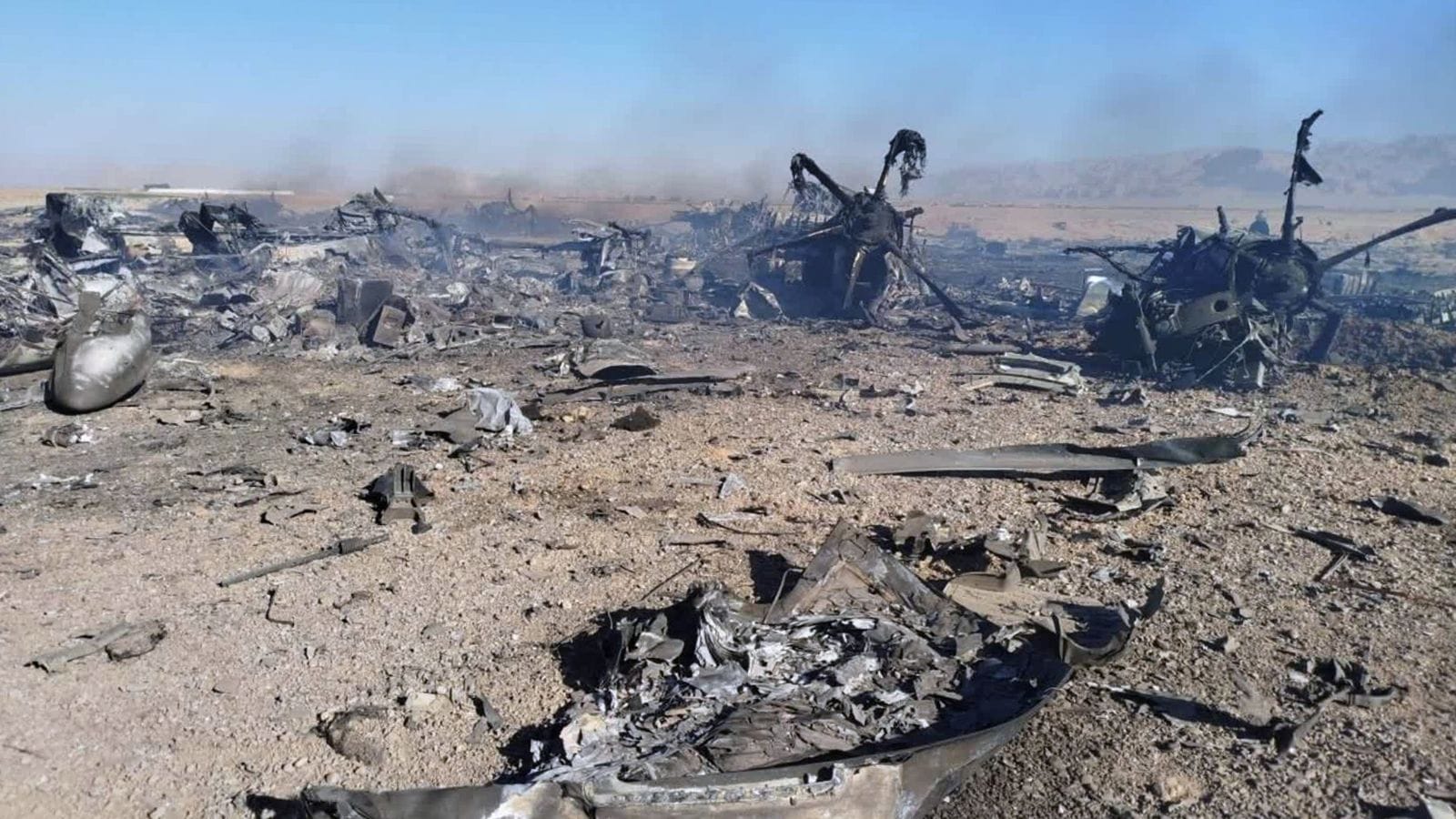
The winner always sets the terms for peace. The world, especially US President Donald Trump, is grappling with the 10-point Iran proposal for a temporary ceasefire. So, who actually won the current war in the Middle East? During crisis times, optics are everything. The clearest and most tempting answer is the Islamic Republic, at least in the short term. Despite the removal of several political and military leaders, including Supreme Leader Ayatollah Ali Khamenei, the regime has endured.
There are no visible signs of widespread revolt that could threaten or even overthrow the regime. The regime still holds the power to promote and persuade its citizens of a “victory” narrative — something other countries involved in the conflict will never be able to do. Most importantly, both Iran and its supporters have been measuring Iran’s “success” mainly by its ability to fire missiles and drones at its enemies and its unflinching control over the Strait of Hormuz. Other players, especially the US and Israel, will not be able to craft a similar story for their citizens. Therefore, Iran’s “victory” will likely be the most compelling and widely accepted story in the region and beyond.
Although there are no official versions of the 10-point Iranian plan that could result in a two-week ceasefire, the available details are unconvincing, much less “reasonable” as many claim. There are five major problems with the plan.
One, as the interlocutors will soon realise when they meet in Pakistan this week, several Iranian demands will need to be refined, if not rejected. It is unrealistic to expect Trump to accept Iran’s “right to enrich” uranium for its nuclear programmes. There will be more comprehensive and intrusive supervision and control than the Joint Comprehensive Plan of Action envisioned (JCPOA), which President Trump withdrew from in May 2018. More importantly, any agreement on the nuclear issue must secure regional acceptance, especially of the Gulf Arab states, something the JCPOA never achieved.
Two, accepting Iran’s demand for “control” of the Strait of Hormuz is unrealistic. The Strait is not Iran’s territorial waters but an international waterway heavily used by many Gulf and non-Gulf countries. It is a vital route for global trade and commerce. Even tacitly endorsing Iranian dominance over Hormuz would be suicidal for the oil-rich Gulf Arab countries, and now Iran is demanding complete control. The cure is worse than the disease. Any effort towards a Persianised Gulf is political suicide for the Arab monarchs, whose legitimacy rests on a cradle-to-grave welfare state model based on a rentier economy.
Three, four out of 10 demands in the plan focus on removing US-led sanctions. This is significant, highlighting the harsh impact of these sanctions on Iranians. It serves as a way to appease the restless Iranian public, especially reformist factions, which have been critical of but unable to challenge hardliner policies. Even before the current conflict, President Masoud Pezeshkian had policy disagreements with Ali Khamenei, particularly on foreign policy. While removing sanctions has long been a demand, this time, it also seems aimed at calming domestic unrest. Getting there will require substantial concessions from the regime, which will only expose its weaknesses.
Four, for a long time, the international community has recognised several Iranian proxies operating mainly in Iraq, Lebanon, and Yemen. As a condition for the ceasefire, Iran demands that Israel stop attacking Hezbollah. Its desire to protect its proxy is natural and understandable. However, in recent weeks, the Lebanese government has become more confident and has been calling for the disarmament of the militant group. Hezbollah, pursuing an independent foreign policy in Lebanon aligned exclusively with Tehran, has few supporters. Recently, the Lebanese government declared the Iranian ambassador persona non grata, which Tehran strongly rejected. Iran, determined to maintain its sovereignty, is not willing to grant the same rights to Lebanon.
Five, this Iranian “victory” comes with a cost that will be more expensive in the long run. Will the decapitation of leaders and devastation induce regime change in Iran, the main goal of the US and Israel when they launched the attack? As Middle Eastern history has shown before, repression by regimes is often — not always — more brutal than foreign invasion. These regimes conveniently ignore humanitarian or international laws when it comes to protecting their survival, and the Islamic Republic, especially the Iranian Revolutionary Guard Corps (IRGC), will not be any different. In recent years, Iran has experienced multiple protests over political, economic, and social issues, only to be crushed through repression. Additionally, uprisings against a single autocratic ruler are generally easier than overthrowing a deeply entrenched regime with several military commanders at the local level. As it stands, unless a violent civil war breaks out, regime change in Iran remains highly unlikely. Hence, the Iran plan has the elements of a “victory” story that will only escalate state violence.
What are the realistic prospects for Iran’s proposed peace plan? Several well-informed commentators quickly called it “reasonable”. Yes, it seems “reasonable” from the regime’s perspective, but not from that of other parties involved. Iran aims to present itself as the “victor” and to impose its terms. Accepting these terms, especially the removal of all “US combat forces”, would turn the Persian Gulf into an Iranian lake. This could only happen if energy-rich Gulf Arab states are ready to accept Iranian suzerainty, pay annual tribute, make a yearly pilgrimage to Tehran to reaffirm their allegiance, and become Persian vassals. It’s difficult for Tehran to admit that its belligerent policies and postures are the main reasons for the American military presence in the region. If the Arab states want to remain sovereign entities — not as geographically separated provinces of Iran — accepting Iranian terms is a suicidal option. Yes, the US failed to be a security provider; the Arab states will need to seek and work towards viable alternatives. In short, even if a ceasefire occurs — including the Hezbollah front — it will likely only be a temporary lull before a much larger military campaign.
The writer teaches contemporary Middle East at Jawaharlal Nehru University