Ahead of Centre’s March 31 deadline to eliminate Left Wing Extremism, once described as the country’s gravest internal security threat, Assistant Sub-Inspector of Police Siva Shankar Nayak reflects on the past decade of his life – marked by encounters with Naxals.
Deployed in several anti-Naxal operations in Odisha, Mr. Nayak, now posted at a police station in Malkangiri district, has earned six police medals for gallantry, including the President’s Police Medal.
But the accolades didn’t come without a cost, he said. “My wife and daughter have spent countless sleepless nights. Every time I returned home at odd hours after an encounter or a narrow escape during anti-Naxal operations, I could see how relieved they were,” Mr. Nayak recalled.
Subrat Majhi (name changed) still plans anti-Naxal operations long after his years in active combat. In over two decades with Odisha Police, he too has earned six gallantry medals. Anonymity, he said, sharpened his focus in the fight against the Red Rebels.
Inside Maoists’ fortress
After joining as constables, they were among the first batches to have trained with the Greyhounds, India’s first dedicated anti-Naxal force carved out of the police force in undivided Andhra Pradesh. They later became part of Odisha’s own Special Operations Group.
Malkangiri, bordering Chhattisgarh and Andhra Pradesh and not far from Telangana, remained a stronghold of the outlawed Communist Party of India (Maoist) for years. Swabhiman Anchal, formerly a “cut-off area” surrounded by water on three sides and mountains and forests on the fourth, was their fortress.
Senior officers scarcely entered the district in uniform. They often came in plain clothes and switched two or three hired vehicles to evade the Maoists’ formidable ground intelligence network.
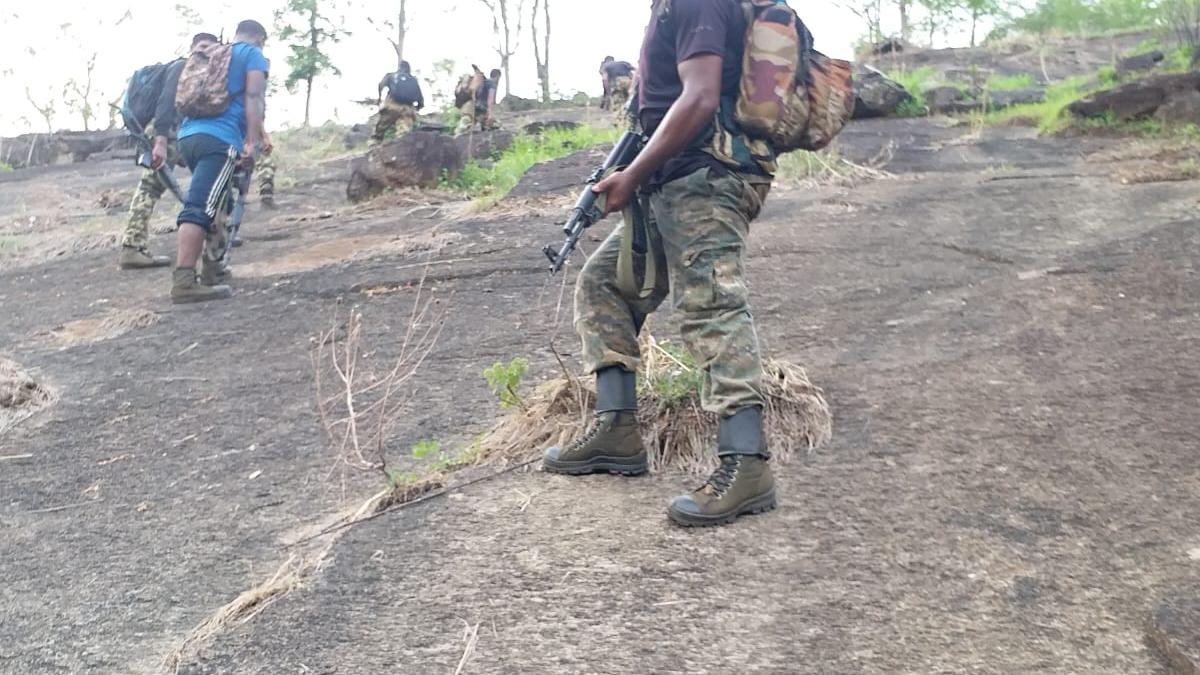
“Between 2005 and 2015, no one in the force felt safe,” Mr. Majhi said. “We would walk 70 km in teams of three groups of about 24 personnel, including trekking hills over four days. Death could have struck at any moment in those ambushes. The extremists were highly trained,” said the officer.
The standing instruction, he added, was simple: trust no one, not even villagers or bystanders. “Teams skirted villages, maintained distance, and avoided even dogs. A single bark could trigger a chain reaction, alerting Maoist ‘sympathisers’ and jeopardising the mission. The rebels then enjoyed deep village support while militia were everywhere. Communication with families was almost impossible without mobile phone networks. Occasionally, a satellite phone message, brief and coded, would reassure loved ones they were alive,” Mr. Majhi said.
Close shave
Mr. Nayak has escaped death more than once. In 2008, a landmine blast ripped apart a police vehicle, killing 17 personnel ahead of them. “We were on motorcycles. Immediately after the explosion, Maoist cadres opened fire from vantage points they had already secured. It was like a battlefield. We retaliated and pushed them back,” he recollected. Rumours spread swiftly that he was among the dead. His family rushed to the site, fearing the worst.
Every anti-Naxal operation begins with precise role briefings, the officers tell The Hindu. On return, teams undergo debriefings to assess performance and “acts of individual courage under fire”. Names are then accordingly recommended for gallantry medals.
Once, nearly 800 Naxal cadres were believed to be active across almost half of Odisha’s 30 districts. Today, their numbers have dwindled to fewer than 40, with most of their leaders eliminated, according to officials. Odisha also served as a crucial transit corridor for cadres of the CPI (Maoist), who, under sustained pressure in Andhra Pradesh, used the route to move towards Chhattisgarh. To counter the insurgency, alongside Odisha Police, Central forces such as the Central Reserve Police Force and the Border Security Force were deployed in affected regions.
While there were instances of alleged excesses by security personnel during patrolling and area domination exercises in Maoist-affected areas, extremist groups, officials claim, often amplified those instances or made allegations against security forces to “deepen mistrust between villagers and the police”.
Built trust with locals
Both Mr. Nayak and Mr. Majhi noted that, alongside sustained security operations against the insurgents, efforts were increasingly focused on building trust with local communities. This strategic shift in the latter part of the decade played a key role in weakening Maoist influence and restoring confidence in the administration, they added.
Published – February 25, 2026 01:13 am IST