Local News
A new report unveiled Thursday shows that the city’s tree coverage expanded by more than 150 acres between 2019 and 2024.
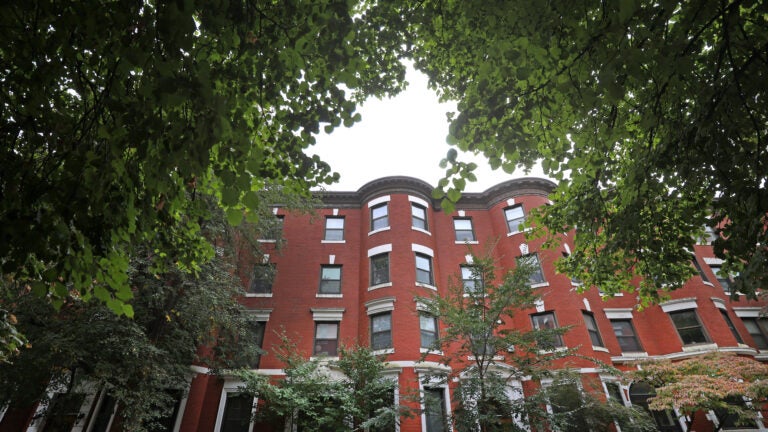
Expanding Boston’s tree canopy is an essential part of the city’s broader climate goals. David L Ryan/The Boston Globe
Boston’s tree canopy has greatly expanded in recent years, according to a newly released citywide analysis.
Mayor Michelle Wu and the Parks and Recreation Department unveiled the report Thursday, which shows that the city’s tree coverage expanded by 151 acres between 2019 and 2024. Excluding Logan International Airport, that’s an increase of 0.5 percent, bringing the citywide total to 28.5 percent covered, according to the report.
The change in Boston’s tree canopy was driven by growth on public parks and rights-of-way. It marks a significant shift from the previous five-year period, where there was no net change in tree coverage, the city said in a press release.
“Growing our tree canopy not only improves climate resiliency — it expands access to green spaces that enhance the quality of life of all our residents,” Wu said in the release. “By shading our streets, reducing heat and energy stresses, investing in cleaner, cooler air, we protect our city for generations to come.”
The University of Vermont’s Spatial Analysis Lab completed the assessment, basing its data analysis on imagery captured during airplane flyovers of Boston. In 2022, the city established the Urban Forest Plan, which added to tree planting and inspection efforts.
East Boston, Jamaica Plain, South Boston, and West Roxbury had the largest net gains of tree canopy, while Hyde Park and Mattapan had net losses, the report states. The city has pledged to “prioritize tree plantings in neighborhoods most susceptible to environmental risk,” according to the release.
Over time, Boston will benefit from its wide variety of trees in terms of age and height; this diversity makes for a more resilient canopy, the city said.
The canopy assessment is a keystone part of the city’s wider climate goals, such as drastically reducing greenhouse gas emissions in the next five years via the 2030 Climate Action Plan. Beyond tree coverage, Boston officials are scrutinizing building emissions, public transportation, and potential regulations for utility companies.
Sign up for the Today newsletter
Get everything you need to know to start your day, delivered right to your inbox every morning.