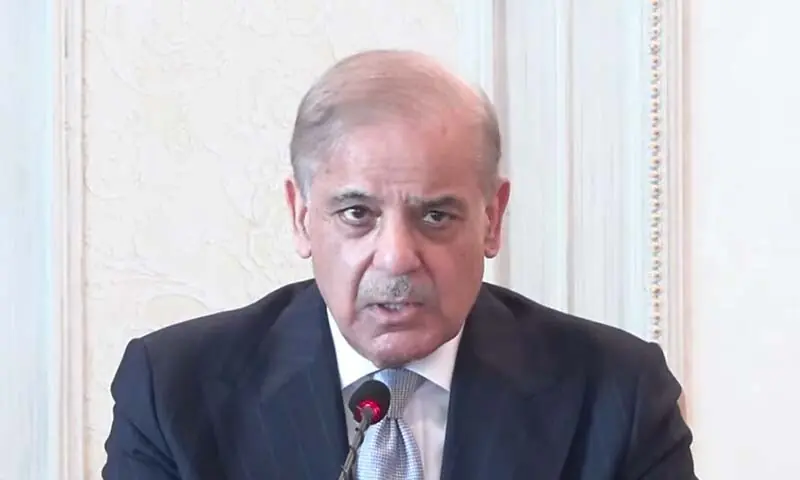
Following talks between the United States and Iran in Islamabad over the weekend, Prime Minister Shehbaz Sharif on Monday said that “full efforts” were ongoing to resolve the conflict.
“Today, the ceasefire still stands. As I am talking to you, matters that are not resolved, full efforts are underway to resolve them,” he said in a televised address to the federal cabinet.
In his first remarks on the matter after the negotiations concluded, the premier hailed talks between the two countries in Islamabad as a “historic moment”.
He said the Islamabad Talks gave Pakistan a chance to “turn looming clouds of war into lasting peace”.
PM Shehbaz added that “if you look through history — take the Oslo Agreement, the Geneva Accord, the Good Friday Agreement … it took months and sometimes years to end hostilities and establish peace”.
Coming to the Islamabad Talks, he said that the Iranian and American delegations had negotiated “continuously for 21 hours”.
The dialogue, he said, was not held indirectly. “It was the first time that the two delegations sat face-to-face. I am a witness to it.”
He said Pakistan’s leadership had worked hard day and night to bring the two sides to the table. “And it is a result of Pakistan’s sincere efforts that the ceasefire still holds,” he said, adding that full efforts were being made to resolve unresolved matters.
“That is why I believe that the Islamabad peace talks were a historic event,” he said, further mentioning that he had received a call from his Japanese counterpart on Monday. “She congratulated me on Pakistan playing an important role” in efforts for de-escalation between the US and Iran, the PM said.
Moreover, he said he had also received phone calls from European leaders, who commended Pakistan’s efforts.
PM Shehbaz particularly lauded Deputy Prime Minister and Foreign Minister Ishaq Dar and Chief of Defence Forces (CDF) and Chief of Army Staff Field Marshal Asim Munir, as well as their teams, for their contributions to de-escalation.
He said it was because of the CDF and his team’s “wisdom” that Pakistan was able to broker a two-week ceasefire between the US and Iran.
The premier said he was responsible for ensuring that “national secrets” were not revealed. “So, those secrets are buried in my heart. But, I can tell you this much that … the Field Marshal and his team spent sleepless nights. And there were moments when matters were close to falling apart, but then they were resolved,” he detailed.
PM Shehbaz said that after the talks, the US and Iranian delegations had issued separate statements, but they had commonalities.
Both sides expressed gratitude to Pakistan for hosting the talks and lauded Pakistan’s political and military leadership “for playing a brotherly role, he said.
The premier said God had given Pakistan the opportunity to mediate between the two sides that “were not ready even to see each other for 47 years”.
He said he was thankful to the US and Iranian presidents, who accepted Pakistan’s invitation for the talks and agreed on a two-week ceasefire. He termed the talks a “moment of pride for 240 million Pakistanis”.
According to a statement issued by the PM’s Office (PMO), the federal cabinet also adopted a resolution, which stated: “The federal cabinet is thankful to God for giving Pakistan the opportunity to play a central role for peace in the region and the world.”
The statement said the resolution paid tribute to PM Shehbaz, DPM Dar and CDF Munir for their efforts for bring the two warring sides to the table and “ending a nearly half-century-long stalemate”.
“Undoubtedly, this role of Pakistan will always be remembered in the history of the world. We pray that these efforts of the Pakistani leadership turn out to be successful and lead to peace in the world,” the statement quoted the resolution as stating.
The road to talks
PM Shehbaz’s briefing came a day after the inaugural round of direct Iran-US dialogue, mediated by Pakistan, concluded after nearly 21 hours of talks without a breakthrough. However, officials indicated that the process had not collapsed and could continue.
The talks, the highest-level face-to-face engagement between Washington and Tehran since the 1979 Iranian Revolution, were held in multiple formats, including expert-level discussions, under the facilitation of Dar and CDF Munir.
They were held more than a month after the US and Israel launched attacks on Iran on February 28, setting off a conflict that gave rise to a global fuel crisis.
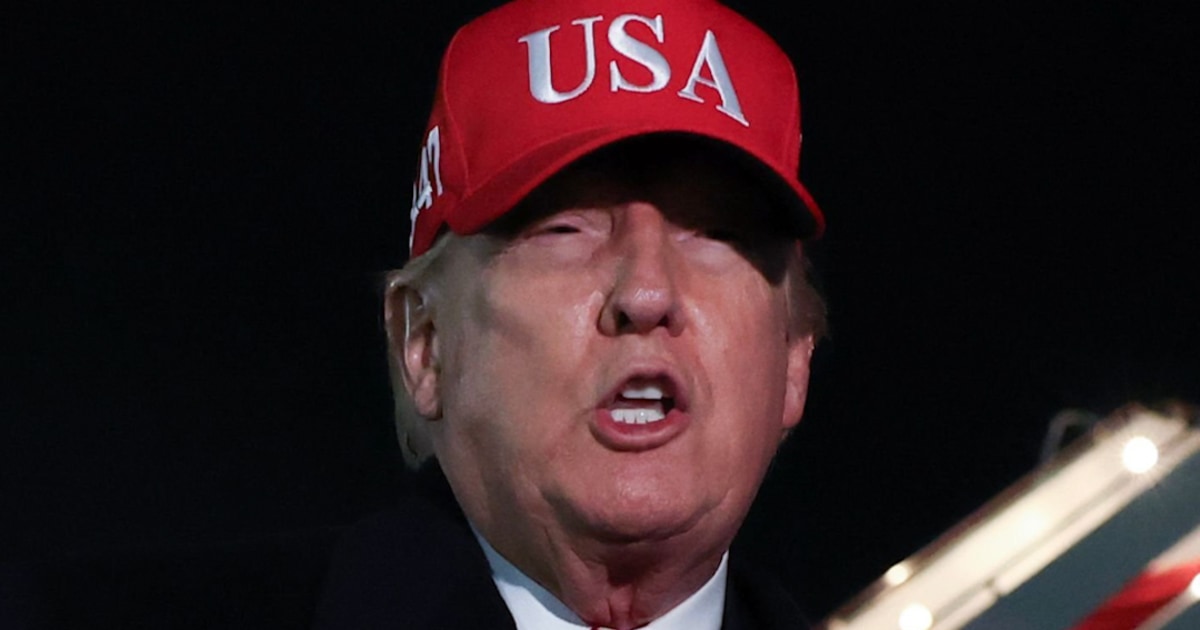
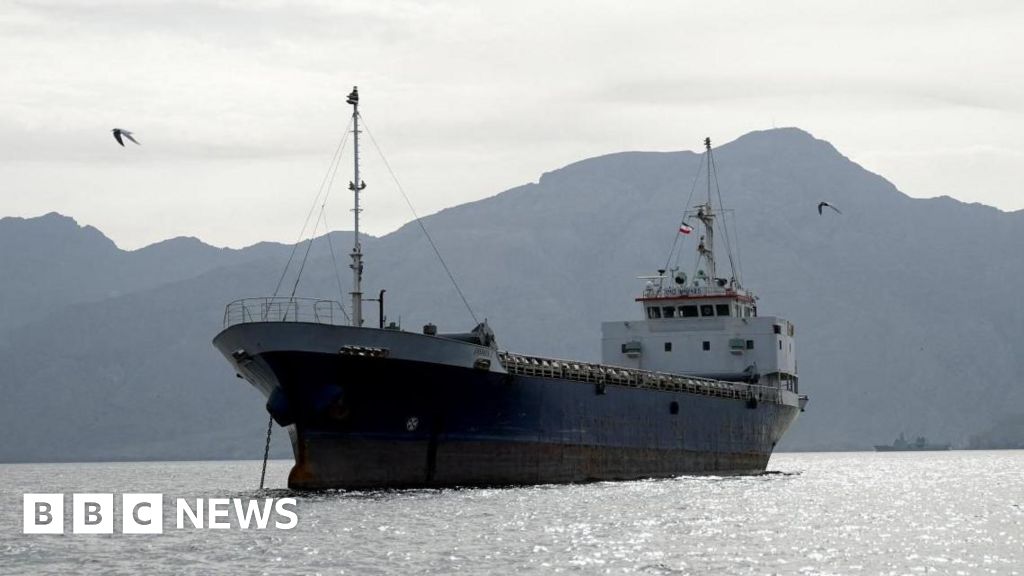
The threats of the war prolonging and intensifying had escalated on April 5, when Trump, after making an expletive-laden post, issued an unusually precise deadline for Iran to agree to a ceasefire deal with Washington and allow traffic through the Strait of Hormuz — a key maritime corridor through which 20pc of the world’s oil and liquefied natural gas flowed before the Middle East war began.
“Tuesday (April 7), 8:00 P.M. Eastern Time,” he wrote, coupled with the warning of bombing Iran’s power plants and bridges on that day, increasing pressure to prevent a worsening situation.
On the day of his deadline, Trump doubled down on his threats against Iran, alarming the world.
“A whole civilisation will die tonight, never to be brought back,” he wrote, prompting backlash from even within his country.
With hours left for the deadline to end, PM Shehbaz publicly requested Trump to “extend the deadline for two weeks”, noting that diplomatic efforts for a peaceful settlement of the ongoing war were “progressing steadily, strongly and powerfully”.
He also requested Iran to open the Strait of Hormuz for a corresponding period of two weeks.
Shortly thereafter, Trump took to his Truth Social platform to say that he had spoken with PM Shehbaz and CDF Munir.
“Subject to the Islamic Republic of Iran agreeing to the COMPLETE, IMMEDIATE, and SAFE OPENING of the Strait of Hormuz, I agree to suspend the bombing and attack of Iran for a period of two weeks,” Trump announced.
Subsequently, Iran’s FM Araghchi shared a statement on behalf of Iran’s Supreme National Security Council declaring that if attacks against the country were halted, it would cease its defensive operations.
Eventually, talks between the two sides were held in Islamabad. While no breakthrough could be achieved, it was, however, significant that neither side walked away, and officials indicated that the process could continue.