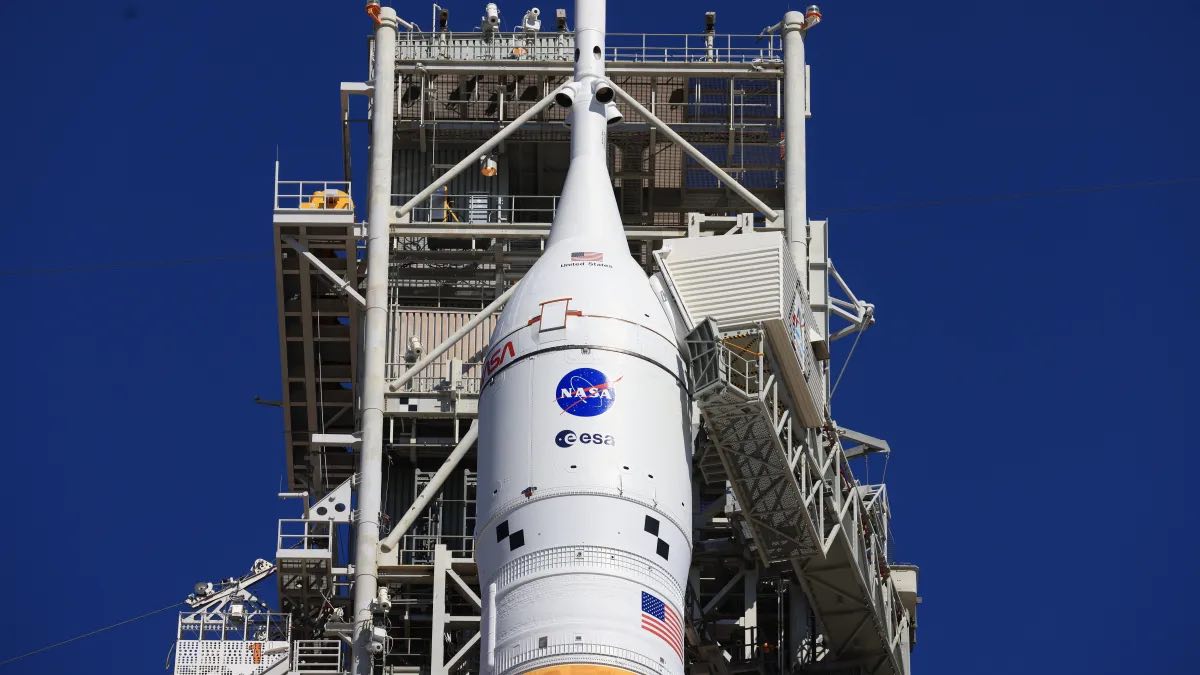
Image: NASA / Ben Smegelsky
South Australia is set to take a giant leap into the future of space exploration, with an Adelaide-based company playing a crucial role in one of the world’s most anticipated missions.
Local aerospace firm Southern Launch will support NASA’s upcoming Artemis II mission, which will see astronauts travel around the Moon for the first time in more than five decades.
The mission marks a major milestone in the Artemis program, with Artemis II set to be the first crewed flight of the Orion spacecraft and the first time humans have journeyed around the Moon since 1972. It’s a critical step toward future lunar landings and eventually, missions to Mars.
From its Adelaide base, Southern Launch will contribute by passively tracking the Orion spacecraft, helping assess global tracking capabilities and collect high-quality data to support future deep space missions. The work will be carried out using infrastructure at the Koonibba Test Range near Ceduna.
“It’s exciting that South Australians are playing a role in this global endeavour,” shared Minister for Defence and Space Industries Chris Picton. “For the first time in more than 50 years, there’s a mission to the moon and the team at Southern Launch will be tracking its progress.
“This highlights the quality of the technology and the workforce based here in SA and the opportunities available to our state to play a role in future space programs.”
Southern Launch’s involvement builds on earlier success, including a 2022 initiative during Artemis I where a group of volunteers successfully tracked the Orion spacecraft from the ground.
“Artemis II represents a critical step in returning humans to the Moon and establishing a sustained presence beyond low Earth orbit,” added CEO Lloyd Damp. “Our participation reflects the growing role Australia can play in supporting deep space missions and the evolution of ground infrastructure required for cislunar operations.”
Beyond the immediate mission, the partnership highlights the strategic value of southern hemisphere infrastructure in global space operations, particularly as agencies look to expand exploration beyond Earth’s orbit.
With eyes once again turning to the Moon, South Australia is proving it has a place in the journey, right from the ground up.