Nigeria provided US with intelligence for strikes on militants, foreign minister says
Nigeria provided the US with intelligence on jihadists before the strikes that took place in the country on Christmas Day, its foreign ministry said on Friday.
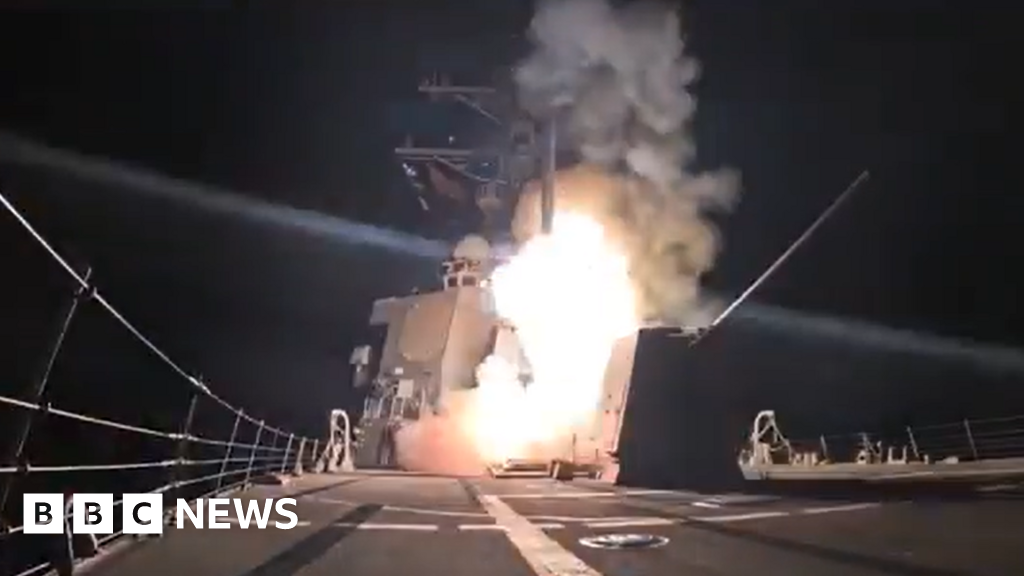
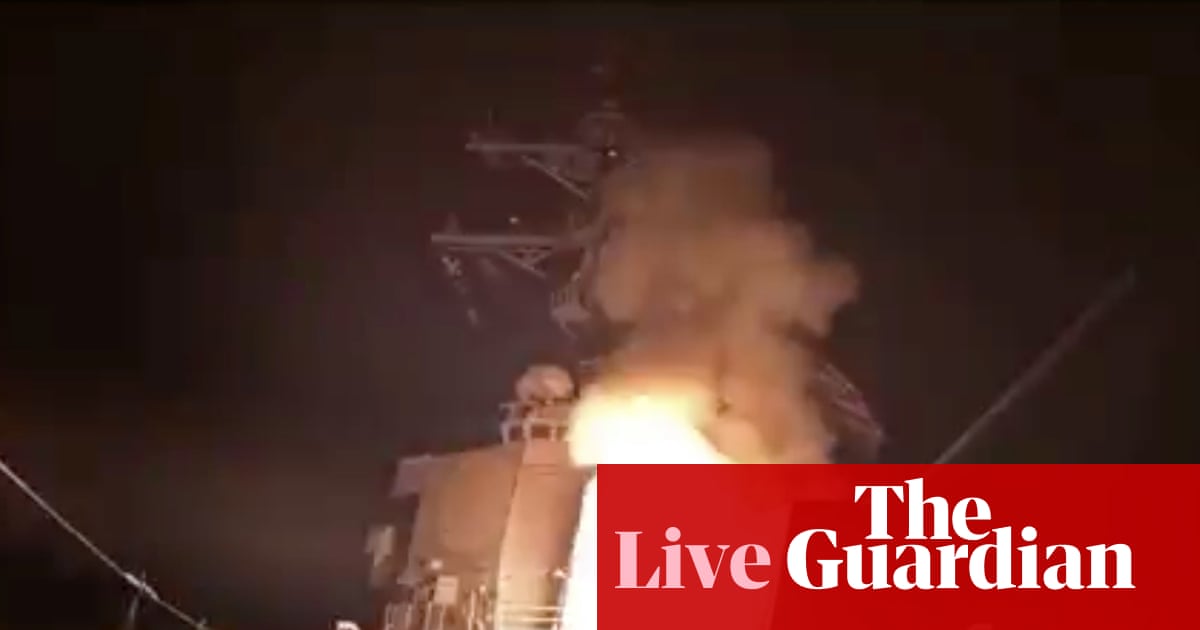
On Thursday, the US president, Donald Trump, said the US military had carried out strikes against Islamic State militants in north-west Nigeria, after spending weeks decrying the group for targeting Christians.
In a post on his Truth Social platform, the president said: “Tonight, at my direction as Commander in Chief, the United States launched a powerful and deadly strike against ISIS Terrorist Scum in Northwest Nigeria, who have been targeting and viciously killing, primarily, innocent Christians, at levels not seen for many years, and even Centuries!
“I have previously warned these Terrorists that if they did not stop the slaughtering of Christians, there would be hell to pay, and tonight, there was. The Department of War executed numerous perfect strikes, as only the United States is capable of doing.”
Now, Nigerian foreign minister, Yusuf Tuggar, has told broadcaster ChannelsTV that he was on the phone with the US secretary of state, Marco Rubio, and that Nigeria “provided” the intelligence.
“We spoke twice. We spoke for 19 minutes before the strike and then we spoke again for another five minutes before it went on,” Tuggar said.
He added that they spoke “extensively” and that President Bola Tinubu gave “the go-ahead” to launch the strikes.
Nigeria’s foreign minister, Yusuf Tuggar. Photograph: Light Oriye Tamunotonye/AFP/Getty Images
Tuggar did not rule out further strikes, describing them as an “ongoing process” that would also involve other countries.
In an interview with the BBC, Tuggar insisted the strikes had “nothing to do with a particular religion”. He said the operation did not have “anything to do with Christmas, it could be any other day – it is to do with attacking terrorists who have been killing Nigerians”.
Trump has previously said he would launch a “guns-a-blazing” US military intervention in Nigeria, claiming that the country’s government has been inadequate in its efforts to prevent attacks on Christians by Islamist groups.
Share
Updated at 07.49 EST
Key events
Show key events only
Please turn on JavaScript to use this feature
Nigerians across Sokoto state told of their shock at Christmas Day strikes by the United States.
Agence France-Presse spoke to people around Jabo town, who said that their area was sometimes a target of armed “bandit” gangs and jihadists, but was not a stronghold for the groups.
“We heard a loud explosion which shook the whole town and everyone was scared,” said Haruna Kallah from Jabo, some 60 miles (100km) south of Sokoto city near the Niger border.
Donald Trump has claimed there are mass killing of Christians in the country’s armed conflicts.
The Nigerian government and independent analysts reject this framing, noting the west African country faces interlinked security crises that kill both Christian and Muslim civilians.
Kallah told AFP he originally thought the attack was carried out by Lakurawa, the main jihadist group in Sokoto state, adding that there had not been an attack in about two years.
Villagers reportedly found burning fragments from the bombardment on the outskirts of the town.
Ayuba Abdulkarim, another Jabo resident, said: “There was a huge explosion and everyone was terrified and thought the town was under attack from Lakurawa. Luckily no one was hurt, but fragments from the bomb caused damage to walls and roofs of nearby homes.”
Tukur Shehu, resident of Tangaza, a neighbouring district, said two strikes targeted Warriya and Alkassim villages – known to house Lakurawa camps, from where they launch attacks and keep hostages.
Share
Members of Donald Trump’s party welcomed the strikes as a sign of the US president’s resolve.
West Virginia congressman Riley Moore wrote on X: “President Trump has been clear that the killing of Christians in Nigeria must end. As I stated at the outset: Do not test President Trump‘s resolved in this matter. Tonight’s strike in coordination with the Nigerian government is just the first step to ending the slaughter of Christians and the security crisis affecting all Nigerians.”
Arkansas senator Tom Cotton wrote to “commend President Trump, Secretary Hegseth, and our brave troops for these strikes against bloodthirsty ISIS”.
Share
Updated at 08.25 EST
What does the Nigerian government say?
After Thursday’s strikes, Nigeria’s foreign ministry praised the cooperation with the US, but pointedly refused to acknowledge America’s actions had anything to do with the persecution of Christians.
“Terrorist violence in any form, whether directed at Christians, Muslims or other communities, remains an affront to Nigeria’s values and to international peace and security,” the ministry said in a statement.
Successive Nigerian governments have struggled to get a hold on the nation’s deteriorating security crisis, with thousands of people killed and hundreds more abducted in the past few years.
In the north-east, Boko Haram and its splinter groups such as Islamic State West Africa Province (Iswap) have waged an insurgency since 2009, killing tens of thousands and displacing millions. In the north-west, heavily armed criminal gangs – often labelled “bandits” – carry out mass kidnappings and raids that affect both Muslim and Christian communities.
Nigeria’s government has previously said in response to Trump’s criticisms that people of many faiths, not just Christians, have suffered at the hands of these groups.
Last month, Nigeria’s president, Bola Ahmed Tinubu, said the characterisation of Nigeria as a religiously intolerant country did not reflect reality.
“Religious freedom and tolerance have been a core tenet of our collective identity and shall always remain so … Nigeria is a country with constitutional guarantees to protect citizens of all faiths.”
Share
Is there religious persecution in Nigeria?
In the past, Nigeria’s government has responded to Trump’s criticisms by saying that people of many faiths, not just Christians, suffer at the hands of extremists groups who operate throughout the country.
Nigeria is officially secular but almost evenly divided between Muslims (53%) and Christians (45%), with the remaining population practising African traditional religions. Violence against Christians has drawn significant international attention, and is often framed as religious persecution, but most analysts argue the situation is more complex and attacks can have varying motivations.
For example, deadly clashes between itinerant Muslim herders and predominantly Christian farming communities are rooted in competition over land and water but exacerbated by religious and ethnic differences. Meanwhile, the kidnappings of priests is seen by many analysts as a trend driven more by money than religious hatred, as they are viewed as influential figures whose worshippers or organisations can mobilise funds quickly.
Share
Why has Trump targeted Nigeria?
Parts of the US right have for years been amplifying claims that Christians are facing persecution in Nigeria. In September, Republican senator Ted Cruz pushed to sanction Nigerian officials who “facilitate violence against Christians and other religious minorities, including by Islamist terrorist groups”.
Claims that Christians face religious persecution overseas have become a major motivating force Trump’s base – and the US president counts evangelical Christians as among his most enthusiastic supporters.
Earlier this year he appeared to act on some of these concerns by designating Nigeria a “country of particular concern” under the US International Religious Freedom Act, which followed weeks of lobbying by American lawmakers and conservative Christian groups. Soon after, he ordered the Pentagon to begin planning for potential military action in the country. At the time, the president said he might go in “guns-a-blazing” if the Nigerian government continued to “allow the killing of Christians”.
Share
What do we know about the strikes?
After spending weeks accusing Nigeria’s government of failing to tackle the persecution of Christians, Donald Trump announced a series of strikes on the west African country on Christmas Day.
The strikes, targeting Islamic State militants in the country’s north, mark the latest overseas military intervention from Trump, who campaigned on a promise to extricate the US from decades of “endless wars” during his 2024 run for president.
In his announcement, Trump said the strikes were aimed at Islamic State militants who have been “targeting and viciously killing, primarily, innocent Christians, at levels not seen for many years, and even Centuries!”
A Defense Department official told the Associated Press that the US worked with Nigeria to carry out the strikes, and that they’d been approved by that country’s government. Nigeria’s ministry of foreign affairs said the cooperation included exchanges of intelligence and strategic coordination.
Share
Updated at 07.44 EST
Zelenskyy on meeting Trump soon: ‘A lot can be decided before the New Year’
Ukrainian president Volodymyr Zelenskyy says a meeting with US president Donald Trump will happen “in the near future”.
The pair are expected to meet at Mar-a-Lago in Florida for a crunch peace summit in the next few days.
“We have agreed on a meeting at the highest level – with President Trump in the near future. A lot can be decided before the New Year,” Zelensky said on social media.
Rustem Umerov reported on his latest contacts with the American side. We are not losing a single day. We have agreed on a meeting at the highest level – with President Trump in the near future. A lot can be decided before the New Year. Glory to Ukraine!
— Volodymyr Zelenskyy / Володимир Зеленський (@ZelenskyyUa) December 26, 2025
There has been no immediate confirmation by The White House about this meeting, according to the New York Times, and no further specifics have been given at this moment.
This comes after earlier this week, the Ukrainian president unveiled a revised 20-point peace plan – which includes security guarantees Ukraine seeks to prevent future Russian aggression.
Yesterday Zelenskyy posted on social media to say he held a nearly hour-long phone call with Trump’s Special Envoys, Steve Witkoff and Jared Kushner. According to the president, they discussed “several substantive details” of the ongoing peace talk.
“We are truly working 24/7 to bring the end of this brutal Russian war against Ukraine closer and to ensure that all documents and steps are realistic, effective, and reliable,” Zelensky wrote on X.
“I hope that today’s Christmas agreements and the ideas we discussed will prove useful.”
Share
Updated at 07.30 EST
The US president, Donald Trump, ranted about Jeffrey Epstein in a Christmas Day social media post, claiming that he had dropped links with the disgraced financier and sex offender “long before it became fashionable” and calling the outcry for the release of the documents referred to as the Epstein files a “Radical Left Witch Hunt”.
The Trump administration is facing increasing scrutiny after its handling of the government files related to Epstein. Many political figures are placing pressure on Trump to give more transparency regarding the documents, while some members of the public are calling for the files’ full release.
“Merry Christmas to all, including the many Sleazebags who loved Jeffrey Epstein…only to ‘drop him like a dog’ when things got too HOT, falsely claimed they had nothing to do with him, didn’t know him, said he was a disgusting person, and then blame, of course, President Donald J. Trump, who was actually the only one who did drop Epstein, and long before it became fashionable to do so,” Trump wrote on Truth Social on Christmas Day.
Earlier this week, a new trove of the Epstein-related documents was released. It included a claim that Trump was on a flight with Epstein and a 20-year-old woman in the 1990s. There is no indication that the woman was a victim of any crime and being included in the files does not indicate any criminal wrongdoing.
The files also include a series of emails between Ghislaine Maxwell and someone who signs himself as “A” and uses the alias “The Invisible Man”. In August 2001, “A” wrote to Maxwell: “I am up here at Balmoral Summer Camp for the Royal Family”.
Share
Updated at 07.05 EST
Nigeria provided US with intelligence for strikes on militants, foreign minister says
Nigeria provided the US with intelligence on jihadists before the strikes that took place in the country on Christmas Day, its foreign ministry said on Friday.
On Thursday, the US president, Donald Trump, said the US military had carried out strikes against Islamic State militants in north-west Nigeria, after spending weeks decrying the group for targeting Christians.
In a post on his Truth Social platform, the president said: “Tonight, at my direction as Commander in Chief, the United States launched a powerful and deadly strike against ISIS Terrorist Scum in Northwest Nigeria, who have been targeting and viciously killing, primarily, innocent Christians, at levels not seen for many years, and even Centuries!
“I have previously warned these Terrorists that if they did not stop the slaughtering of Christians, there would be hell to pay, and tonight, there was. The Department of War executed numerous perfect strikes, as only the United States is capable of doing.”
Now, Nigerian foreign minister, Yusuf Tuggar, has told broadcaster ChannelsTV that he was on the phone with the US secretary of state, Marco Rubio, and that Nigeria “provided” the intelligence.
“We spoke twice. We spoke for 19 minutes before the strike and then we spoke again for another five minutes before it went on,” Tuggar said.
He added that they spoke “extensively” and that President Bola Tinubu gave “the go-ahead” to launch the strikes.
Nigeria’s foreign minister, Yusuf Tuggar. Photograph: Light Oriye Tamunotonye/AFP/Getty Images
Tuggar did not rule out further strikes, describing them as an “ongoing process” that would also involve other countries.
In an interview with the BBC, Tuggar insisted the strikes had “nothing to do with a particular religion”. He said the operation did not have “anything to do with Christmas, it could be any other day – it is to do with attacking terrorists who have been killing Nigerians”.
Trump has previously said he would launch a “guns-a-blazing” US military intervention in Nigeria, claiming that the country’s government has been inadequate in its efforts to prevent attacks on Christians by Islamist groups.
Share
Updated at 07.49 EST