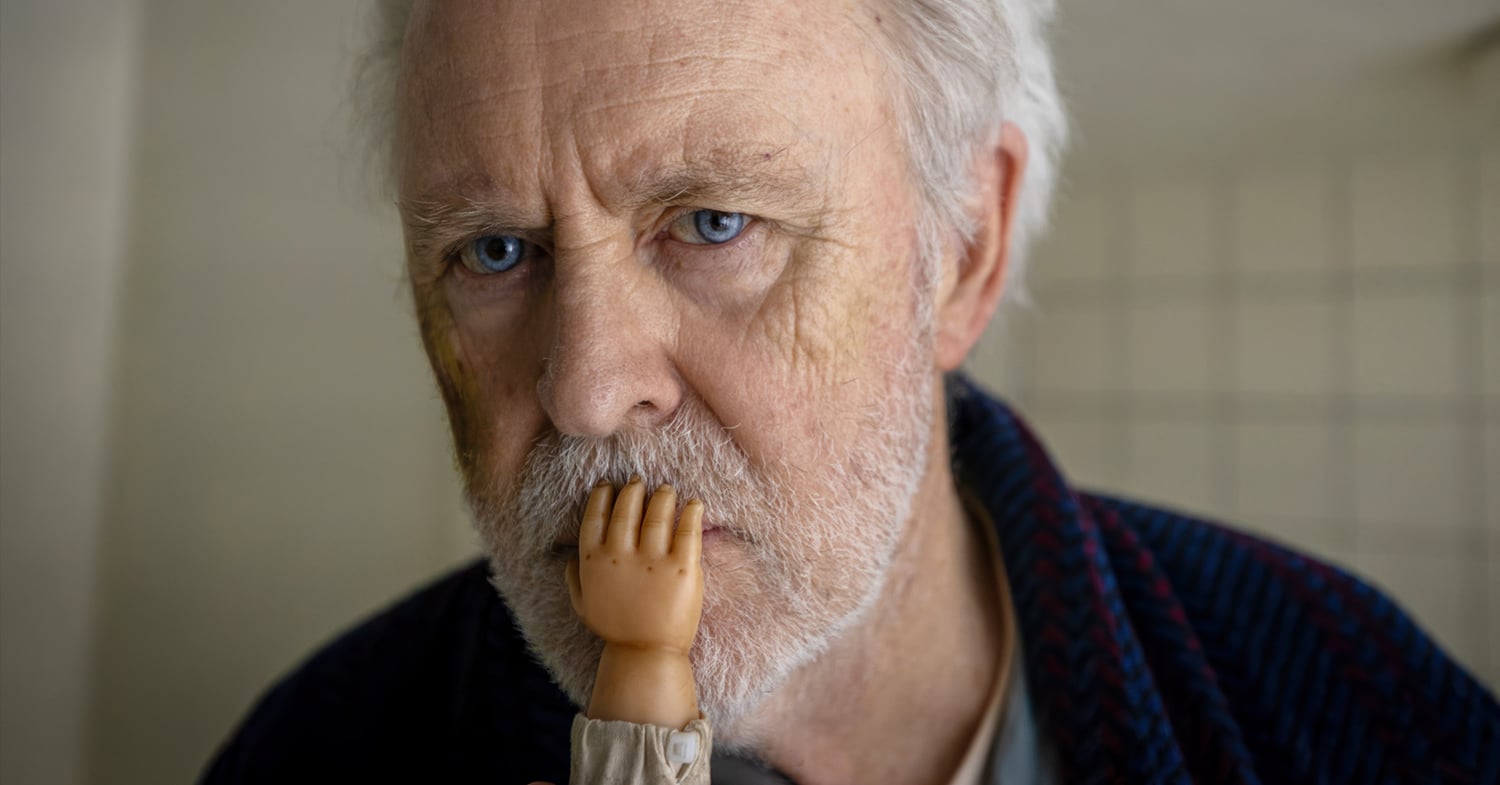
John Lithgow in ‘The Rule of Jenny Pen’ – Courtesy of IFC
I joined Dread Central in 2021, when the site acquired my podcast Development Hell, which has since grown beyond my wildest expectations. That project then pulled me deeper into the publication, and since Halloween, I’ve been guiding the site as Dread Central’s new top executive editor. My passion for horror, for this community, and for highlighting outstanding indie genre filmmaking has only intensified as my responsibilities have expanded these past five years.
Running Dread Central now means leading a viciously talented team whose work pushes our editorial vision forward every single day: associate editors Chad Collins and Tyler Doupe, co-founder Jon Condit, and our sharp roster of staff writers—Ashliene McMenamy, Matthew Jackson, Matt Konopka, and Caroline Colvin. I’m genuinely grateful for this talented group of writers and what we’re building together. As 2026 approaches, my focus is simple: to strengthen Dread Central’s legacy and ensure that good horror films, big or small, reach the passionate fans of this brilliant community.
However, in the meantime, here are my top 10 horror movies of 2025.
The Ugly Stepsister
In an indie horror landscape crowded with no-budget splatter fairytales like Winnie the Pooh: Blood and Honey and Cinderella’s Curse, The Ugly Stepsister comes as a jolt of actual craft. Emilie Blichfeldt builds a fantastical alternate 1900s where Elvira, a character usually pushed to the margins, undergoes a barrage of grotesque, historically inspired cosmetic procedures in a desperate bid to impress Prince Charming. Lea Myren sells every deranged beat of this body-horror makeover, and the film’s morbid sense of humor keeps the whole thing razor sharp from tip to toe.
What also elevates The Ugly Stepsister above its peers is the clarity of its extremely gruesome feminist engine. Like Coralie Fargeat’s The Substance, it uses gore and transformation to interrogate the violent bargains demanded by beauty culture, and Blichfeldt delivers the critique through a playful, comedic lens. That balance lets the film stay subversive without sinking into the realm of being gross for no reason. It’s pointed and highly ambitious, proving there’s still room to do something innovative with a cursed fairytale retelling.
Dust Bunny
Dust Bunny is a delicious visual brunch, dialed into director Bryan Fuller’s signature fixation on detail. Food becomes a central motif again—tables lined with surreal sweets and dim sum arranged like edible sculptures, complete with rabbit designs. The production design leans into playful, off-kilter world-building: a chicken lamp laying a glowing egg-shaped bulb, ornate spaces packed with color and abstraction, and a hand-crafted charm that feels deliberate in every frame. The result lands somewhere between The Goonies and Léon: The Professional filtered through a pitch-perfect YA horror lens.
Yet underneath the whimsy, the film settles on a clear emotional thesis: the monsters we fear most are the domestic ones, both in our homes and inside ourselves. Fuller suggests that survival isn’t about banishing them but learning to coexist—letting those shadows walk beside us rather than spending life balancing on furniture, terrified of touching the floor. It’s a real, true end-of-the-year treat.
Abraham’s Boys
There’s a low, persistent unease running through Abraham’s Boys, the horror drama from director Natasha Kermani based on a story by writer Joe Hill. The film treats Dracula’s legacy with serious intent, drilling into something intimate and unnervingly sad. Kermani and cinematographer Julia Swain lean into daylight horror, coating the film in dusty, washed-out Americana that feels like a grave where the Van Helsing myth has been left to rot.
Jocelin Donahue (The House of the Devil) gives a standout turn as Mina, channeling the eerie gravitas of classic Gothic icons like Barbara Steele. At the same time, Titus Welliver keeps Van Helsing just human enough to make his madness sting. In a marketplace clogged with safe IP retreads, Abraham’s Boys stands out as something rarer: a slow-burn, atmosphere-first reinvention that preys on the Dracula myth rather than polishing it, and finds real horror in the weight of family and regret.
Black Phone 2
Black Phone 2 is bonkers, old-school, and surprisingly restrained—while still swinging hard with its brutality and immaculate visuals. The winter-camp setting is a knockout: bleached cabins, frozen windows, and those humming orange space heaters casting a practical, red-stained glow that somehow gives the movie enormous weight. That tiny, grounded choice makes the terror feel tactile, real, and lived-in. Yes, the film leans into a real dose of religious imagery, but it’s more Angels in the Outfield earnest than The Conjuring sanctimonious, and the sincerity weirdly works.
As for the hand-wringing over its clear Elm Street DNA: I plead with detractors to relax. Dream-horror has been around long enough to claim its own corner of the genre’s shared language, and Black Phone 2 taps into that trope with total self-awareness. The movie isn’t hiding the influence; it’s weaponizing it, folding dream logic into a brutal, snowy reality. That blend of homage and innovation strengthens the film rather than distracting from it, and the result is a sequel that hits harder, looks sharper, and feels far more deliberate than anyone expected.
The Monkey
“Everybody dies. Some of us peacefully and in our sleep, and some of us… horribly,” Lois tells her young sons as they stand together in formalwear beneath an old oak in a suburban graveyard. Tatiana Maslany, in a small but film-stealing turn, delivers the line with a clarity that sets the movie’s entire emotional frame. She explains to her twin boys the randomness and essential meaninglessness of life and death, grounding The Monkey in a perspective that’s both bleak and strangely tender.
Some people get to go out like the end of Big Fish, surrounded by everyone they’ve ever loved. Others meet something closer to The Vanishing, alone and consumed by terror. The Monkey, Osgood Perkins’ loose adaptation of Stephen King’s short story, builds its whole thesis around that divide. What follows is an existential, gut-soaked horror-comedy that fully embraces the insignificance—and occasional absurd joy—of being alive.
28 Years Later
I went in expecting 28 Years Later not to have been made for me—that it would have been built for a brazenly boy-coded demographic, all heart-pounding grit and brutality beyond my usual threshold. Instead, I walked out emotionally wrecked and eating crow. This film is nothing like I anticipated. It’s bizarre in all the best ways: the pacing, the dialogue rhythms, the tonal whiplash of the world itself. None of it matches the trajectory of the first two entries, and that unpredictability becomes its biggest asset. The performances are sharp, the emotional weight is suffocating, and the scares land without tipping into misery.
Even with a structure that openly telegraphs the next chapters already in motion, 28 Years Later still strikes gold. It’s an entirely different undead creature than its predecessors—one that keeps the scrappy, indie-film DNA of the 2002 original while expanding in exactly the right directions. The result is a rough-edged spectacle that feels alive, strange, and freshly dangerous.
The Rule of Jenny Pen
As The Rule of Jenny Pen establishes director James Ashcroft as one of the most confident voices in contemporary horror, its co-leads Geoffrey Rush and John Lithgow deliver two distinct tour-de-force performances from true-blue legends of the craft.
Rush’s portrait of a man recovering from a stroke is quiet yet furious, full of small choices that show how fragile dignity can become. Lithgow, armed with the film’s uncanny title puppet, pushes things into absurd psychological-horror territory without ever losing its grip to comedy. Their opposing energies—one withdrawn, one invasive—build a pressure the way a natural storm might. Because of them, the film stands out as one of the year’s most memorable and devastating horror dramas.
Eddington
With Ari Aster’s brilliant fourth film, Eddington, he allows the mask of America’s decency to slip off completely, and what’s revealed beneath is the rotting flesh on the face of the chaotic beast we’ve become.
Eddington wields its uncategorizable nature with real purpose. Aster uses the pandemic as the quiet moment when America’s polite mask finally slips, exposing a rot that had been spreading for years. 2020 becomes the flashlight beam, not the wound. While not horror in the strictest sense, Aster directs the film with the detachment of something cosmic, watching an empire collapse right on schedule.
Audiences may not feel ready to revisit the collective hell of those early pandemic years, but Eddington doesn’t care. It drags that moment into focus and insists we look straight at it—at what fell apart, and at what had been broken long before.
Weapons
Weapons is joyously cruel, always surprising, and brutally funny. While there are several duelling storylines, it’s the character of young Alex and his grotesque aunt, Gladys, who elevate this film to its spirally chaotic heights. Their scenes are electric—unnerving, tender, and sadistically playful. Cary Christopher as Alex is phenomenal and should be a bigger part of the Weapons cultural conversation.
However, it’s still Amy Madigan as Gladys who steals this movie. And with it, she delivers a spiny, classical performance—like Gladys is real and somehow willed her way out of a grotesque fairytale and wandered right on to Cregger’s sophomore set. She’s arch and operatic, but never quite campy. Christopher and Madigan are astonishing together on their shared path to hell.
Sinners
Ryan Coogler has crafted not just the standout film of the year, but arguably one of the greatest of all time, guided by his seemingly uncrackable creative instincts. He directs with a confidence reminiscent of Tarantino, yet also devoid of ego. In Coogler’s hands, spectacle never outshines substance, and story, seemingly, remains his absolute priority.
In a two-year span where Wicked has dominated the attention market for its reestablishment of Old Hollywood magic, it’s Sinners who actually delivered us the impossible, forgotten craft of actual old school blockbuster movie-making. This is a perfect film: authentic and startlingly real. It’s a musically miraculous and emotionally inventive tale of community that peaks with its inter-dimensional ancestor dance sequence, which shatters the fifth wall between story, history, film, screen, and soul. Ultimately, this is cinema fulfilling its best and most profound potential.
Categorized: Best of 2025 Editorials News


![Nightmarish Horror Adventure Title ‘Lucid Falls’ Announced for Steam [Trailer]](https://i0.wp.com/bloody-disgusting.com/wp-content/uploads/2025/12/lucidfalls.jpg?resize=900%2C580&ssl=1 "Nightmarish Horror Adventure Title ‘Lucid Falls’ Announced for Steam [Trailer]")