


In an era defined by burnout and the search for purpose, the story of an English butler who sacrifices his entire identity for his employer hits harder than ever. Is “dignity” worth the cost of an unlived life? Below, we explore how Kazuo Ishiguro’s masterpiece and James Ivory’s adaptation offer two different, devastating answers to that question.
“I can’t even say I made my own mistakes. Really — one has to ask oneself — what dignity is there in that?”
I first watched James Ivory’s adaptation of The Remains of the Day in 1994 shortly after its theatrical release. I remember Anthony Hopkins’ superb performance as Stevens, the English butler at its centre, but I found the pacing slow. Three decades later, after reading Kazuo Ishiguro’s Booker Prize-winning novel, I returned to the film.
While the film is largely faithful to the book, the transition from page to screen reveals the distinct challenges of adaptation. How do you film a tragedy that takes place almost entirely inside a man’s head?
Want to go further than this review?
I’ve put together an extended cut — a longer, closer reading of Stevens’ self-deception, plus five discussion questions built for book clubs. Available as a PDF or EPUB for $7
Ishiguro’s novel deserves its stellar reputation. Among other things, it is a ruthless examination of “Englishness”— unsentimental clarity likely only possible from an outsider. Ishiguro was born in Nagasaki, Japan, in 1954, the son of Japanese parents. In 1960 the family moved to Britain.
The story is a psychological excavation. Stevens, an aging butler, recounts his career at Darlington Hall. However, this is no simple memoir. Stevens is the ultimate unreliable narrator—not because he lies to the reader, but because he lies to himself.
He prides himself on “dignity,” which he defines as English emotional restraint and absolute dedication to duty. He claims: “Continentals are unable to be butlers because they are as a breed incapable of the emotional restraint which only the English race is capable of.”
As the novel progresses, we discover this “dignity” is a shield. It insulates him from the risk of intimacy with the housekeeper, Miss Kenton, and causes him not to question the views of his employer, Lord Darlington — a Nazi sympathizer. Stevens is equally unable to show emotion toward his father, whom he employs as an under-butler, and their relationship remains distant and strained.
Stevens’ father exhibits the same emotional repression. Stevens recalls:
“Yet so well did my father hide his feelings, so professionally did he carry out his duties, that on his departure the General had actually complimented Mr John Silvers on the excellence of his butler and had left an unusually large tip in appreciation — which my father without hesitation asked his employer to donate to a charity.”
As the story unfolds, the reader discovers that the qualities Stevens admires most — his version of greatness: dedication to duty, English emotional restraint, and English dignity — are the very things that condemn him to a wasted life of loneliness and regret. One of the novel’s great achievements is that this recognition arrives gradually, obliquely, and too late.
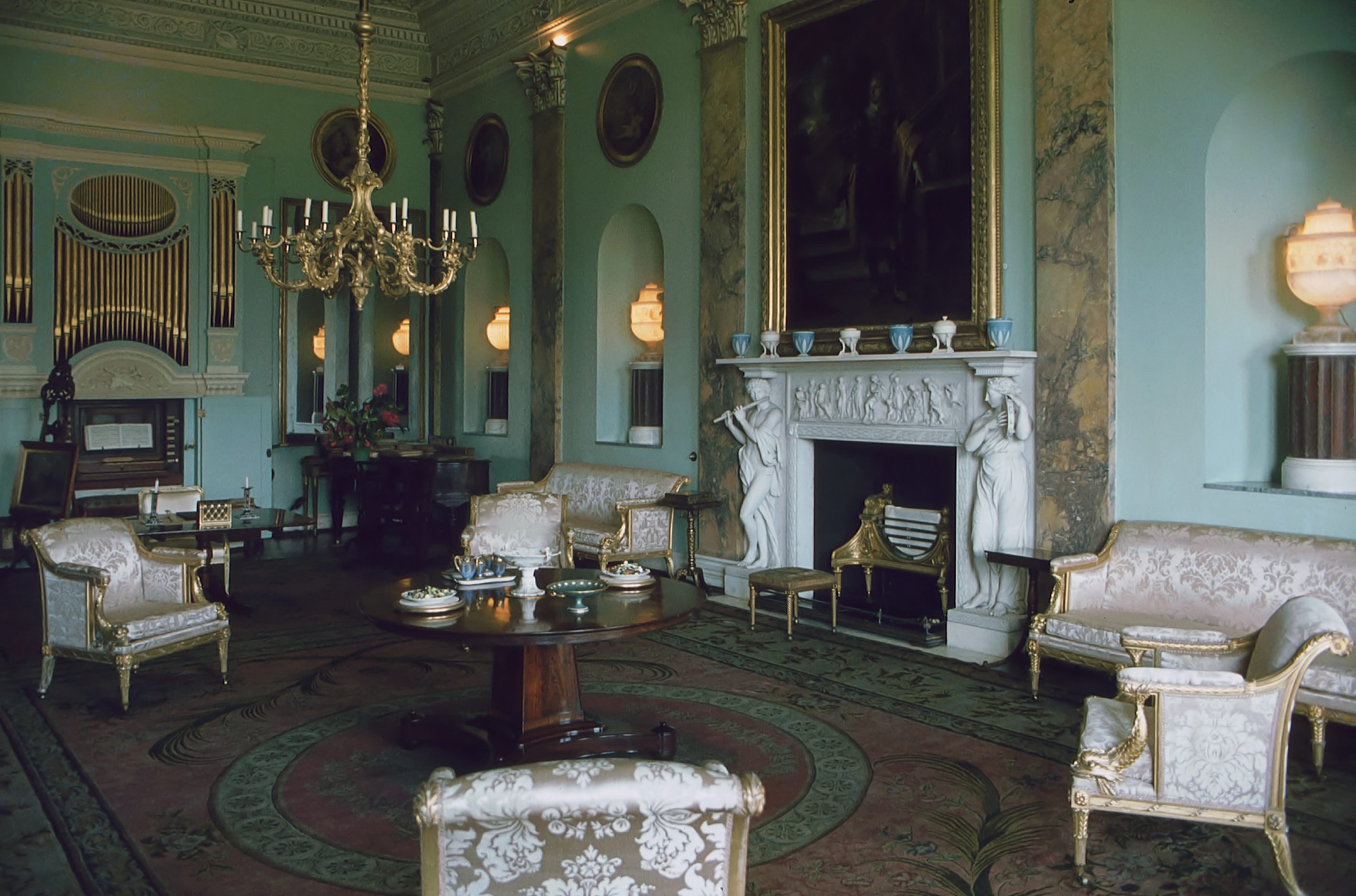
Cinema cannot live inside a character’s consciousness the way a novel can. It must externalize thoughts through performance, framing, and atmosphere.
Consequently, Ivory’s film is softer. The characters are given first names (James and Sarah), and the edges are rounded off. Stevens becomes marginally more likeable; Lord Darlington is portrayed as naive rather than malicious.
The film makes one significant structural error: combining the two American characters (the affable Mr. Farraday and the duplicitous Senator Lewis) into one figure, played by Christopher Reeve. The result is a confused composite who does not serve the narrative functions of either original character. This was the only casting mistake in an otherwise flawless ensemble.
The film succeeds largely because of Anthony Hopkins’ impeccable performance. Ivory resists the urge to use voiceover, instead trusting Hopkins to convey decades of repression through micro-expressions, posture, and silence. Emma Thompson creates a Miss Kenton who is expressive without being explanatory.
Ivory largely avoids having characters explain the story of the film. Meaning accumulates through pacing, silence, visual rhythm, and character-driven dialogue. This restraint preserves much of the novel’s emotional atmosphere, though some complexity is lost. Credit for the success of the adaptation is also due to Nobel Prize-winning playwright and screenwriter Harold Pinter (1930-2008), who wrote the original screenplay. Although Pinter asked to have his name removed after substantial revisions by Merchant Ivory Productions, his influence on the script remains evident.
Ultimately, the film sacrifices the novel’s psychological sharpness for emotional accessibility. It is less a story about self-deception and more a romance of regret.
“I can’t even say I made my own mistakes. Really — one has to ask oneself — what dignity is there in that?”
This confession, the novel’s most revealing moment, is spoken to a minor character omitted from the film. It is Ishiguro’s novel that has provided an enduring insight into the human condition: how easily lives may be wasted. Opportunities for loving relationships can be wasted through self-deception about our true feelings and the lack of courage to act on them. Entire lives can be lost through trusting in the “wisdom” of others and subordinating our own needs, choices, and beliefs to duty.
The novel communicates this insight with greater clarity and remains the deeper work. Its access to Stevens’ consciousness allows Ishiguro to convey emotional repression, self-deception, cowardice, and moral complexity with devastating precision. The film, however, performs an impressive act of translation. By resisting voiceover and explanatory dialogue, and by trusting performance and silence, Ivory brings to life — in visual and auditory terms — a story defined by interiority.
The film would probably have earned a perfect score but for two script-related factors: the dilution of Pinter’s original vision, and the merging of the Farraday and Lewis characters.
Book: 9.5/10
Film: 9/10
If this review struck a chord, I’ve written an extended cut — deeper analysis, plus discussion questions for anyone reading this with a book club or just wanting to think it through further. It’s $7, available as a PDF or EPUB.
If you’d like to read future essays on books and their screen adaptations, you can subscribe to From Page to Frame. All posts are currently free, and some content will always remain so.
