For many, migration comes with spending years away from family, children struggling to fit in, and the small adjustments that require starting over. For Ejoke, moving to Canada was a family journey that began with his wife leaving Nigeria in 2019 to pursue her studies. In this conversation with FunTimes, Ejoke shares his family’s migration story, the realities of raising children in the diaspora, and why he does not see himself moving back to Nigeria permanently.
What made your family consider relocating to Canada?
My wife moved to Canada in 2019 on a study visa. Relocation was something I had been encouraging her to consider for years, even after we got married and started having children. I had friends whose families had taken that route, so I had seen how it could work for people. But my wife was not interested at first. She always complained about the cold, and I could not convince her to move. Then, one morning in 2017, she said she was tired of Nigeria and ready to relocate. She had been job hunting for a while without much success, and she had a friend who had moved to Canada the previous year. This friend kept telling her about the opportunities and how much better her life had become. My wife could also see the evidence for herself, so it was not just somebody telling her stories. That was how the journey began. She applied to a school, got admission, applied for her visa, and eventually left for Canada in 2019.
What was it like staying behind in Nigeria with the children while your wife was in Canada?
It was not easy at all. My wife used to handle many things at home, from going to the market and shopping to taking the children to school. Suddenly, I had to take responsibility for all of that while also managing my own schedule. I had to reorganize my life to make sure I was available for the children. I did not want to leave them in the hands of maids or relatives, so I made a conscious effort to be present and take care of them myself. That period taught me a lot about parenting. Sometimes, when one person is doing so much in the home, you do not fully appreciate everything they handle until you have to do it yourself.
Tell us about your journey to Canada and the moment your family reunited.
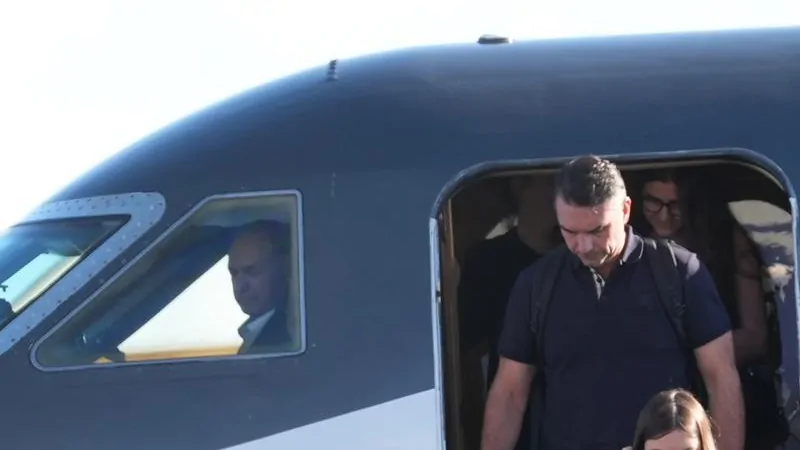
I landed in Canada with my two children after spending a period apart from my wife. We left Nigeria on August 19, 2021, and arrived in Canada on August 20, 2021, after a very long and exhausting journey of about 19 hours. The journey was quite an experience, especially with the children. But the moment we stepped out at Pearson Airport and saw my wife waiting for us, all the tiredness disappeared. Our joy knew no bounds. After being apart for two years, we were finally together again. People talk a lot about the benefits of migration, but they do not always talk about the emotional cost of living in different countries from your spouse and children. You miss the everyday moments that other families may take for granted. Reuniting was a very special moment for us.
What was the job-hunting process like when you arrived in Canada?
I did not get a big job when I arrived. I started as a salesperson in a shop and kept applying for the kind of job I wanted, and eventually I landed one. From the beginning, I knew I was entering a new environment. I was not expecting to walk into Canada and immediately get the same kind of job I had in Nigeria. One thing I came to appreciate is that honest work is respected. You can do a job that people might look down on in Nigeria and still afford a decent life here. There is nothing wrong with starting small while you work towards something better. For me, the important thing was to remain open-minded and not allow pride to stop me from making progress.
How did your children adjust to life in Canada?
One of the biggest challenges was my daughter adjusting to school. She was 10 years old when we arrived, and fitting in was not easy for her. Her skin color and accent made her feel different, and she was the only Black child in her class. Imagine being 10, leaving everything you know behind and finding yourself in a new country where you feel you do not belong. You are trying to make friends, understand a different culture, and get used to a new school environment, all while dealing with the feeling that you are different from everyone else. After some time, my daughter started withdrawing. She did not want to go to school, her grades were poor, and she kept saying she wanted to return to Nigeria. We had to spend months talking to her, encouraging her, and helping her rebuild her confidence. I think this is something people need to talk about more when discussing migration. We often focus on adults finding jobs, making money, and adjusting to life abroad, but children are also going through a major change. Our children need support too. Moving abroad may be an opportunity for the family, but we must also make sure our children feel that they belong.
Read also: “The biggest shock for me has been the cost of living in Canada”
How does your life in Canada compare with the life you had in Nigeria?
I had a good and comfortable life in Nigeria, so I would not say I relocated because I had nothing. But certain things were becoming increasingly frustrating. Constant power failures, insecurity, traffic, and the declining economy were wearing me out. I lived on the mainland in Lagos while my office was on the Island. On a typical workday, I could leave home as early as 5 or 5:30 a.m. and return at 9 p.m., sometimes as late as 11 p.m. Imagine spending that much time travelling to and from work every day. It takes a lot out of you.
Here in Canada, I would say I have a better quality of life. My stress level has reduced, and I do not have to deal with three hours of standstill traffic just to get somewhere. There are also differences in how accessible certain services are. For example, when something happens and you need police assistance, the response can be much quicker here than what I was used to in Nigeria. Of course, no country is perfect, and Canada has its own challenges.
What is your social life like in Canada? Do you ever miss the community you had in Nigeria?
I was not really the outgoing type in Nigeria. I spent a lot of time at home, so I do not feel as though I am missing out on much fun back home. I still keep to myself here in Canada. However, my family have met many Africans and African Caribbeans through our church. Over time, we have built a community with people who look out for one another. Sometimes, we organize picnics and other gatherings, and we have become like one big family. Having that kind of community makes a difference when you live far away from your relatives and the people you grew up with. You may not have your entire family around you, but you can still find people who understand your background and are willing to support you.
What has been the biggest adjustment for you since moving to Canada?
The cold, definitely! I am not even going to lie; Canadian winter will humble you. Having to wear layers of clothes can be a lot when you are not used to that kind of weather. It is one thing to hear people talk about winter, but experiencing it yourself is another thing entirely.
Healthcare is another area where you need patience. The waiting times can be frustrating, and you may sometimes spend several hours waiting to see a doctor. You also have to learn to take appointments seriously. If you arrive late, even by a few minutes, you could lose your appointment and have to book another one. I remember going for an appointment and doing the African man time. When I arrived, I was told I would have to book another appointment. That taught me a lesson! You have to adjust because things operate differently here. I have also learnt to do more things myself to save money. I fix certain things around the house because hiring someone can cost a lot.
Five years on, how far have you come?
I may not be where I want to be yet, but I am not where I used to be. I have a good job, and I want better, which I will get by the grace of God. We have gone from student visa to permanent resident, and now citizenship. Canada has been a real blessing to my family.
Do you see yourself returning to Nigeria permanently?
Nigeria will always be home, but with the state of things right now, I would not consider returning permanently.
What would you say to other Nigerian families considering migration, especially those who may have to live apart for a while?
I would tell them to think carefully about the process and understand that migration is not just about the person travelling. It affects the whole family, especially when children are involved.
I would also advise people to be ready to adapt. Do not assume that everything will work the same way it did in Nigeria, and do not be ashamed to start small. You may have to learn new skills, change your expectations, and work your way towards the life you want.
The journey has not been without its challenges, but we have made progress, and I am grateful for how far we have come. My prayer is that every family living apart in different countries will soon have the opportunity to reunite and experience that same joy of being together again.