

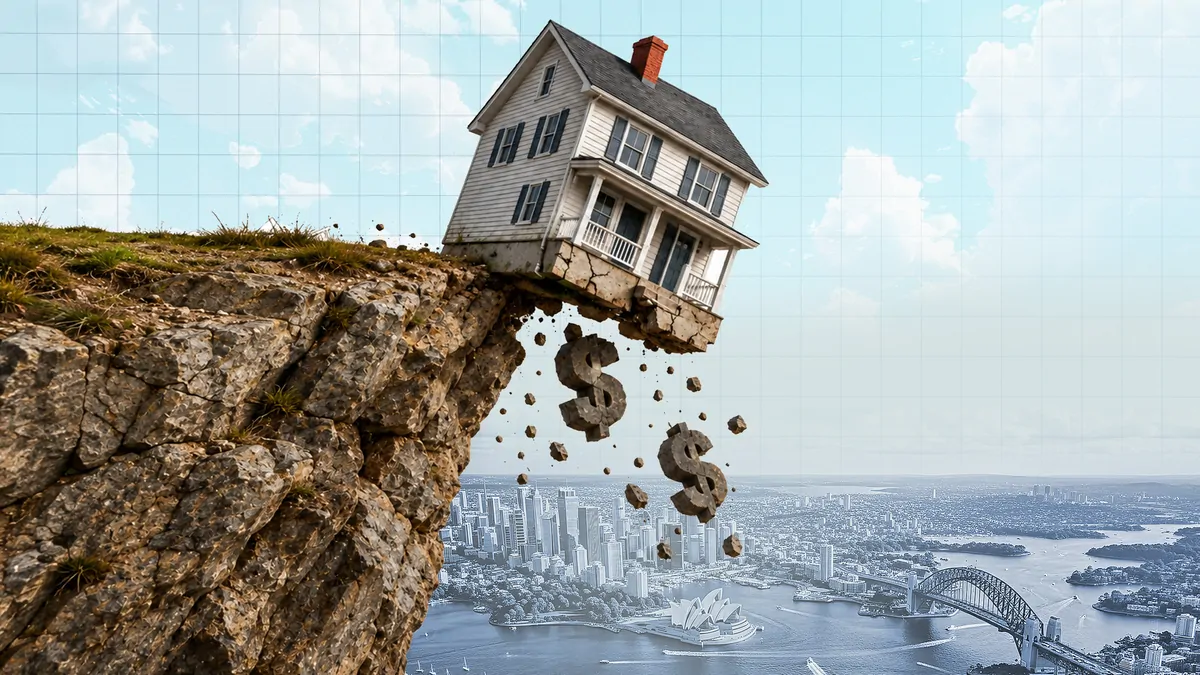
Treasurer Jim Chalmers has accused the Opposition of talking down the economy after a major bank predicted a fifth rate hike for 2026 on Melbourne Cup day would cause house prices to plunge.
The ANZ bank is predicting Sydney house prices will plunge by $200,000 by the end of next year as property values fell by close to $100,000 in Brisbane and Melbourne from their peaks earlier this year.
Futures market pricing for a November 3 interest rate rise has tripled to 62 per cent after the Reserve Bank of Australia’s deputy governor Andrew Hauser this week delivered a hawkish speech warning inflation and unemployment could both rise.
Sign up to The Nightly’s newsletters.
Get the first look at the digital newspaper, curated daily stories and breaking headlines delivered to your inbox.
By continuing you agree to our Terms and Privacy Policy.
ANZ chief economist Adam Boyton said another hike was likely in 11 days’ time that would take the RBA cash rate to an 18-year high of 4.85 per cent.
“We continue to expect that the RBA’s monetary policy board will increase the cash rate by 25 basis points at its November meeting,” he said.
“The post-meeting communication will likely focus on the hard choices the RBA faces in a world of supply shocks and constrained capacity.”
The RBA’s fifth rate rise this year could potentially see more 90,000 first homebuyers, who have taken advantage of Labor’s expanded 5 per cent deposit scheme during the past year, caught in a $56 billion debt trap.
Liberal senator Dean Smith, the Coalition’s shadow assistant minister for the cost of living, said first homebuyers, who took on an owner-occupier mortgage between October 2025 and June 2026, were particularly at risk of negative equity where they owed their bank more than their home was worth.
“Those first homebuyers are now being squeezed between falling property values and rising mortgage repayments,” he said.
“For someone who entered the market with only five per cent equity, a relatively modest fall in the value of their home can wipe out that equity extraordinarily quickly.”
Dr Chalmers accused the Opposition of talking down the economy for political purposes.
“I think their goal here is to turn their talking down the economy and all of their endless negativity into a self‑fulfilling prophecy,” he told The Canberra Playbook podcast on Friday.
“You know, they desperately want confidence to be low. They desperately want inflation to be high because they see political opportunity in that.”
Dr Chalmers also justified spending more money on cost-of-living help, despite the Reserve Bank warning higher government spending was adding to overall demand in the economy during a time of high inflation.
“The pressures on people right now are very substantial and obviously that keeps me awake at night,” he said.
“The fact that people are under substantial pressure. And there’s a number of reasons for that, some of them are outside our control, and some of them we have some influence over.
“You know, providing some cost-of-living help, managing the budget in a responsible way.”
ANZ has released updated forecasts predicting a 14.1 per cent plunge in Sydney home prices in 2026 and 2027, which would wipe $217,865 from the mid-point house price as part of the worst downturn since the early 1980s.
This would see the value of a home with a backyard plunge from $1.59 million at the end of last year to $1.37m by the end of next year, based on Cotality data.
Melbourne home prices were forecast to plunge by 10.2 per cent this year and next, which would see the Victorian capital’s median house price plunge by $98,595 to $882,570.
Brisbane, previously Australia’s strongest market, was tipped to suffer a 8.7 per cent drop, which would see the middle-market house slide by $97,337 to $1.03m.
Perth, Australia’s best-performing State capital city market, was expected to see a 1.5 per cent gain this year followed by a 5.4 per cent drop next year for an overall net loss of 3.9 per cent that would see the typical house price fall by $39,136 to $943,932.
Sydney’s housing market is forecast to crash. Credit: The Nightly
Adelaide, another strong market, was tipped to have 0.2 per cent growth this year but a 10 per cent plunge next year, which would see prices fall by $94,321 to $866,180.
“While the Sydney and Melbourne markets have been the most affected so far, there are signs that some of the smaller capitals are starting to catch up,” ANZ said.
“The combination of rising interest rates, global uncertainty and tax policy changes has dampened sentiment.”
A dual-income couple earning $216,704 or two, average, full-time salaries, has seen their borrowing capacity shrink by $94,700 to $1.01m as a result of the Reserve Bank’s February, March, May and September increases that took the cash rate to a 15-year high of 4.6 per cent, Canstar calculations showed.
Sydney’s housing market plunged by 8.6 per cent between the February peak and the RBA’s last hike on September 29, Cotality data showed.
Perth property values have fallen by 6 per cent since peaking in April.
Brisbane prices have dropped 5.4 per cent since May while Adelaide prices have declined by 2.9 per cent since then, when Labor announced changes to negative gearing and capital gains tax concessions.
ANZ, like Westpac, is expecting a November 3 rate hike that would take the RBA cash rate to an 18-year high of 4.85 per cent and add $122 to monthly repayments on an average, new mortgage of $731,000.
It is expecting capital city property prices to start recovering in August 2027, led by a slow recovery in Sydney and Melbourne, ahead of rate cuts in November 2027 and February 2028 that would take the cash rate back to 4.35 per cent.
“While this should support a recovery in housing prices from late 2027, the higher end point for the cash rate means we have less of a pickup factored in than in our previous forecasts,” the ANZ economists said.
