

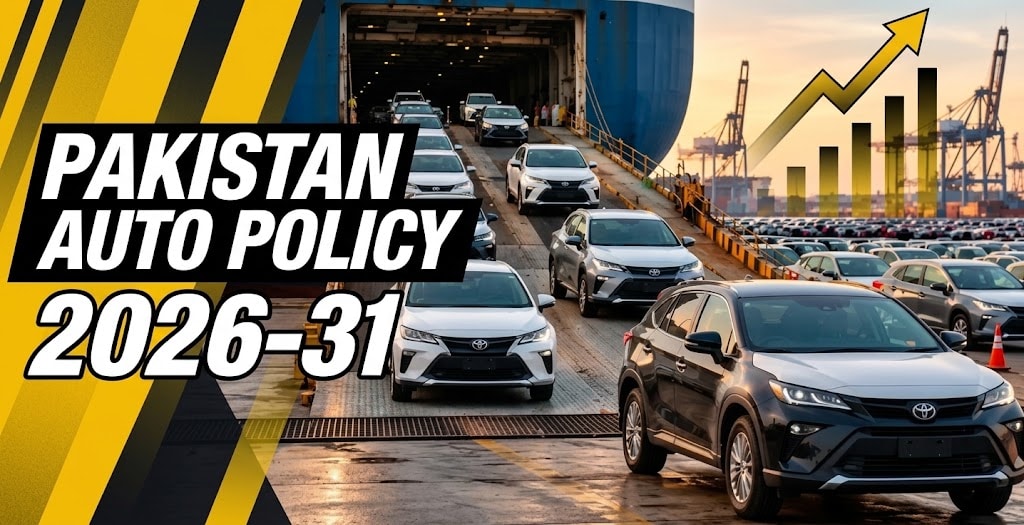
ISLAMABAD – Pakistan’s automobile industry is approaching crucial policy decision as Prime Minister Shehbaz Sharif prepares to review long-awaited Automotive and Auto Parts Manufacturing Policy 2026–31, with approval possible today if premier is satisfied with the proposed framework.
The proposed policy could reshape the country’s car market over the next five years, with major proposals covering automobile tariffs, locally manufactured parts, export growth, electric vehicles and fresh investment in the industry.
PM convened meeting to look into the proposed framework. A final decision could provide much-needed clarity to automakers and consumers who have been waiting for the government to announce its future direction for the sector.
Car Prices, Imports and Local Manufacturing
One of the key proposals involves gradually reducing automobile tariffs, a move that could change the competitive landscape of Pakistan’s automotive market.
Lower tariffs could potentially put pressure on vehicle prices by increasing competition, although the actual impact on consumers would depend on the final tariff structure, taxes, exchange rates and manufacturers’ pricing decisions.
The proposed policy also aims to strengthen domestic manufacturing by encouraging greater use of locally produced auto parts. The government’s broader objective is to help Pakistani manufacturers become more competitive and integrate local suppliers into international automotive supply chains.
For consumers, manufacturers and auto-parts businesses, the final policy could influence decisions ranging from vehicle purchases to future investment in production facilities.
The urgency surrounding the proposed framework comes after Pakistan’s previous automotive policy expired on June 30, 2026. The prolonged gap has created uncertainty for manufacturers, particularly those making decisions about production, investment and vehicle pricing without a clear long-term policy roadmap.
According to the report, the committee has recommended seven broad principles aimed at transforming Pakistan’s automotive sector. The proposed framework also includes export targets designed to expand the country’s presence in international markets.
Increasing exports would require local manufacturers to strengthen production capabilities, improve technology and meet international market requirements. The plan also seeks to encourage investment and increase local value addition, potentially creating greater opportunities for Pakistani auto-parts manufacturers to supply both domestic and international markets.
Stronger integration into global supply chains could help local businesses expand beyond the domestic market while improving the industry’s overall competitiveness.
EV Part of New Strategy
Electric vehicle adoption is another key area covered by the proposed policy. The framework aims to encourage investment and support the development of the local automotive ecosystem as the industry moves towards newer technologies.
Its implementation could influence future manufacturing priorities, the development of EV-related supply chains and the range of vehicles available in Pakistan. However, the scale and timing of these changes will depend on the final measures approved by the government.
The proposed reforms could have far-reaching consequences for Pakistan’s automobile industry, particularly if tariff reductions increase competition and the government succeeds in attracting new investment.
However, approval of the policy would not automatically guarantee cheaper cars. The impact on prices would depend on how the government implements the proposed changes and how manufacturers respond to the evolving market.
PM Shehbaz approves Pakistan’s new Auto Policy 2026-31
