“You can’t change a winning side.”
You’ve heard it all week before the second Test at St George’s Park in Gqeberha, the old Port Elizabeth.
As a player, I understand it. When it’s all working, you want the same faces and the same routines. Players love continuity, and I would always prefer the same side if everything is humming.
Sign up to The Nightly’s newsletters.
Get the first look at the digital newspaper, curated daily stories and breaking headlines delivered to your inbox.
By continuing you agree to our Terms and Privacy Policy.
But it’s a saying, not a rule. Winning sides have changed, and sides that stuck together have been rewarded.
Australia moved on from Jake Weatherald after one Test (even though that was a loss) of the two-Test series against Bangladesh, following a long break from Test cricket. So hard calls can be made.
If I was a selector, despite the terrific win in the first Test I’d have question marks over Nic Maddinson, Marnus Labuschagne and Beau Webster, and questions about the batting order.
For the second Test, I’d bring Cooper Connolly in for Maddinson and Michael Neser in for Webster. Neser should suit this pitch. He’s a great option with the ball and he can bat too, so he adds to the attack without weakening the order at No.7.
Connolly is the one I’d like to see at No.5. If he’s up to it, he could even open with Matt Renshaw. To be fair, I felt Connolly should have played the first Test.
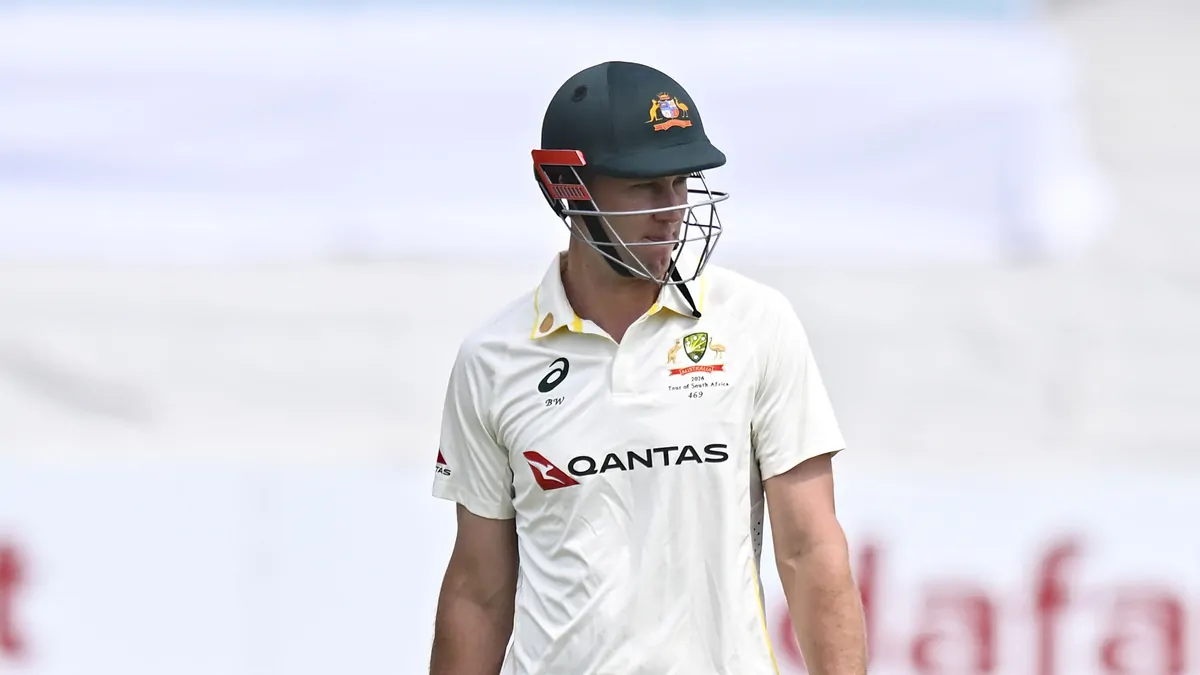
Cooper Connolly of Australia congratulates Pat Cummins, Captain of Australia after he caught the ball from Keshav Maharaj. Credit: Gallo Images/Getty Images
When he was picked for this tour, I thought we’d see him get a good run at it, build some experience and learn his craft in conditions that would probably suit him and he has been playing well for Australia in recent times. He also has handy left-arm spin that either turns away from right-handers or slides on, which is another option for the captain.
A trend at the moment is Travis Head not getting away as he has in the past as an opener. Maybe if Renshaw was at the other end, that would give him a better feel, knowing he could play his natural game and not be tentative. Renshaw showing grit and patience at the top with Head could be ideal.
But I still think Head is good at No.5 for so many reasons. But with this side, the selectors, coach and captain are all saying batsmen should be able to bat anywhere in the order. It’s interesting whether these batsmen are comfortable with that way of thinking, or whether some are struggling for consistency because of it.
South Africa will fire back hard, I think, but this isn’t the South Africa of the past. I don’t think they have the batting personnel they once did. Much has been made of why they played the first Test in Durban, where they rarely win against Australia. They’ll also have Kagiso Rabada coming back, with his aggression and presence to spice things up.
But it really comes down to the batting. Both bowling attacks are very good. The question is which top six can hold off the bowlers best. I think reverse swing could play a bigger part in this match, so batting first and getting a good total on the board will be important.
Whoever wins the toss will be thinking about that. Once the ball gets old and scruffy, it will start to move late, and that’s when partnerships matter most.
There’ll be plenty of eyes on Rabada. South Africa had Anrich Nortje’s pace in Durban, and he bowled some hostile spells.
But Rabada brings pace, a heavy ball and the fast bowler’s attitude. He looks like a fast bowler with a bit of mongrel in him.
He steps over the boundary line ready for the contest. We’ve seen in the past that it can tip over the edge, and he was at the centre of it in 2018 at this very ground. But there’s nothing wrong with that in a fast bowler. He can ruffle a few feathers in this uncertain Australian batting line-up.
So why is Rabada so tough to face? He has all the attributes of a fast bowler, including an aggressive approach and a willingness to get in your face when he sees an opportunity. He’s fast, and he has a high release point that gets him good bounce. But it’s the whole package he brings, not just one thing. He attacks, but he also has control and is at you constantly.
Kagiso Rabada, who’s been tormenting Australia for a decade, is set to play in the second Test. (AP PHOTO) Credit: AAP
And look at his record against Australia: 58 wickets in 11 Tests at 21.39. Away from Australia it’s 32 wickets at 17.28. He took 11 wickets at this ground in 2018 and nine in last year’s World Test Championship final.
He has the skill set; he can do it on his own too, and change a game pretty quickly. But he’ll still need his partners at the other end to work with him and build pressure. It will be his first match in any format since May, after a hamstring tear, so the support around him matters even more.
I’m looking forward to the battle between him and Steve Smith. Rabada has got him four times in Tests.
But I’m just as interested to see how Renshaw plays him after the Test he had in Durban. Facing Rabada fresh is a different test altogether.