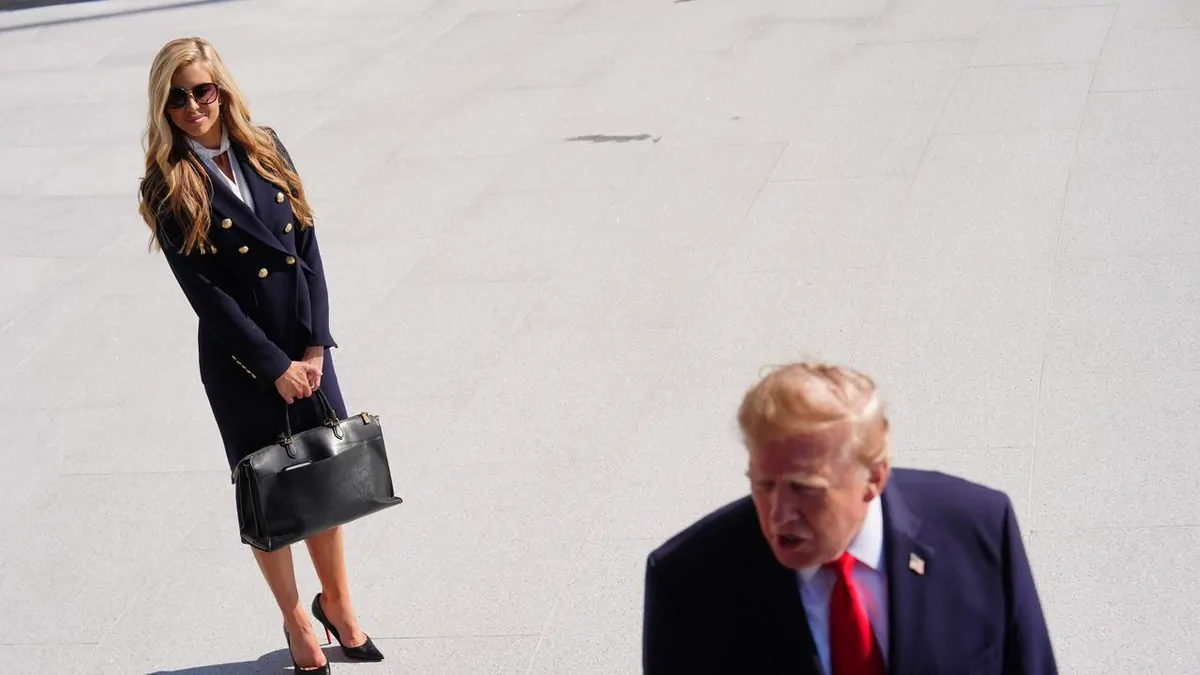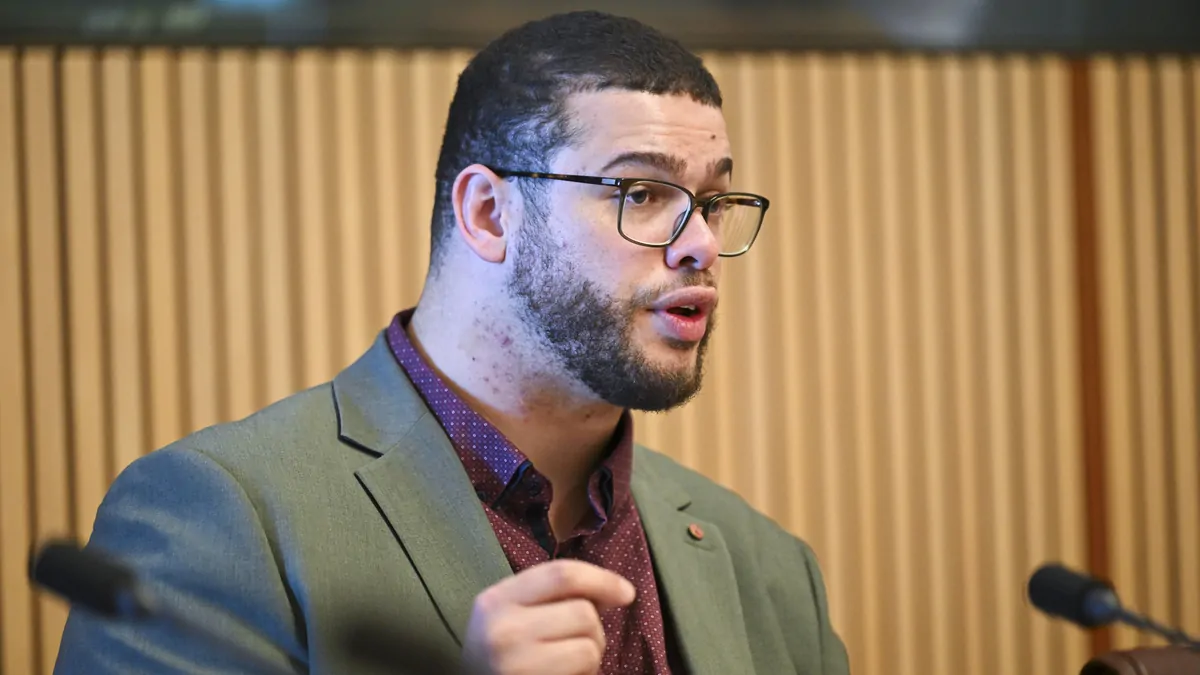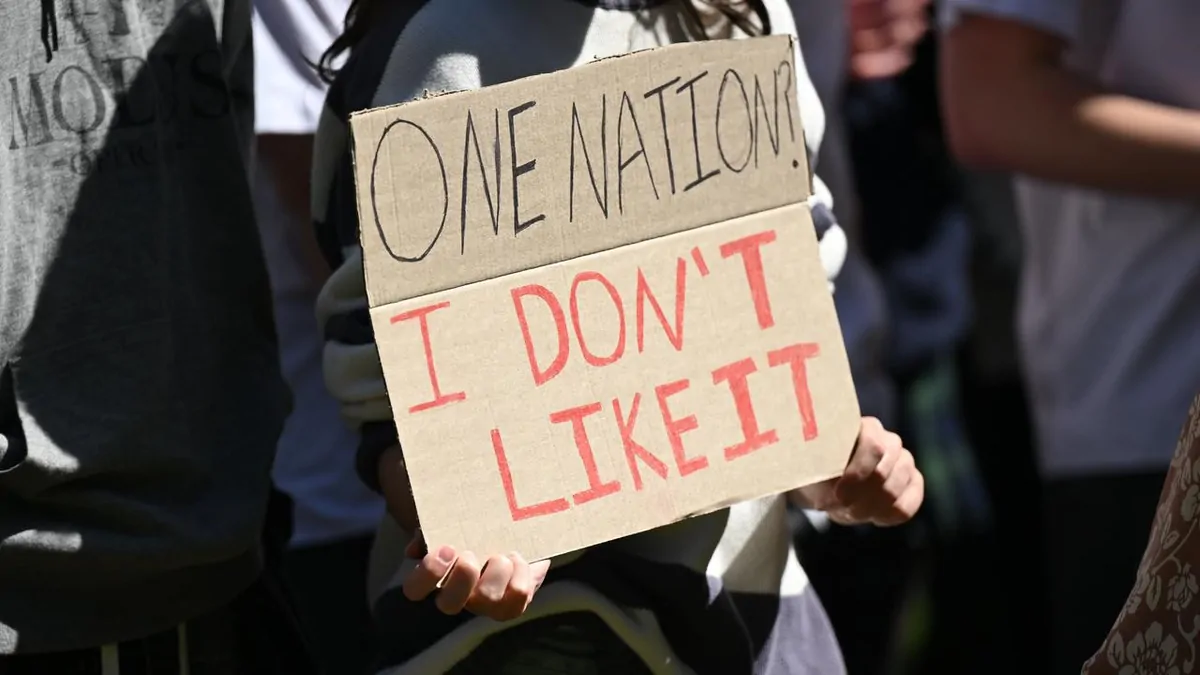
In 1998, as a fledgling One Nation party prepared to contest its first election campaign, Pauline Hanson’s team selected a song they thought best embodied their standard-bearer to introduce her at rallies and events.
The song was I Am Australian, recorded the year before by the Seekers’ Judith Durham, Air Supply’s Russell Hitchcock and Yothu Yindi’s Dr M Yunupingu, an impassioned plea for unity at a time of racial disharmony.
When the co-authors – Bruce Woodley, also of the Seekers, and the Bushwackers’ Dobe Newton – found out on the grapevine the new nativist party planned to use their song, they were aghast.
Sign up to The Nightly’s newsletters.
Get the first look at the digital newspaper, curated daily stories and breaking headlines delivered to your inbox.
By continuing you agree to our Terms and Privacy Policy.
Legally, however, there wasn’t a great deal they could do but bluff.
“At the time, we didn’t have moral rights under the Australian Copyright Act,” Newton tells AAP.
“But a friend of ours, a solicitor in the entertainment area, pretended we did and he wrote a cease and desist letter, which was effective because they gave in and decided not to use it.”
It wasn’t until 2000 that moral rights – which ensure creators are credited for their work and protect that work from “derogatory treatment” – were introduced via an amendment to the Copyright Act.
All of which made the use of I Am Australian at last week’s Conservative Political Action Conference in Brisbane – featuring the now-Senator Hanson alongside a parade of anti-immigration speakers – that much more galling.
Asked if he considers the use of the song by CPAC in its official program as derogatory treatment (in the sense of it appearing contradictory to the values it espoused), Newton is unequivocal.
“It gives the impression that we, as the authors of the song, have somehow aligned themselves with the motivations of those who were presenting that event,” he says.
“From my point of view, that’s absolutely not the case.”
Newton and Woodley are far from the only Australian artists to complain about what they say is the misappropriation of their work by One Nation and other political parties and causes.
Only last week, Daddy Cool and Mondo Rock legend Ross Wilson objected to the use of his most famous song, Eagle Rock, at One Nation’s Victorian election campaign launch.
On January 26, Senator Hanson walked on stage to address an anti-immigration rally backed by the Hoodoo Gurus’ What’s My Scene – prompting the band to issue a memorable statement condemning its use.
There was also Clive Palmer, whose United Australia Party put its own spin on American heavy metal band Twisted Sister’s song We’re Not Gonna Take It in the 2019 federal election – a jape that cost the mining magnate $1.5 million in damages.
“WE’RE NOT GONNA TAKE COPYRIGHT INFRINGEMENT ANY MORE!!” the song’s author, Dee Snider, wrote on X, then known as Twitter.
But the reality is few artists have the time, resources or energy to sue.
For drummer Lindy Morrison, formerly of the Go-Betweens and board member of the Phonographic Performance Company of Australia, the blunt approach taken by Hoodoo Gurus is probably the most effective.
“If you haven’t got the money to hire lawyers, which most of us don’t, you’re going to have to start with a cease and desist letter and then name and shame,” she says.
She uses a profane hypothetical to illustrate the issue of synchronisation rights – where most of the money is for musicians in the streaming age, and which explicitly illustrates the value of moral rights.
“You cannot synchronise a recording or a song into a moving image without permission,” she says.
“And the reason for that is – as I used to always tell my students – you may not want your song or recording being put into a movie where a man is having sex with a pig.”
For Mark Callaghan, leader of Ganggajang, the political equivalent is the prohibited hate group National Socialist Network using his song Sounds of Then (This is Australia) in a recruitment video in 2025.
Callaghan – also a long-serving board member of APRA-AMCOS – says getting the song removed illustrates how the Copyright Act is ill-equipped for dealing with the digital age and tech giants.
“We were dealing with Facebook and Google and it was only with the help of APRA that we were able to get it taken down,” he explains.
“We couldn’t get it taken off their website because the people hosting them just would not engage.”
“It was incredibly illuminating about just how powerless artists are in that situation.”
Callaghan says there are countless more benign examples, usually where songs are used without permission in commercial contexts.
He cites a bar in Brisbane where staff wear T-shirts quoting the chorus lyric from his most famous song.
“I should probably reach out and say something to them,” he says.
“But really, life is short. There’s other things to worry about.”