

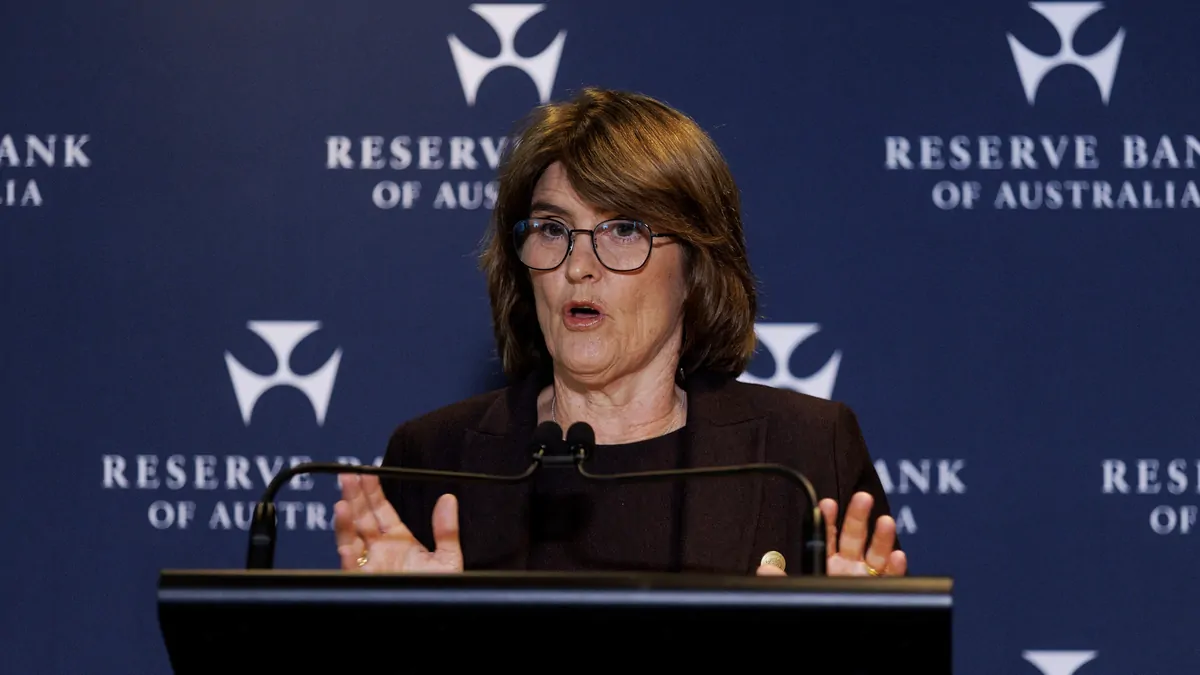
The Reserve Bank of Australia is walking a tightrope.
The bank has a dual mandate on the labour market and inflation.
To refer to the bank itself, it’s overall goal is to “promote the economic prosperity and welfare of the Australian people, both now and into the future”.
Sign up to The Nightly’s newsletters.
Get the first look at the digital newspaper, curated daily stories and breaking headlines delivered to your inbox.
By continuing you agree to our Terms and Privacy Policy.
The bank’s Monetary Policy Board, chaired by RBA Governor Michele Bullock, makes decisions about monetary policy to achieve this goal.
“This means setting monetary policy to achieve both price stability and full employment”, the bank says.
In practical terms that translates to “as many people in jobs as possible, while at the same time keeping inflation low and stable.”
It’s inflation target is between 2-3 per cent.
The RBA regards 4.5 per cent as the unemployment rate which achieves the balance required to avoid fuelling inflation, although some economists now put it closer to 5 per cent.
The RBA’s preferred measure of underlying inflation, known as the trimmed mean, has been above its 2-3 per cent target for 13 straight months, growing by an annual pace of 3.6 per cent in August.
The bank last month voted to raise the cash rate to a 15-year high of 4.6 per cent, marking the fourth hike this year.
On Thursday, latest Australian Bureau of Statistics figures showed unemployment had risen to 4.7 per cent for the first time in five years.
The jobless rate last month hit the highest level since October 2021, when Sydney and Melbourne were still in COVID lockdown.
The new figures came two days after the International Monetary Fund predicted a 4.7 per cent jobless rate for 2027.
The RBA’s forecasts in August didn’t have unemployment reaching 4.7 per cent until December 2027.
Economists were hotly debating the likely ramifications of the latest jobless number.
Ebury economist Anthony Malouf said it appeared the RBA was willing to let the labour market cool to bring inflation down.
VanEck’s head of investments and capital markets Russel Chesler said the RBA was prepared to see unemployment increase.
“Even though the unemployment rate has increased slightly to 4.7 per cent, inflation will be the primary factor that the RBA will be looking at when deciding whether to increase rates,” he said.
“We could very well see rates still increase this year, with inflation remaining stubborn.”
Ms Bullock hinted as much last month.
“High inflation hurts all of us, especially the most vulnerable. Pay packets don’t go as far as they used to and that’s why we need to stop this high inflation,” she said.
“The (RBA) board will raise interest rates again if that’s what is needed to bring inflation down.”
So that could mean a higher cash rate — and interest rates — in three weeks at the expense of jobs in a desperate bid to curb inflation.
It might add up to a grim picture all round.
The news on Thursday that the RBA Governor’s base salary has climbed above $1 million will add to the pain for those struggling to make ends meet and to cover their seemingly ever-rising housing loan repayments.
And of course for those who have found themselves without a job.
