Get your news from a source that’s not owned and controlled by oligarchs. Sign up for the free Mother Jones Daily.
A velvety butterfly called the coastal green hairstreak once peppered the fog-capped hills of San Francisco. But then the city began to build out, and new structures fractured the jewel-toned insect’s native range. The butterflies were scattered into isolated populations, some only a few blocks apart—an astronomical distance for a creature that, over its lifetime, can venture only a few hundred feet or so from the native shrubs it depends on.
In 2007, when the species was nearly gone from San Francisco, a local nonprofit got to work on a simple solution: Create a butterfly highway between some of the scattered populations by adding more of the insect’s host plants. “We planted microhabitats wherever we could get—a swath of a triangle or a long stairway edge,” says Amber Mahlberg, executive director of Nature in the City, the organization leading the project.
It worked. Butterflies from previously isolated populations followed the breadcrumb trail and interbred, boosting their genetic diversity and odds of long-term survival.
Microhabitats like these are good for wildlife like butterflies, and they benefit humans, too: Mounting research shows that small green spaces could improve the health of people who live nearby. “Americans tend to think about [the] nature benefit from the great outdoors, our national parks,” says Kathleen Wolf, a University of Washington social scientist focused on urban greening. However, for both humans and other animals, ease of access tends to trump grandiosity. Over the past decade, scientists have found that when tiny green spaces are scattered across cities, their cumulative effects are greater than the sum of their parts.
Mini-parks can give migrating birds passing through urban areas a place to rest and feed, says Frank La Sorte, a Yale scientist who studies avian ecology and behavior. In a 2023 study, La Sorte found that cities studded with small parks have a greater number of bird species than those with just a few large parks.
As for human benefits, a 2026 study determined that Americans with easier access to parks had lower rates of obesity, high blood pressure, and diabetes. Advocates for mini–green spaces pointed to such correlations in their push for changes in the federal rules for parks funding, though many of the new grants approved in the name of environmental justice were promptly eliminated by the Trump administration, which dismissed them as “DEI.”
Federal and state governments have long prioritized bigger parks, says Will Klein, research director at the nonprofit Trust for Public Land. That can make it tricky to get the necessary funding to build small green spaces in park deserts. So the group developed a new metric to assess a park’s value: the “10-minute walk.”
The idea is that everyone in US cities should be able to stroll from their home to a public green space in 10 minutes or less—which the group estimates is currently not the case for one-third of Americans. More than 300 mayors have embraced the idea, and now almost every major US city has incorporated the “10-minute walk” into its planning criteria, Klein says.
As part of the Biden administration’s Inflation Reduction Act (IRA), Congress approved more than $1 billion for urban greening. “All sorts of organizations lined up, scrambled, put in grant proposals, were awarded funds, and were beginning to do the projects,” Wolf recalls.
“The thing with urban parks is that they’re not as isolated as they might appear.”
Just across the bay from San Francisco, home of the successful butterfly highway, the community of North Richmond secured some of those much-needed dollars from another IRA program. During my recent visit, I could see why the community so desperately needed the funds. Amid a dense mix of residential and industrial properties, there were just a few public outdoor spaces. I saw two of them; one was a sports field and the other was called Landfill Loop, a former dump that, as far as I could tell from the prints in the dirt, isn’t frequented by anyone but raccoons.
In December 2024, through the IRA’s Community Change Grants program, North Richmond was promised $19 million to establish new green spaces, among other things, but the vast majority of that money never arrived. North Richmond, along with more than 100 other communities across the country, was left in the lurch.
In July, a judge ordered the Trump administration to pay out the grants, but the funding remains on hold while the administration appeals the ruling. Now, the work of micropark building often falls to nonprofits and volunteers.
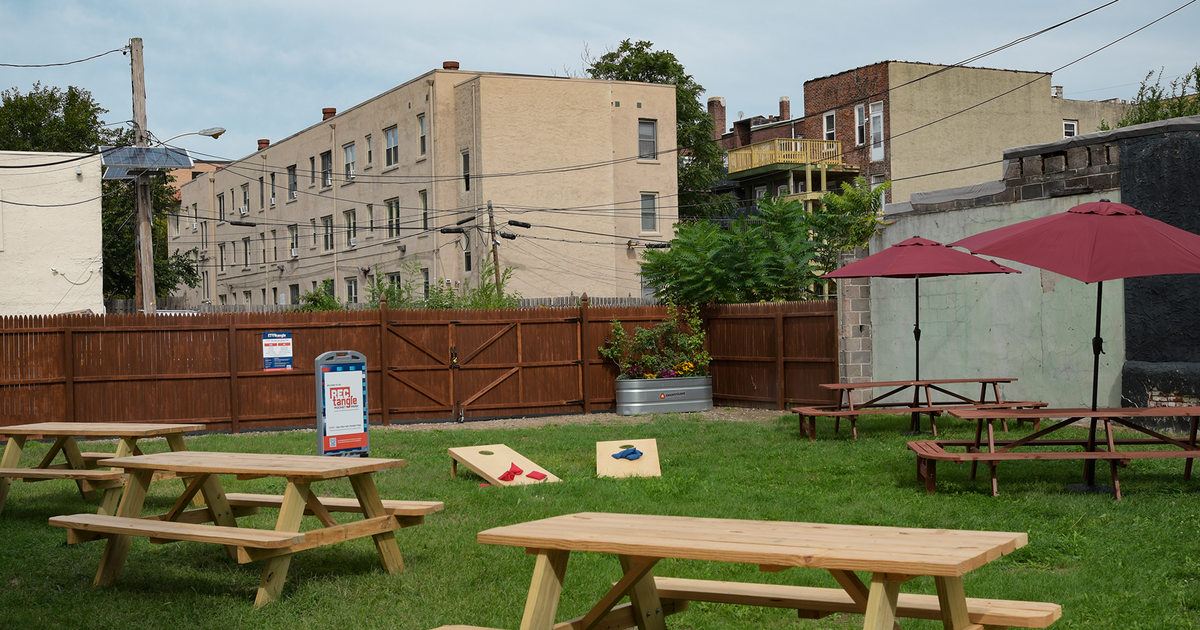
That’s not so bad in high-income zip codes—like the ones the green hairstreaks needed to cross—where private resources for neighborhood improvement are often ample. It’s much harder in places like North Richmond, which is ironic, because these poorer communities tend to have plenty of neglected patches that would make for perfect tiny parks. Green spaces can slot into almost any oddly shaped, leftover parcel that no one knows what to do with. As ecologist La Sorte put it, “The thing with urban parks is that they’re not as isolated as they might appear.”
It could be the strip of dirt by some train tracks or a gravel-filled schoolyard or sometimes even guerrilla gardening on abandoned lots—a kind of living patchwork with the potential to transform an entire neighborhood.