The scale of Australia’s re-armament program is difficult to comprehend.
Look at it from any direction and it’s big.
The financial numbers are mind-boggling.
Sign up to The Nightly’s newsletters.
Get the first look at the digital newspaper, curated daily stories and breaking headlines delivered to your inbox.
By continuing you agree to our Terms and Privacy Policy.
The $4 billion being spent on the Osborne shipyards in Adelaide is dwarfed by the $12 billion committed to the Henderson marine precinct in Western Australia.
That $12 billion is about half the $25 billion Canberra expects to spend to make the docks fit for purpose.
The $25 billion is half the $50 billion industry observers believe will be the final price tag.
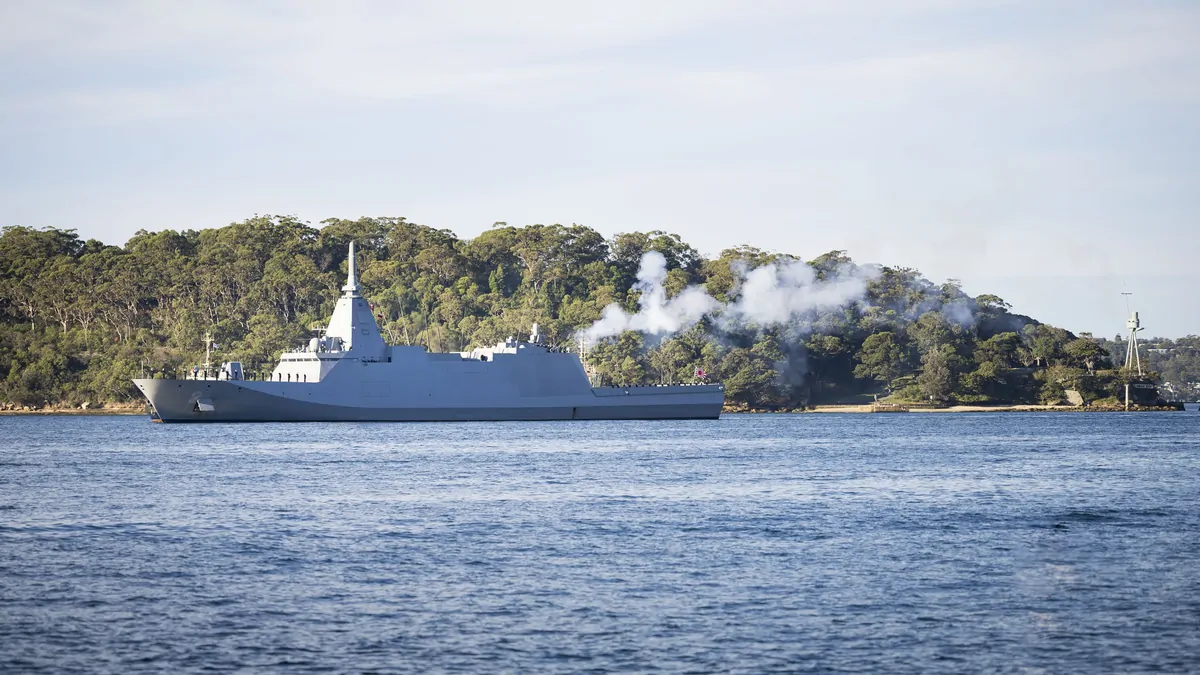
The 11 Mogami-class frigates we are buying from Japan will cost $20 billion. The AUKUS submarines will be north of $360 billion.
It’s like we’re playing with Monopoly money.
Then there are the construction logistics.
The amount of concrete needed to make Henderson usable is estimated to be three times Perth’s annual residential consumption.
More than 6000 workers will be needed during construction. The project is the equivalent of building 10 public hospitals at once.
The headaches don’t stop when the builders leave; operating a precinct that includes nuclear facilities, regular defence facilities and civilian industry brings its own challenges.
Security protocols alone would give Claude pause for thought.
The amount of economic activity that’s about to be unleashed has been likened to the genesis of the Pilbara iron ore industry.
Federal and State governments had no experience in that until Lang Hancock landed his plane on what was almost solid iron back in 1952, yet our politicians and bureaucrats managed to help create a new industry from scratch.
So why can’t we do the same with defence?
Well, for one thing, when Hancock put the chocks under the wheels of his plane, we already had an established mining bureaucracy courtesy of the 19th century gold rush.
A nuclear sector is completely new. And the rules that need to be followed won’t even be ours; they’ve been created by the Pentagon.
How many planning officials in the WA Department of Major Infrastructure have ever dealt with the US Department of War?
There are going to be things we don’t know we don’t know, which is a very risky position to be in when you’re spending this much money.
We are going to need help. We have neither the institutional knowledge nor intellectual property to negotiate these waters.
Over the next few years Australians are going to hear a lot about a company called H&B Defence.
It’s a joint venture between two of the world’s biggest defence “primes”. H&B was created two years ago by American shipbuilder Huntington Ingalls Industries and British “maritime sustainment” behemoth Babcock International Group.
H&B Defence was created to hold the Australian Government’s hand during the nuclear-powered submarine project.
Whether Canberra takes up the offer is yet to be determined.
The Australian public service has a natural inclination to try to hold all the cards. Ceding authority to the private sector is done rarely and grudgingly.
Handing the reins to a foreign-owned corporation? Good luck.
The MPs tasked with ensuring AUKUS and the broader rearmament program should be mindful of our inexperience in this area.
We don’t need to start with a blank page.
Between them, HII and Babcock spent billions getting things wrong before they got it right.
As America’s biggest shipbuilder, HII’s Newport News Shipbuilding division in Virginia has produced 60 nuclear-powered submarines.
Babcock sustains the entire Royal Navy submarine fleet and is in charge of the sprawling naval dockyard in Plymouth, which is Britain’s only facility for refitting and de-fuelling nuclear boats.
Henderson Shipyards in Western Australia. Credit: Richard Cordell/Department of Defence
They are offering a cradle-to-grave solution for workforce skilling, nuclear infrastructure design, submarine sustainment, de-fuelling and decommissioning.
Seems like an out-of-the box solution right? Why reinvent the wheel?
Well, because the wheel they’re selling us is going to be expensive.
Defence companies charge like wounded bulls.
Then there’s the issue of secrecy. H&B will demand a level of confidentiality that will make every parliamentarian squirm.
Finally, there’s the question of sovereignty.
A lot of people reckon the Henderson precinct is already a wholly-owned subsidiary of Downing Street and the White House; how will they feel about a company run by the Yanks and Poms dictating terms?
They are valid questions for policy makers to ponder but for the sake of Australia’s security, let’s hope they ponder fast because China’s military chiefs don’t get side tracked by community consultation processes or governance hand-wringing.