One of the great challenges with a new adaptation of Stephen King’s Carrie is that everyone knows the story.
You don’t need to have read King’s novel or have seen Brian De Palma’s 1976 adaptation to be aware of Carrie. It’s etched into the culture, and by osmosis, you will be familiar with the iconic image of Sissy Spacek as Carrie, eyes wide in horror, splattered in a bucket’s worth of pig blood.
Carrie is the patron saint/devil of victimised schoolkids, and the ultimate cautionary tale to bullies because you never know if your target secretly has telekinetic powers and is capable of trapping all her tormenters in a school gym, setting fire to the whole place.
Sign up to The Nightly’s newsletters.
Get the first look at the digital newspaper, curated daily stories and breaking headlines delivered to your inbox.
By continuing you agree to our Terms and Privacy Policy.
Beware the humiliated teen.
So if everyone knows the end point, how do you find a new way to tell the story, and, rather ambitiously, stretch it out to eight one-hour episodes, stringing the audience along the way?
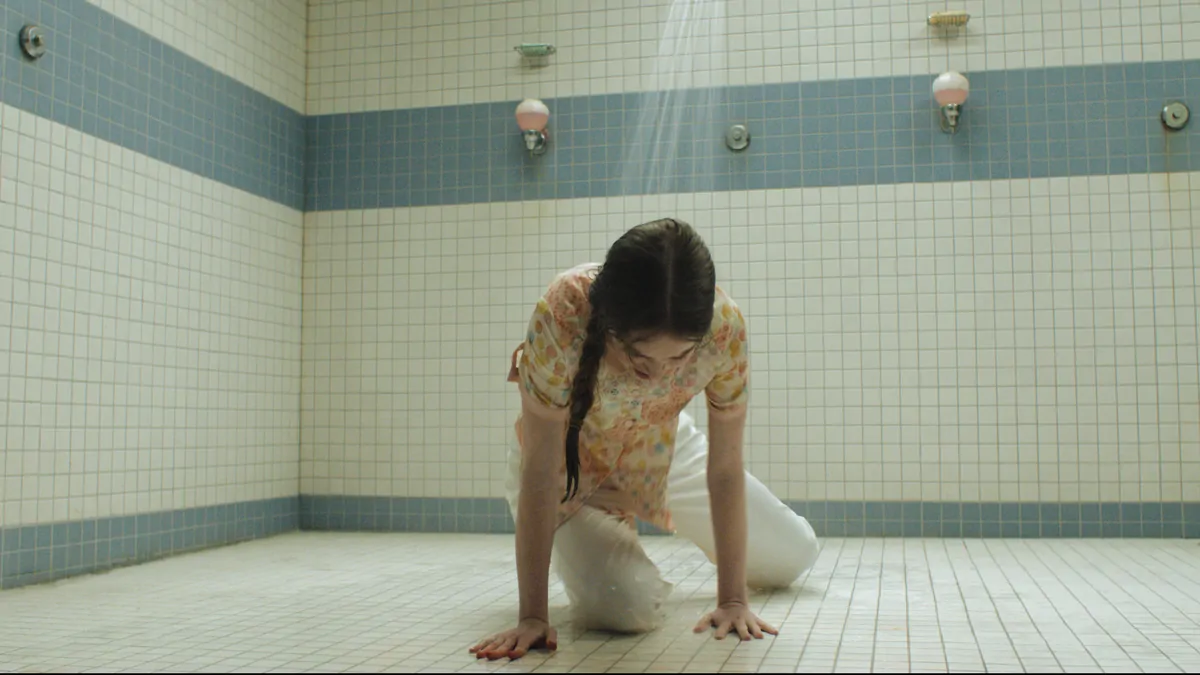
Summer H. Howell as Carrie White. Credit: Robert Falconer/Prime
If anyone is going to be able to pull it off, it’s Mike Flanagan, who for the past decade, has built a body of work specialising in serialised dread, including the shows The Haunting of Hill House, Midnight Mass and The Fall of the House of Usher.
The salient details are the same, but Flanagan expands his version of Carrie so it’s not just this specific story of a cloistered young girl, thrust from her homeschool prison into a wilds of American high school circa 2026.
It’s also an exploration of the social structures and layers of trauma built over successive school shootings, social media, a culture of entitlement, the pressures of exceptionalism, and a country that has no real sense of its future.
The bullies are still mean, but there’s a context to them. It doesn’t excuse them, but it explains them, at least a little bit.
There’s depth to the thrills, which offers something compelling to audiences, no matter their level of familiarity with King’s novel.
Carrie is Carietta White (Summer H. Howell) who is found cowering in a cupboard alongside her mother Margaret (Samantha Sloyan) after the death of her father in a workplace accident.
Carrie can be read as a revenge fantasy. Credit: Robert Falconer/Prime
Almost no one knew Carrie existed. She had no contact with the outside world, told by her parents that everything outside their front door was a threat, both to her physical body and to her spiritual soul.
Margaret is no unwilling victim, she fully supported her husband’s regime, and helped enforced these conspiracy-laden, Christian values. When she and Carrie are forced by the courts to interact with the wider, secular world, Margaret makes it known exactly what she thinks of its inhabitants.
The only secret Carrie kept from her parents is an unofficial library kept in a bird feeder in the garden, stocked by her next-door neighbour. Through those forbidden books, Carrie’s imaginary was world broadened, even a little bit, by stories about Anne of Green Gables and the like.
What it didn’t extend to was contemporary American teenagehood, which comes as a big shock when she attends Ewen High School for the first time. She’s completely unprepared for metal detectors at the entrances, realistic active shooter drills and the social order.
She’s like Cady Heron but four times more clueless. Carrie’s mother didn’t think she needed to know about menstruation, so when it comes, Carrie is horrified, leading to one the book, film and now show’s most potent displays of cruelty led by queen bee Chris Hargensen (Alison Thornton).
The TV adaptation of Carrie explores the social horror that is contemporary American high schooling. Credit: Robert Falconer/Prime
There are more sympathetic figures in Sue Snell (Siena Agudong), Sue’s boyfriend Tommy (Joel Oulette) and gym teacher Ms Desjardin (Amber Midthunder). Matthew Lillard plays the school principal Henry Grayle, the kind of educator who isn’t ill-intentioned but has been beaten down by a system that’s about surviving rather than thriving.
Flanagan’s Carrie is more social horror than horror-horror. School is kind of hell for everyone, not just Carrie, contending with security and gun control, technology, the extra dimension of social media, and even just how to teach these kids when no one can agree on what they’re supposed to learn.
In this crucible of endless dilemmas with no solutions is Carrie, an innocent who becomes a focal point for a lot of what else is going on.
Everything also coalesces on Howell’s performance as Carrie. The young Canadian actor seems to have reserves of brightness and guilelessness that continue to push through even as the character is put through it.
The delicate balance of pain and trauma with a seeming incorruptibility is the foundation on which Carrie’s later actions are built. When her powers come to the fore, and she starts to exert some control over them, and real horrors reveal themselves, you never forget where Carrie started.
In that sense, this series is a tragedy, as well as a warning.
Carrie is streaming on Prime Video from October 7