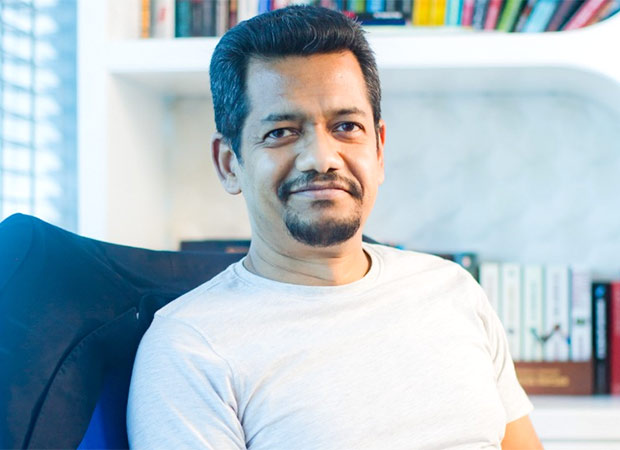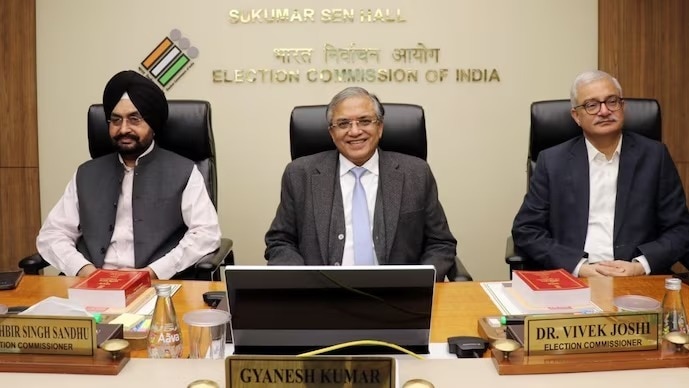
As questions mount over the Election Commission’s handling of the SIR, political analyst Rajat Sethi and Swaraj India co-founder Yogendra Yadav have turned the spotlight on Election Commissioners Sukhbir Singh Sandhu and Vivek Joshi, asking why they did not call a full Commission meeting or approach the President if they believed the poll panel’s decisions were illegal.
Yadav said the continuation of not just Gyanesh Kumar but the other two Election Commissioners was untenable if they believed that illegal decisions were being taken but did not bring the matter before the public.
“Why did the two not requisition a meeting of the Commission? And if they did and the meeting was not held, why did they not approach the President of India?” Yadav asked during a debate on India Today TV.
He questioned why the two commissioners had instead written to the Cabinet Secretary.
“Is Cabinet Secretary the boss of Election Commission of India?” Yadav asked, adding that the entire Election Commission should be held accountable.
Sethi, who has worked on a BJP election campaign in the past, also questioned the conduct of the two commissioners, while stopping short of calling for their removal.
He said the three Election Commissioners should have sat together to deliberate on the issues raised in the internal communications.
“If the two commissioners are on one side on a decision, they could have called the full-fledged meeting of the Election Commission on their own,” Sethi said.
Sethi also questioned why the two commissioners approached the Cabinet Secretary despite the constitutional independence of the Election Commission.
The Election Commission is an independent constitutional body, Sethi said, adding that he did not understand why the two commissioners would show “deference” to a Cabinet Secretary.
“I don’t understand the conduct of the two commissioners as well,” Sethi said.
He said the key issue was whether Sandhu and Joshi had jointly opposed particular decisions, thereby forming a majority against them, or whether they had raised objections on separate issues while a majority still supported the decisions.
“Did the two commissioners disagree collectively on a certain topic, making the whole decision illegal, ab initio? Or did the two commissioners disagree on different issues, and the majority was still with the decision that was taken?”
“These details we don’t know,” Sethi said, adding that only the Election Commission and the three commissioners collectively could clarify what happened.
He said the available information had led to an assumption that decisions taken by the Election Commission were illegal because there was no majority, if not a consensus. However, he said the records of the deliberations would be needed to establish whether that was actually the case.
Sethi further said that if the two commissioners were together on a particular decision, they had an institutional option to call a full-fledged meeting and potentially annul the decision.
The debate followed reports of internal communications in which the two Election Commissioners had raised concerns over aspects of the SIR process, including changes to electoral forms and the use of centralised electoral-roll software.
Yadav argued that the issue went beyond routine disagreement within the poll panel. He alleged that the Election Commission had authorised its staff to take actions that were the prerogative of electoral registration officers.
He also cited the controversy over changes to Form 6, the statutory application form for inclusion of names in electoral rolls, and said the matter required greater transparency.
Sethi, however, said the central legal question was whether the decisions in question had the required majority under the Election Commission (Appointment, Conditions of Service and Term of Office) Act, 2023.
He said if the two Election Commissioners had jointly opposed a decision and constituted a majority against it, the decision could not have been taken. But he added that the available information did not establish whether their objections amounted to a collective opposition to specific decisions.
“The core legal question” could be answered only by the Election Commission itself, Sethi said.
The debate also saw BJP spokesperson Siddharth Yadav argue that dissent during Election Commission deliberations was provided for under the 2023 law and that the final decisions cited by the poll panel had been unanimous.
He said no formal dissent had been recorded against a final decision and questioned the conclusion that the Election Commissioners had been overruled by the CEC.
The discussion has therefore raised a separate question beyond the allegations against Gyanesh Kumar: if Sandhu and Joshi believed certain actions were unauthorised or illegal, why did they not use the institutional mechanisms available to them to force a full commission meeting or make their objections public?
– Ends
Published By:
Sayan Ganguly
Published On:
Sep 23, 2026 23:58 IST