

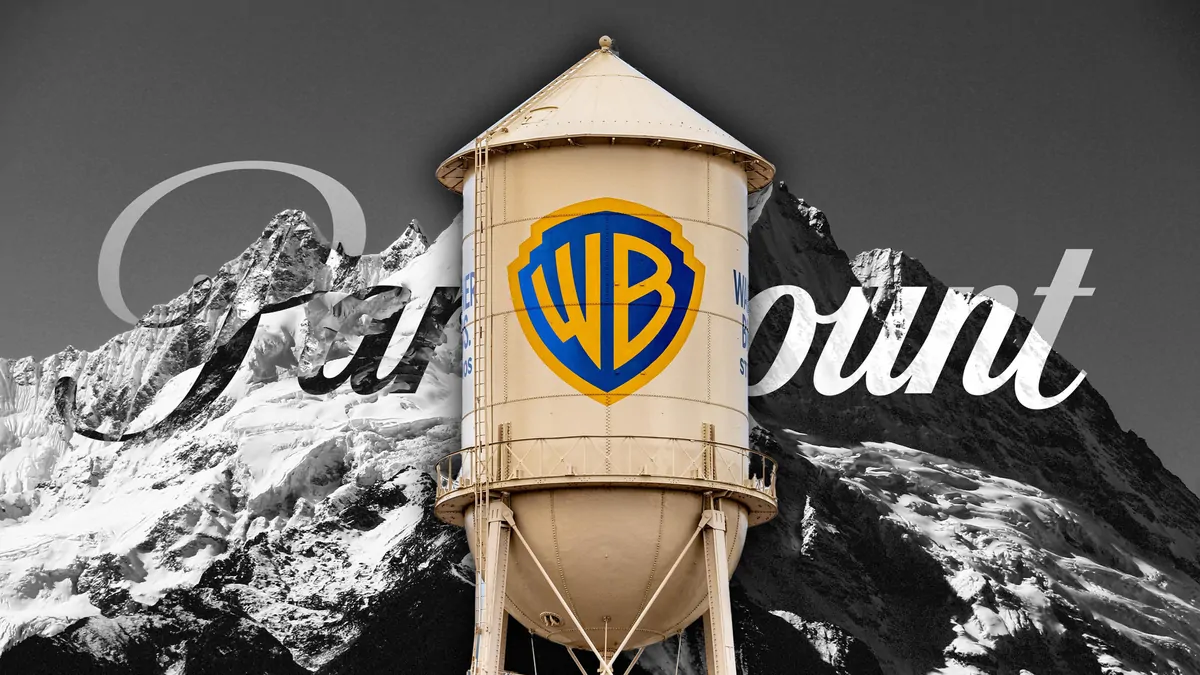
The proposed $US110 billion ($154b) Paramount and Warner Bros. merger surmounted its final hurdle with 12 US state attorneys-general, led by California’s Rob Bonta, settling the lawsuit it had brought to block the deal.
In the end, the concessions the AGs sought didn’t amount to much, and David Ellison, the tech scion whose father’s billions are funding a large part of this leveraged buyout along with Middle East sovereign wealth funds, will get to expand his entertainment empire. Ellison took over Paramount only a year ago.
Sign up to The Nightly’s newsletters.
Get the first look at the digital newspaper, curated daily stories and breaking headlines delivered to your inbox.
By continuing you agree to our Terms and Privacy Policy.
The potential merger of two Hollywood legacy studios has had the industry on edge as the prospect of inevitable consolidation and mass job losses loomed large.
That the merger deal terms included taking on $US80b of debt is particularly worrying.
David Ellison. Credit: Michael Nagle/Bloomberg
There had been a lot of chest puffing from both Mr Bonta, a Democrat, and Ellison, and ultimately, Ellison, who had threatened to relocate Paramount out of California, came out on top.
Despite Mr Bonta’s threats that Ellison’s team would need to make significant concessions for a settlement, such as the divestment of US cable news network CNN, which is owned by Warner Bros., the Paramount folks didn’t give up much.
According to industry newsletter What I’m Hearing from Puck, Bonta had been under political pressure to sign a settlement from Californian politicians including Governor Gavin Newsom and Los Angeles Mayor Karen Bass. Puck journalist Matt Belloni claimed that Democrats had started to hear from Silicon Valley donors that they wanted to see the deal done.
The Writers Guild of America has also settled its separate suit, conceding that it couldn’t alone fund the fight without the AGs’ lawsuit, and carved out a deal that would protect its members at CNN and secure a payment into its health plan.
As you can imagine, many people in Hollywood are seeing today as a dark day, one in which the industry has been irrevocably changed. The artist-led campaign against the merger, which had supporters including Mark Ruffalo and Jane Fonda, could do little more than warn Ellison that they were watching him.
Meanwhile, the bankers and money men of Wall Street pocketed some hefty fees. The deal is expected to close within the fortnight.
The combined company
There is a lot of existing crossover in the operations of Warner Bros. and Paramount, and it’s inevitable that some of those units will be consolidated, which means job losses.
The two shiniest components are the movie studios as well as their respective Los Angeles backlots. For the foreseeable future, the Paramount and Warner Bros. lots can’t be sold off and will continue to be used in line with “past practices”.
When the merger is completed, Ellison will control a wide slate of known film and TV brands including Lord Of The Rings, Harry Potter, Mission: Impossible, Transformers, DC Comics, The Conjuring universe, Looney Tunes, Teenage Mutant Ninja Turtles, G.I. Joe and Star Trek.
HBO reboot series Harry Potter and the Philosopher’s Stone. Credit: HBO
On the TV side, the Paramount half brings with it the likes of MTV, SpongeBob, Paw Patrol, NCIS, CSI and Dexter.
Warner Bros. Television has a large library which includes favourites such as Friends, Gilmore Girls, The West Wing and Adult Swim.
The company will now own two streaming platforms: Paramount+ and HBO Max.
Paramount+ is the lesser of the two and has made its centrepiece offering the TV universe created by Taylor Sheridan, which includes the a handful of Yellowstone spin-offs as well as other male-oriented shows such as Mayor Of Kingstown, Tulsa King and Landman.
Sheridan, since Ellison’s takeover of Paramount, has already flagged his intention to leave and will be defecting to Universal after his contract expires in 2028.
There are also moves underway to expand beyond Paramount’s core brand identity and make it a more attractive proposition to female and prestige viewers. Ellison hired Cindy Holland, the former Netflix originals boss who was ousted in 2020 when the streamer shifted its commissioning priorities to broad appeal.
Holland spearheaded Netflix’s foray into originals and was known for been a talent-friendly executive who green-lit bold plays such as Orange Is The New Black, The OA and House Of Cards.
Since she landed at Paramount+ a year ago, Holland has declared her division open for business and was especially interested in hearing from creators who have stories for women. She has already green-lit a Clueless sequel series, a thriller starring Viola Davis and a legal show with Nicole Kidman and Elle Fanning.
Cindy Holland Credit: John Nacion/Variety via Getty
What’s not known yet is how Paramount+ will sit alongside one of Warner Bros.’ most valuable assets, HBO Max and its programming boss and hit whisperer Casey Bloys.
Bloys is highly regarded in the industry and has for years now reported straight to the CEO level. It seems unlikely that he will be OK with sitting under Holland.
HBO has for more than two decades held the unofficial title of most prestigious maker of TV and has the shows and awards to back that up.
Ellison has in its past said that “HBO should stay HBO” but it’s always difficult to know how long that kind of general commitment will last.
When current Warner Bros. boss David Zaslav took over after the Warner Bros. Discovery merger, he made the colossal mistake of merging HBO and Discovery’s streaming platforms and naming it Max, which had to be unwound later.
It undercut the power of the HBO brand and placed shows such as The Wire and Succession alongside Dr Pimple Popper and Say Yes To The Dress.
Hopefully Ellison means what he said and will leave HBO and Bloys to the thing they know best: make great TV.
The movies
When Disney bought 20th Century Fox in 2019, the two companies had separately released between 22 and 36 films in cinemas a year. Since then, despite assurances at the time, that combined number has halved, according to CNBC.
The future of the screen exhibition industry has been of particular concern for the people who actually make the movies.
The merger between two movie studios would inevitably lead to cuts, especially when the new company will be saddled with so much debt and a promise of $US6b in “savings” in the short term.
During the pitch process, Ellison had repeatedly said he wanted to save the film business, and would commit to releasing an increased number of films per year.
That number was a key point in the settlement.
Ellison has agreed the combined Paramount Warner Bros. business will release at least 30 movies in cinemas annually for the first two years, which then rises to 32 films annually in the next three calendars.
At least 20 per cent of those films will be blockbusters while four of the films will be considered “independent”. It has also committed to spending $US300 million per year on productions in the US. Failure to hit those goals will result in a $US30m penalty per film it doesn’t make, and those funds will be disbursed to workers.
Those cinema releases also have an exclusive 45-day window before digital rental or purchase and a 90-day lockout of subscription streaming.
There is a get-out-of-jail-free card, a force majeure clause, that allows Ellison to wiggle out of those terms in the face of “economic recessions”, which is not more clearly defined.
Just who gets to decide who’s making those movies and what kind of films they will be is up in the air.
At the moment, the bosses of Paramount’s film studio are Dana Goldberg and Josh Greenstein while their Warner Bros. counterparts are Pam Abdy and Mike De Luca. It’s unlikely both sets of executives are going to keep their jobs once the two studios are merged.
Abdy and De Luca have the higher profiles because of Warner’s successful 2025 release slate which included critical favourites Sinners and One Battle After Another and commercial hits such as the Minecraft adaptation. But their 2026 movies have yet to crack the top 10 of this year’s box office charts.
Goldberg and Greenstein joined Paramount last year and one of the first projects they signed is High Side, a James Mangold-directed, Timothee Chalamet-starring action thriller.
Paramount also has in its future Tomorrow, Tomorrow And Tomorrow, a coming-of-age adaptation of a best-selling book, as well as Damien Chazelle’s (La La Land, Whiplash) next film.
Ellison has made a lot about loving movies and started in the industry by forming his own production company, Skydance, funded by his father’s money.
However, the movies Skydance made have tended towards specific genres, mostly male-led action blockbusters such as the Mission: Impossible franchise but also titles that were critically panned including 6 Underground, Gemini Man, Snake Eyes, The Tomorrow War and Transformers: Rise Of The Beast.
With 30 films to make a year, the collection will surely have to be more diverse than the studio owner’s personal tastes.
CNN’s future
Instead of being made to sell CNN, Ellison will get to keep the news jewel as part of the sale. Both CNN and broadcast network CBS, which he acquired when he bought Paramount, will be subject to an independent editorial board made up of five current or former journalists.
But that panel will be appointed by the board of Paramount Warner Bros., which itself is hand-picked by Ellison, so that has raised questions as to just how independent the adjudicators will be when resolving editorial disputes between reporters and management.
Ellison has already copped criticism for changes he instituted at the Paramount-owned CBS since he took over. One of his actions was to hire conservative commentator Bari Weiss to oversee editorial direction at the broadcaster’s news operations.
CBS has since been embroiled in endless controversies, including its mass sacking of 60 Minutes reporters and producers, due to Weiss’ perceived bias in favour of the Trump administration.
Anderson Cooper. Credit: Al Drago/Bloomberg
Ellison’s ownership of two news networks had been a sore point for the merger’s opponents. Ellison and his father, Oracle founder Larry Ellison, have well-publicised links to the Trump administration. It had implied during the pitch process that those relationships would make government approval of the merger easier to gain.
According to a report in The Guardian last year, Donald Trump had discussions with the older Ellison about which CNN hosts he would like to see fired. The US President had also previously publicly advocated that CNN be sold.
This week, Mr Trump banned CNN along with Politico and MSNOW (formerly MSNBC) from the White House in a showdown on press freedom. The three outlets are now suing.
Spare a thought for high-profile CNN broadcast journalist Anderson Cooper who left 60 Minutes in the middle of the CBS circus and now finds Ellison will still be his boss.
