Landmine-detecting rats could be used to detect contaminated soil, saving communities from devastating effects including vegetation loss and health risks.
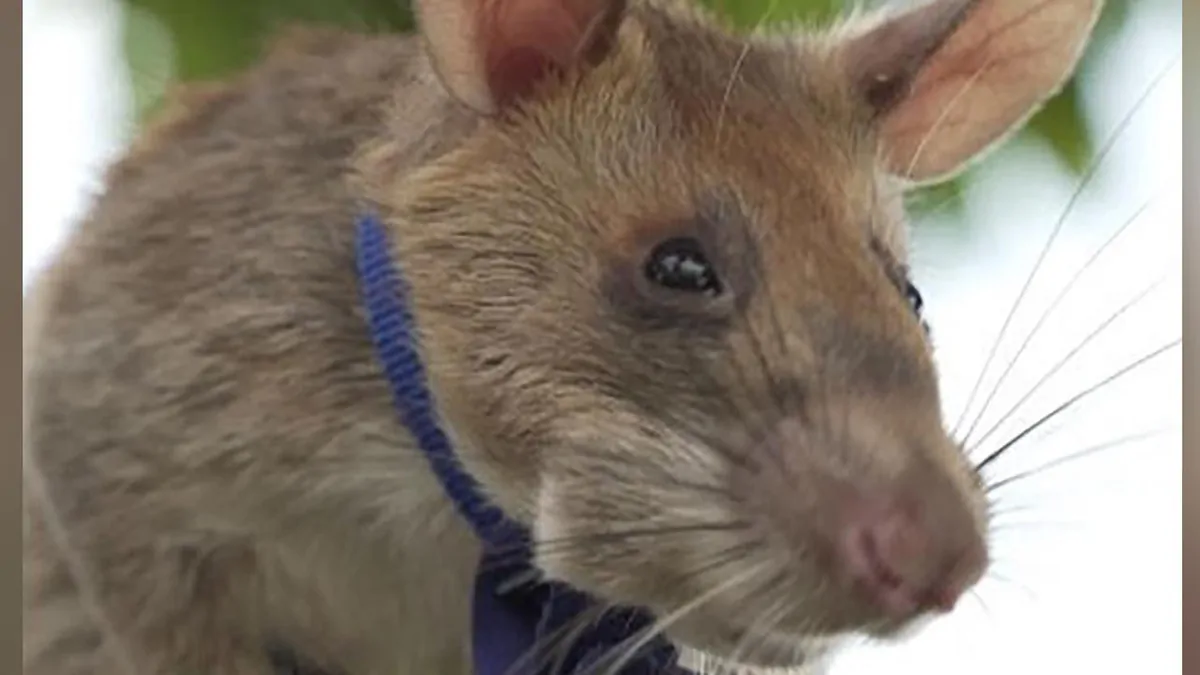
Professor Paul Nathanail, a contaminated-land specialist working with not-for-profit APOPO, shared research on the viability of training African giant pouched rats to detect soil contaminated with petroleum at a conference in Adelaide on Wednesday.
“The initial results are really exciting,” Prof Nathanail said ahead of his presentation at the CleanUp 2026 conference.
Sign up to The Nightly’s newsletters.
Get the first look at the digital newspaper, curated daily stories and breaking headlines delivered to your inbox.
By continuing you agree to our Terms and Privacy Policy.
“What we’re doing now is looking at whether we can train the rats to work at investigation levels that are relevant to contaminated sites.”
Soil contaminated with petroleum hydrocarbons poses considerable threats, resulting in soil degradation, vegetation loss and health risks.
Rats can be trained to carry out scent-detection tasks in just a few months, with Prof Nathanail noting that their sensitive sense of smell and trainability made them promising candidates.
If successful, the rats could be used to detect petroleum in contaminated sites where access to laboratories is limited.
Researchers suggested rats could be more accurate than labs in certain cases, due to difficulties preserving the integrity of soil samples during transportation.
The animals could also be used to pinpoint leaks of dangerous substances inside industrial facilities, which would enable more targeted repairs and shorter shutdowns.
A study conducted using APOPO-trained rats and published in January found six of them correctly identified positive samples while rejecting all clean soil.
Prof Nathanail stressed the safety and wellbeing of the rats was paramount.
“The rats are very well looked after,” he said.
The next phase of research involves determining which hydrocarbons to target and how low a concentration of the contaminants rats can reliably detect.
APOPO deploys rats across Africa, Asia and South America, where they detect landmines alongside technical survey dogs.
The non-profit says it has destroyed over 170,000 landmines in 11 countries and freed almost three million people from the threat of explosives.
The rats can also be trained to detect tuberculosis in human sputum samples, performing 100 checks that would take a lab technician four days in just 20 minutes. Positive samples are then confirmed by a lab.
Prof Nathanail said he hoped the research would inspire people to see “just how important it is to have innovative thinking outside the box.”