There is a particular kind of democratic despair that does not arrive quietly. It builds — through broken promises, through wars launched on false pretenses, through financial crises absorbed by the many while the few walked free. By the time it peaks, voters are not simply disappointed. They are done. Done with the polished evasions, the carefully calibrated non-answers, the whole performance of expertise deployed in service of interests that were never quite their own.
The result, across much of the Western world over the past decade, has been a remarkable act of collective substitution. Disillusioned by experienced, institutionally fluent leaders they no longer trusted, electorates turned toward political outsiders — figures who had never negotiated a treaty, never sat across a foreign minister, never been initiated into the protocols of multilateral diplomacy. The implicit logic was disarmingly simple: If the insiders lie expertly, perhaps the outsiders will at least blunder honestly.
This substitution has a name in the leadership literature. Barbara Kellerman of Harvard Kennedy School spent years mapping the failure modes of political leadership, drawing a crucial distinction between leaders who are unethical — skilled, networked, self-serving — and those who are simply incompetent. The democratic gamble of recent years has been to flee the first pathology and land squarely in the second. The experience has not been comfortable.
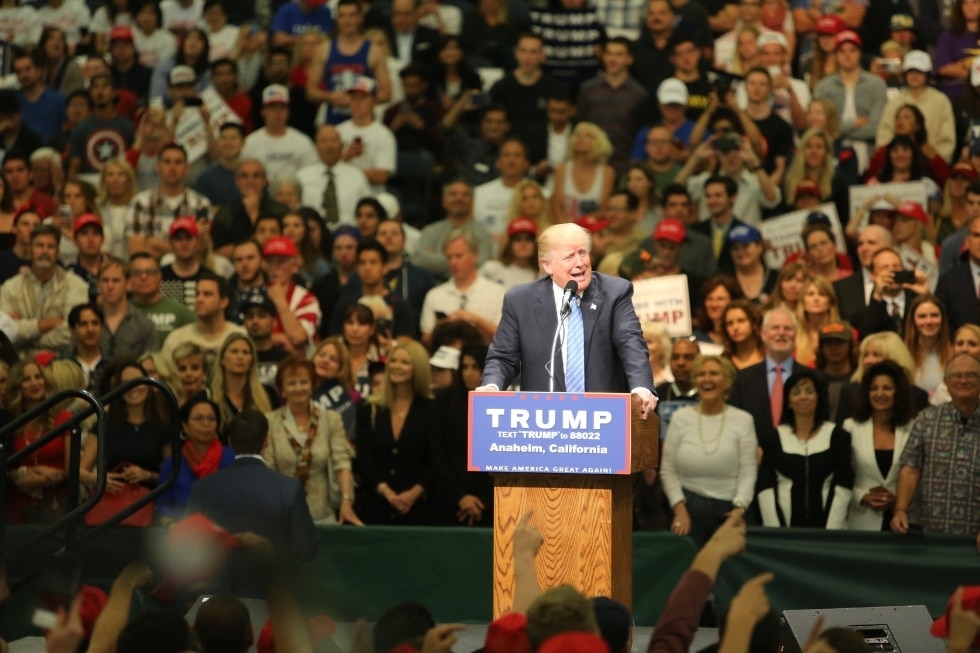
The US is the most vivid case. President Donald Trump’s election in 2016 was, at its core, a referendum on the political class — and the political class lost. Here was a candidate whose entire appeal rested on never having operated within the institutions he was now asking to lead. His ignorance of foreign policy was not a liability he tried to hide. It was, for millions of voters, a feature.
The costs of inexperience
The consequences were swift and structural. On his third day in office, Trump formally withdrew the US from the Trans-Pacific Partnership, dismantling a painstakingly built multilateral framework designed to counterbalance Chinese economic influence in Asia — a gift to Beijing achieved at zero cost, with no strategic alternative prepared. In 2018, he pulled the US out of the Iran nuclear agreement, shattering a diplomatic coalition assembled over years of patient negotiation and, as arms control analysts later documented, accelerating Iran’s uranium enrichment timeline without producing any viable alternative deal. The transatlantic alliance, meanwhile, absorbed years of unpredictable tariffs and theatrical contempt — strain applied precisely when unified Western resolve was most needed.
The point is not that experienced leaders would have done everything differently, or necessarily better. The point is that deceitful statecraft can, in principle, be detected and corrected — through institutions, through press scrutiny, through the slow grind of democratic accountability. Strategic ignorance leaves a different kind of wreckage: decisions made without understanding what is being destroyed, legacies that outlast the administration that produced them.
France’s different experiment
France offers a variation on the theme. President Emmanuel Macron’s rise in 2017 was itself a version of outsider politics — a young technocrat who had never won an elected office, who built his own political movement expressly to circumvent the parties that had governed France for half a century. The Gaullists and Socialists did not simply lose an election. They collapsed, leaving behind a political vacuum that no single force has yet managed to fill.
What followed was a France chronically unable to restore the democratic confidence that Macron had promised to renew. Marine Le Pen’s National Rally — which held eight seats in the National Assembly in 2017 — had grown to 89 seats by 2022 and led all parties in the 2024 European Parliament elections with 31.4% of the vote. Each of these numbers is a measurement of failure — not Le Pen’s failure, but the failure of the centrist outsider gamble to address the underlying grievances that fed the populist wave in the first place.
What connects Washington and Paris is not ideology. It is structure. In both cases, voters exhausted by one kind of leadership failure reached for a corrective that turned out to carry its own, different, costs. The hunger driving that reach was legitimate. The anger at a self-dealing political class was, and remains, well-founded. What proved miscalculated was the remedy: the idea that inexperience is a proxy for authenticity, that not knowing the rules is evidence of not being corrupted by them.
The return of competence
There are early signs — tentative, easily overstated — that the pendulum may be beginning to move again. The visible costs of outsider leadership are creating conditions for what might be called a competence rehabilitation: not nostalgia for the old class and its evasions, but a grudging recognition that governing is a craft, and that dismantling institutions requires at minimum understanding what they were built to do.
The bar, if the pendulum swings back, will be higher than before. Voters who have lived through both failure modes are unlikely to extend the old deference. They will want statesmanship that is both prepared and honest — not a choice between pathologies, but an insistence on transcending them. Whether democratic systems can produce that combination is the question the next decade will answer.
[Luna Rovira edited this piece.]
The views expressed in this article are the author’s own and do not necessarily reflect Fair Observer’s editorial policy.