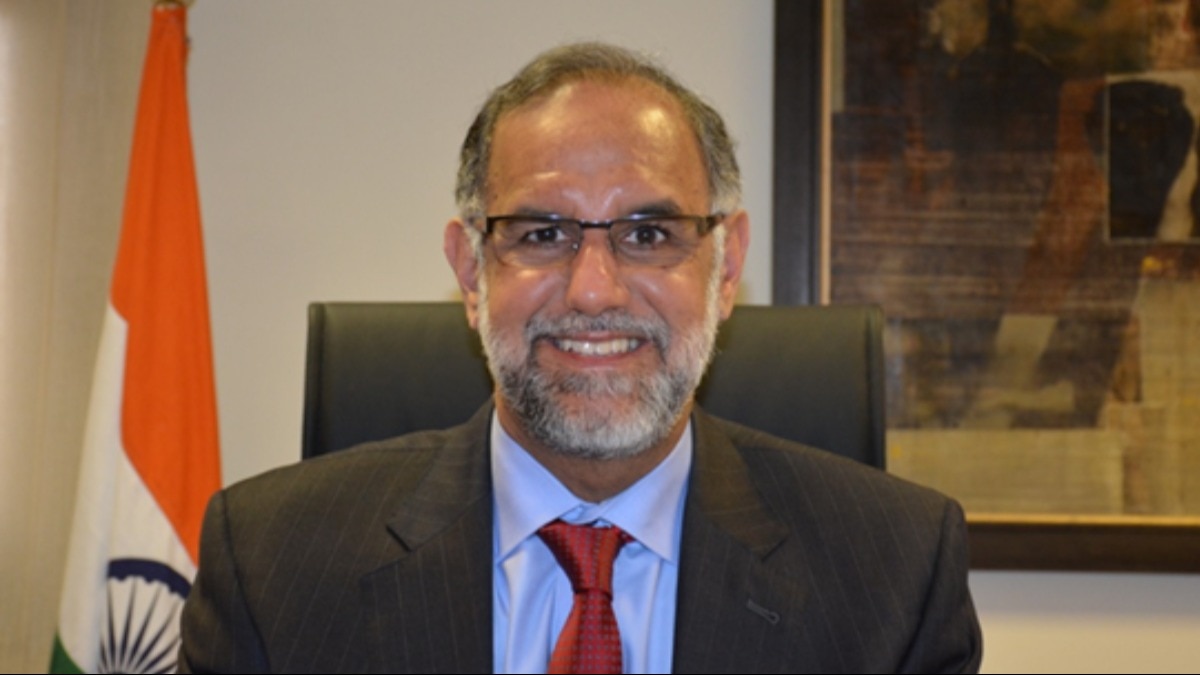
He represented India in several countries during a long diplomatic career. Now, back home in Punjab, retired Indian Foreign Service officer Navdeep Suri has been asked to produce documents proving that he is an Indian citizen.
Suri, who served as India’s ambassador to the United Arab Emirates and Egypt and as high commissioner to Australia, encountered the problem during the Special Intensive Revision of electoral rolls in Punjab.
The Amritsar resident retired from foreign service in 2019. In a series of posts on X, he described how a routine visit to submit his documents turned into a struggle to establish his eligibility.
“Sharing my experience with SIR in Punjab. Went to BLO, submitted Voter ID and Aadhaar card, was assured that everything is in order. Got a message today from a volunteer saying some details don’t match with SIR in 2003!” Suri wrote.
Suri said he was asked to return with documents proving his Indian citizenship despite having already submitted his voter ID and Aadhaar. Since he was outside India in 2003, he was told to produce his passport as proof.
The former diplomat underscored the irony of being asked to establish his citizenship after spending years representing the country overseas.
“If I have trouble establishing my citizenship after representing India in three countries, what’s the fate of the common citizen?” he asked.
The Election Commission of India, the Punjab government and the Centre have yet to respond to Suri’s account.
SIR UNDERWAY ACROSS PUNJAB
The draft electoral rolls for all 117 Assembly constituencies in Punjab were published last week as part of SIR 2026.
The publication began the second phase of the exercise. Electors can submit claims and objections between August 13 and September 12. These will be examined and disposed of by October 8, before the final rolls are published on October 12.
Election officials collected and digitised enumeration forms from nearly 1.94 crore of Punjab’s 2.14 crore electors during the first phase.
More than 20 lakh electors, or 9.63 per cent of the total, were categorised as absent, shifted, dead or duplicate.
The house-to-house enumeration exercise was conducted from June 25 to August 3 to update the state’s electoral rolls.
For Suri, however, the revision has raised a more basic question: if a former diplomat who represented India across three countries struggles to satisfy the process, how difficult could it prove for an ordinary voter?
– Ends
Published By:
Aprameya Rao
Published On:
Aug 23, 2026 21:02 IST