How To
John Paul, AAA Northeast’s Car Doctor, hears from a reader wondering if they need to rotate tires on a 2023 EV.
The Car Doctor hears from a reader wondering if they need to rotate tires on a 2023 EV. Nissan
August 13, 2026
4 minutes to read
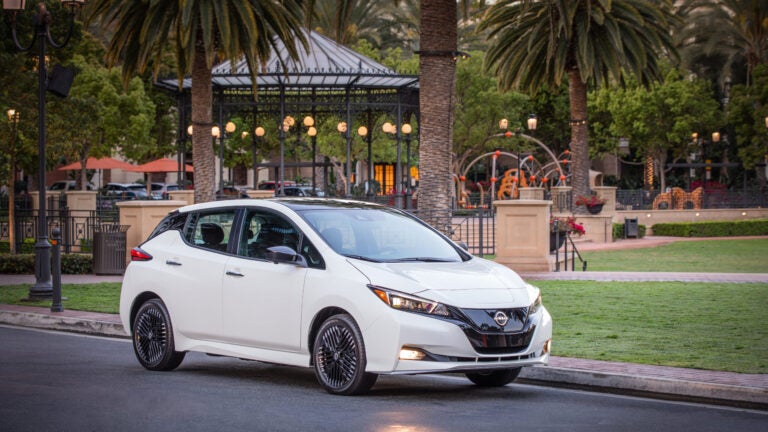
Q. I bought a used 2023 Nissan Leaf (base model) two years ago. It had 26,000 miles and newly replaced tires. Eighteen thousand miles later, the tire alert appeared on the dashboard, suggesting I rotate the tires. I’ve kept the tires properly inflated, and they appear to be in good shape and wearing evenly. How important is it to rotate tires on a two-wheel-drive EV?
A. Electric vehicles tend to wear tires more quickly due to their instant torque and additional weight. To get the maximum life out of your tires, rotate them at the recommended intervals. EV tire life is often somewhat shorter than that of a comparable gasoline-powered vehicle, due in part to low-rolling-resistance tires and the overall characteristics of electric vehicles. Even if the tires appear to be wearing evenly, regular rotations help maximize tread life and can reduce tire noise over time.
Q. I own a 2019 Subaru Impreza hatchback with more than 38,200 miles. I recently had my car towed to Subaru due to a flat tire. Since my vehicle inspection was due, I decided to have that done as well. I was informed that I needed additional maintenance, including an HVAC Purification Filtration Service ($169.99), Fuel & Emissions System Tune-Up ($359.95) and replacement of all four tires ($815.52). I chose not to go ahead with those suggestions. I did agree to replacing the cabin air filter ($44.95 with a coupon), cleaning the A/C box and drains (total $184.99), having a four-wheel alignment ($199.99), and, along with the tire replacement at $203.88, replacing a damaged tire sensor ($379.95). Should I have had the HVAC Purification Filtration Service and the Fuel & Emissions System Tune-Up? How critical are these services? How are the rates for all of these repairs?
A. It sounds like these services are dealer add-ons rather than Subaru-required maintenance. The HVAC purification service is typically a cleaning of the ductwork with a disinfectant-type cleaner. The Fuel & Emissions System Tune-Up is likely a fuel-system and induction-system cleaning service. Personally, I would consider these services an upsell and not required maintenance. One note, however: Subaru is very fussy about matching tire circumference on all four wheels. If the other three tires were original, I would replace them soon. Running tires with significantly different tread depths can cause excessive wear to the AWD system over the long term.
Q. I have a 2014 Honda Accord with about 193,000 miles and it runs well. I had the spark plugs changed at 100,000 miles. I’m considering having the spark plugs changed again, and I’m also thinking that maybe I should replace the spark plug wires. What are your thoughts on that? I’m considering having a good local mechanic do the work, or is this something I should take to the dealer?
A. Your Honda uses a coil-on-plug ignition system, not traditional spark plug wires. Unless you are having a problem—which it sounds like you are not—a spark plug replacement should be all that is needed. Any good independent repair shop should be able to perform this service. I would ask the shop to use NGK or Denso spark plugs. I would avoid bargain brands and stay with the original-equipment style plugs.
Q. My car vibrates at 50 miles per hour and higher, but the tires look okay. Does my car need an alignment?
Your car may need a wheel alignment, but that is usually not the cause of a vibration. Vibrations at lower speeds can be caused by a damaged tire or bent wheel. Vibrations that occur primarily at highway speeds are more commonly caused by tires that need balancing.
Q. I have been reading your column for a long time, and I know you are also a traffic safety expert. I was backing out of my driveway and directly behind me was a stopped school bus dropping off a young child at the driveway across the street. I tapped the bus door, and neither one of us had any damage. The driver was required to call a police officer and write up a report. My question is this: Is the driver allowed to block a driveway directly behind me to drop off children? Technically, he was blocking my departure. He told me that he delivers students door to door. If I am backing out of my driveway, does he have to stop directly behind me and prevent me from leaving? I look forward to your response.
A. Yes, a school bus can block a residential driveway while dropping off children. In some areas, this is actually the preferred practice. School bus drivers are trained to prioritize child safety above all else. In fact, a school bus may stop traffic on an entire roadway while children are loading or unloading. As a separate issue, drivers backing out of a driveway are generally responsible for yielding to traffic already on the roadway. I am not a lawyer, but from my experience in traffic safety, liability generally falls on the driver leaving the driveway unless the other driver was speeding, impaired or otherwise violating the law.
John Paul is AAA Northeast’s Car Doctor. He has over 40 years of experience in the automotive business and is an ASE-certified master technician. E-mail your Car Doctor question to [email protected]. Listen to the Car Doctor Podcast on Apple Podcasts or other popular podcast sites.
Sign up for the Today newsletter
Get everything you need to know to start your day, delivered right to your inbox every morning.