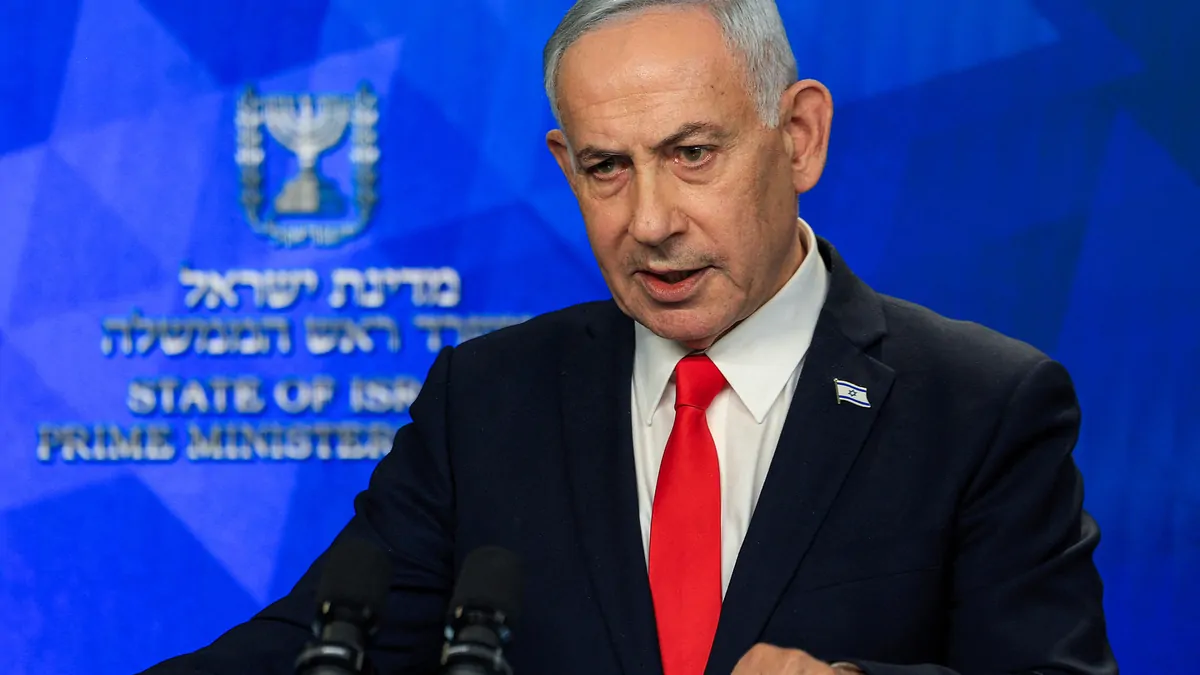
Israeli Prime Minister Benjamin Netanyahu rejected a US-backed plan Sunday for Hamas to lay down its weapons in Gaza in exchange for Israeli withdrawal from the territory – a proposal President Donald Trump recently touted as a breakthrough toward ending the conflict there.
Netanyahu, at the start of a government meeting, said that “Israel does not accept the 15-point document.”
Hamas, in a statement, reaffirmed its own commitment to the plan it agreed on with the Board of Peace – which was created by Trump – and called on parties to help ensure its implementation. The White House, when asked for comment on Netanyahu’s remarks, referred The Washington Post to the Board of Peace, which did not immediately respond.
Sign up to The Nightly’s newsletters.
Get the first look at the digital newspaper, curated daily stories and breaking headlines delivered to your inbox.
By continuing you agree to our Terms and Privacy Policy.
Netanyahu’s dismissal of the Gaza plan is the latest apparent setback for Trump’s efforts to end Middle East conflicts. While Trump has also expressed optimism about recent negotiations between Iran and Gulf countries to stop the war he launched on February 28, Iranian officials on Saturday said any deal would not reopen the vital Hormuz Strait unless the United States met a list of demands. These included withdrawing US forces from the region, paying war damages and lifting sanctions – steep terms that cast further doubt on prospects of ending hostilities that have driven up global oil prices and dragged down the president’s approval ratings.
As Trump has sought to bring the Iran war he launched alongside Israel to a conclusion, further fissures have emerged in what had long been a rock-solid relationship with Netanyahu.
The Israeli Prime Minister hinted at those tensions in his remarks on Sunday about the Gaza plan. “Unlike all those who lecture us, we do what needs to be done for Israel’s security, and we can and know how to stand our ground, even against our best friends when necessary,” Netanyahu said.
Unveiled on July 30, the Gaza plan from the Board of Peace gave Hamas and Israel two weeks to agree on a timetable and process for implementing the disarmament of Hamas and the withdrawal of Israeli forces from Gaza.
However, the militant group and Israel disagree as to which should come first. Hamas says Israel must end its military campaign in Gaza as a first step, and Israel has called for complete disarmament of Hamas and removal of weapons from Gaza as a prerequisite for withdrawing.
Trump, in announcing the plan late last month, said on Truth Social that the Board of Peace – a group that was set up in the aftermath of the 2025 deal to release the remaining hostages that Hamas seized during the Oct. 7, 2023, attack on Israel – “reached a HISTORIC agreement for the COMPLETE DISARMAMENT of Hamas and all other armed groups in Gaza.” He called it “a monumental step toward lasting PEACE and SECURITY.”
Trump described the agreement as Hamas disarming in stages, with the Israeli military pulling out of the territory over time and being replaced by an international stabilization force that would work in partnership with a revamped Palestinian police force.
Donald Trump waves to attendees during day four of LIV Golf New York at Trump National Golf Club on Sunday. Credit: Jordan Bank/Getty Images
Netanyahu on Sunday said Israeli withdrawal will be carried out only after “genuine disarmament, not fictitious disarmament.”
His demands included that the Palestinian militant group give up all weapons: “Heavy weaponry, lighter weaponry, all weaponry,” he said.
Israeli Finance Minister Bezalel Smotrich said in a video on X, “There is no Hamas in Gaza. That is the goal of the war, and we are committed to it.” He added that “the IDF cannot withdraw a single millimeter from the Gaza Strip … prior to the disarmament of Hamas.”
Netanyahu on Sunday also said: “As long as I am prime minister, a Palestinian state will not be established.”
The Gaza framework says that it aims to “create appropriate conditions for a credible pathway towards achieving Palestinian self-determination and statehood.”
While Trump has not yet commented publicly on Netanyahu’s remarks, he did discuss the status of the talks with Iran, saying the U.S. is “only semi-negotiating” with Tehran and ‘low-keying it,” in an interview with Axios Sunday.
“We are just watching Iran with its huge inflation and the fact they have no money,” Trump said. “It will work out. It always works out. It’s like a chess game.”
Mark T Esper, Trump’s former defence secretary in his first term, told ABC News’s This Week that Iran’s aggressive demands for reopening the Strait of Hormuz showed that Tehran has been “emboldened” and is more “confident about their position in the world.”
In a sign of continued turmoil in the region, Yemen’s Iran-backed Houthi rebels launched a new attack on Sunday on a refinery belonging to Saudi Arabia’s state oil company Aramco in the southern city of Jazan.
The Saudi Energy Ministry said a fire broke out at the facility and was brought under control. Authorities did not identify the cause, but said no injuries were reported.