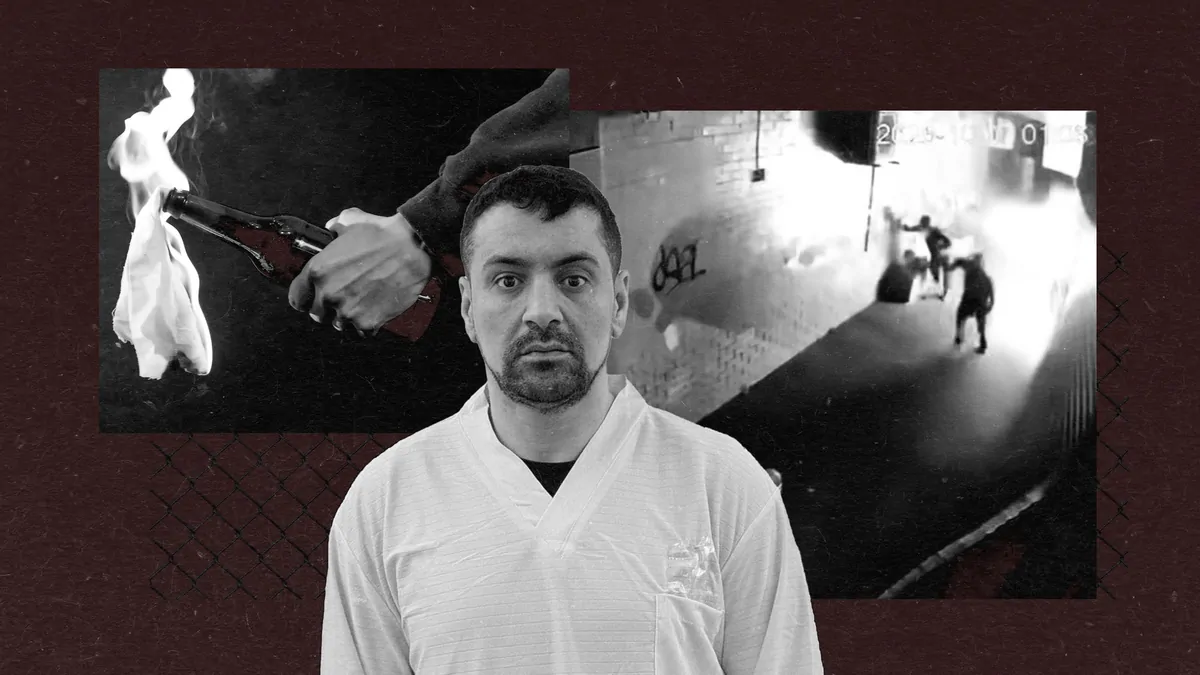
Australia’s criminal intelligence agency has warned organised crime syndicates are increasingly recruiting younger children as “disposable” foot soldiers to carry out everything from arson to murder in one of law enforcement’s fastest-growing battlefronts.
Australian Criminal Intelligence Commission Deputy CEO of Intelligence Adam Meyer said serious criminal networks were relying more heavily on a “Crime as a Service” model, outsourcing their “dirty work” to vulnerable children while hiding behind encrypted digital platforms.
“It’s to distance themselves from the actual criminal activity and impair law enforcement agencies’ ability to detect and identify their involvement,” he said.
Sign up to The Nightly’s newsletters.
Get the first look at the digital newspaper, curated daily stories and breaking headlines delivered to your inbox.
By continuing you agree to our Terms and Privacy Policy.
“These groups are looking to take advantage of more vulnerable individuals to undertake their dirty work.
“Essentially, to identify cannon fodder that they can throw in to undertake a whole series of activities, and they see these young individuals as being largely dispensable.”
Mr Meyer said outsourcing offending had become a defining feature of modern organised crime.
“We are absolutely seeing it become far more central to the broader organised crime business model, with crime-as-a-service becoming more significant, more serious and indeed more violent,” he said.
“The ‘kill crews’ — the latest version of guns for hire — are an indicator of the developing crime-as-a-service business model, where they’re hired by criminal syndicates through encrypted communication channels and other secure digital applications without a dedicated affiliation to any specific criminal group.”
ACIC deputy chief executive officer of intelligence Adam Meyer said the black market had sparked violence between organised crime gangs. Credit: NewsWire
The warning comes after Victoria Police last month arrested an Essendon man they allege was a high-ranking member of The Commission, the organised crime syndicate linked to underworld figure Kazem “Kaz” Hamad.
The 20-year-old allegedly boasted of having more than 2000 potential offenders at his disposal and has been charged with offences including kidnapping, extortion with threats to kill, false imprisonment, attempted arson, aggravated home invasion and three counts of recruiting a child to engage in criminal activity.
The accused is among the adults exposed in Victoria’s growing child-recruitment racket — a ruthless crime-for-hire system in which children are allegedly paid to steal “kill cars”, torch businesses, invade homes and kidnap strangers.
Mr Meyer said the trend had become one of the biggest emerging challenges facing Australian law enforcement.
“Coupled with the rapid escalation and evolution of technology, which really turbocharges the ability for that crime-as-a-service to occur, the involvement of youth in that is a significant concern and focus for us,” he said.
Mr Meyer said recruiters were finding children “through a range of online platforms”.
“We see them reaching out to young individuals or essentially advertising these job offers directly over those platforms and young people respond to them,” he said.
“In some cases they are completely unrelated to the networks looking to outsource the activity.
“Neither necessarily knows the other. It’s a simple business transaction.”
At street level, youth workers in Melbourne’s west say criminal networks are becoming increasingly skilled at identifying and exploiting the children most susceptible to recruitment.
The Youth Junction Inc chief executive Blake Edwards said about 25,000 young people pass through its integrated youth hub in Sunshine each year, with around 350 receiving intensive support because they were at high risk of entering or becoming further involved in the criminal justice system.
“We’re certainly seeing organised criminal groups become more sophisticated in how they identify and exploit vulnerable young people,” he said.
“We are seeing criminal networks deliberately targeting young people who are isolated, who are vulnerable, who are looking for belonging or looking for protection.
“That’s really concerning because it’s these young people who are taking all of the legal risk, while the adults pulling the strings are remaining largely behind the scenes.”
Mr Meyer said recruiters cast a wide net, seeking out children they believe are easier to manipulate.
“They increasingly see youth as dispensable assets but also, in some ways, easier to influence,” he said.
“Some of these young kids are vulnerable. They’re crying out for attention or focus and some engage in this activity because they believe it will bring them notoriety, publicity or exposure.
“Unfortunately, serious and organised crime groups manipulate and take advantage of those kids.”
Mr Meyer said for most young people, the lure was simple.
“It’s predominantly money,” he said.
“The organised crime networks also promote the activities as the ability to gain notoriety or be part of what they foolishly suggest is a worthy cause.
“It’s a very thin veneer on top of what is a very violent approach.”
Kazem Hamad. Credit: Instagram
Mr Edwards said many young people caught up in crime are also seeking identity, protection and the family connection they felt they lacked.
“It’s about belonging. It’s about status. It’s about identity. It’s about feeling respected,” he said.
“For some young people, it might be because they’ve been promised quick cash or expensive items, but others are told they’ll be protected or become part of the family and for a lot of them, they never had that.
“For a huge number of these young people, they don’t actually feel they’ve got a genuine choice.”
Once children are connected with these networks, it becomes hard to leave.
“There’s fear and intimidation that makes it really difficult for them to walk away,” Mr Edwards said.
“That’s why we need to think about this as exploitation, not just poor decision-making.”
The children being drawn into serious offending are also getting younger.
Mr Meyer said the ACIC was seeing children in their early to mid-teens in its investigations.
“Our concern is that we’ve seen that age demographic becoming younger over recent years,” he said.
“Our hope is that it doesn’t continue to go down.”
Mr Edwards said Youth Junction had encountered children as young as 10 involved in criminal activity.
“The level of risk that exists with young people more broadly, particularly those that we provide services to out here in Melbourne’s West, are getting younger and younger,” he said.
“You’ve got kids doing things that years ago you would have expected an 18-year-old to do and now they’re involved at 12 and 10.
“What worries me most is how quickly young people can become trapped in this situation.
“The earlier that organised crime groups recruit someone; the more opportunity they have to shape that person’s identity and normalise the offending behaviour so we’re seeing young people exposed to increasingly violent experiences at younger ages.”
Mr Meyer said many offending children had little understanding of the criminal enterprise behind the individual task they had been given.
“They’re aware of the specific activity they’re being asked to do, but in many cases they’ll have no idea what it relates to more broadly,” he said.
“They won’t necessarily understand who the network is they’re acting on behalf of.
“For them, it’s simply, ‘I’m going to get paid $1000 to go and do this thing over here,’ but they have very little idea what it forms part of or what it might lead to.”
He warned the greatest danger was not just the immediate crimes, but what happened afterwards.
“Once they’re involved, serious organised crime networks seek to continue exploiting them time after time,” he said.
“Our concern is more than just the one-off activities.
“These youth become almost indoctrinated into the serious organised crime environment, potentially build expertise, become far more hardened criminals and create much longer-term challenges for us.”
But Mr Edwards said intervention could still break that cycle.
Youth Junction provides intensive case management focused on mental health, education, employment, family relationships and rebuilding connections with trusted adults and communities. About 87 per cent of young people engaged in its programs do not reoffend.
“I think it’s fair to say that many of these young people are being exploited,” he said.
“The adults who organise these crimes insulate themselves from the consequences while young people carry the legal, physical and emotional risks.
“That doesn’t remove personal responsibility for offending, but it highlights why we need to look beyond punishment alone, which seems to be the only thing that we’re doing at the moment.
“The best way to protect communities is to stop young people being successfully recruited in the first place.”