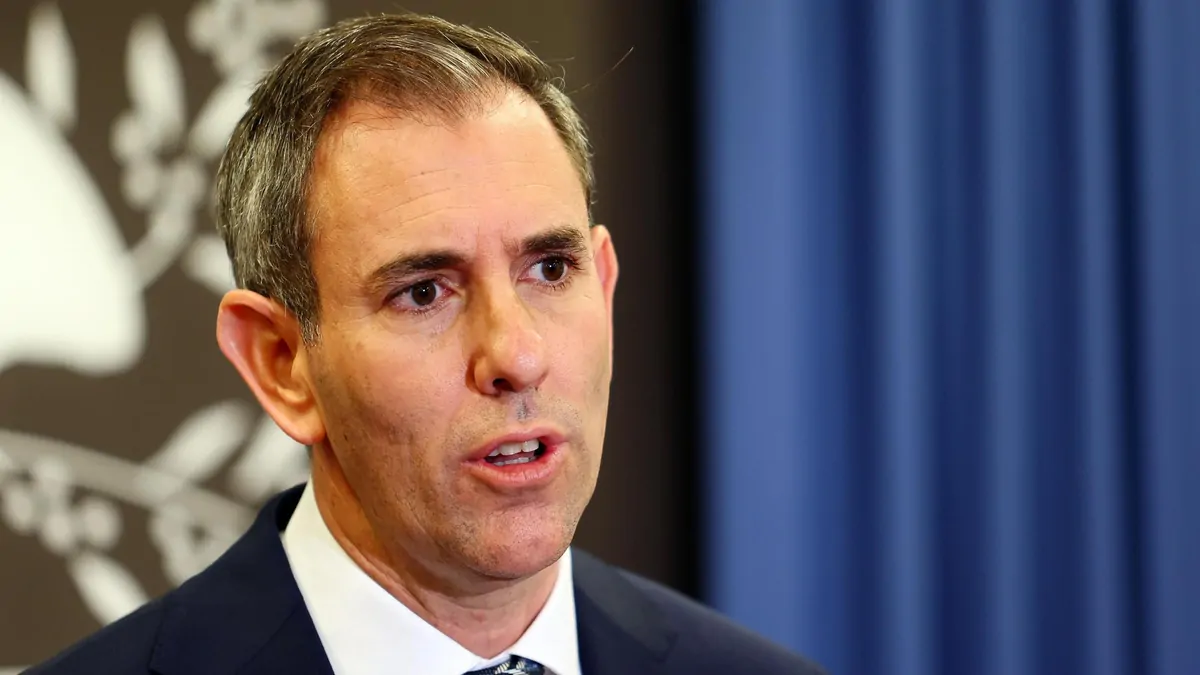
Treasurer Jim Chalmers has been accused of trying to detonate a political landmine after flagging a plan to repeal a “widow’s tax” on investment properties — two months after concerns were first raised.
Labor’s Budget sought to grandfather negative gearing and the 50 per cent capital gains tax discount for investment properties exchanged before May 12.
But on June 9, the Financial Advice Association of Australia issued a submission to the Senate economics committee warning the proposal meant a spouse, following a divorce or a death, would not have access to this grandfathering provision, as their share of an investment property was transferred into their name.
Sign up to The Nightly’s newsletters.
Get the first look at the digital newspaper, curated daily stories and breaking headlines delivered to your inbox.
By continuing you agree to our Terms and Privacy Policy.
Dr Chalmers on Tuesday night put forward draft legislation, with 17 days of consultation, to address the so-called “widow’s tax” — six weeks after the Senate passed the overall Budget package.
Shadow treasurer Tim Wilson said it appeared Labor was simply trying to detonate a political problem, with the Budget passing both houses of Parliament with support from the Greens after only two days of Senate committee hearings.
“They’ve released this updated legislation because they’ve laid landmines all across the economy that keep exploding,” he told News24 on Wednesday.
“The question for the Treasurer is, is he going to allow more than two days of consultation?”
Independent Senator David Pocock, who led the campaign in Parliament to repeal the so-called “widow’s tax”, said he hoped legislation addressing this problem could be passed without delay to avoid the rushed Budget laws hampering the ability of a widow or widower to get a mortgage.
“The substance of the announcement appears to address many of the most urgent concerns with the bill,” he told ABC News Breakfast on Wednesday.
“However, the timing for passage of this legislation is important.
“It’s critical that lenders are able to consider preserved benefit in assessing loan serviceability in decisions they are making now and in coming months.”
The Reserve Bank’s three rate rises this year have already diluted the borrowing capacity of prospective borrowers and a delay in addressing problems with the widow’s tax could potentially impair a divorcee or a surviving spouse’s ability to get finance.
The Federal Government is now seeking to amend the Treasury Laws Amendment (Tax Reform) Bill by inserting mention of what happens when a spouse dies and the widow or widower acquires the ownership interest.
The four Treasury exposure draft papers address changes to capital gains taxes, how the CGT is applied, negative gearing on existing properties and negative gearing arrangements for new properties.
“We are seeking feedback on how the reforms should apply in specific situations, including keeping current tax treatment when certain property transfers because of death or relationship breakdown,” Treasury said.
Phil Anderson, the Financial Advice Association of Australia’s general manager of policy, advocacy and standards told The Nightly his group had “not identified any significant concerns with the exposure draft and will continue to review the proposed amendments as part of the consultation process”.
Labor’s fifth Budget since coming to power in 2022 included changes to negative gearing and the CGT that Prime Minister Anthony Albanese had ruled out ahead of the 2022 and 2025 elections.
Negative gearing for properties exchanged after Budget night would be restricted to brand new dwellings from July next year.
The existing 50 per cent capital gains tax discount from that time would be replaced by a minimum 30 per cent tax on those future price gains.