Doubling down on its E20 petrol policy, the government asserted that it played a key role in protecting Indian consumers when crude prices shot through the roof during the US-Iran war. Coming out with its fourth such clarification on E20 in a week amid outrage among a section of vehicle owners, the government said petrol prices would have climbed to Rs 125 per litre at the peak of the turmoil in the Middle East, which houses some of the world’s biggest energy producers.
In a detailed statement, the Petroleum Ministry said global crude prices jumped to $135 (around Rs 13,000) a barrel during the Iran war. Crude prices touched unprecedented levels as Iran, in response to the US-Israeli strikes, blocked the Strait of Hormuz, the waterway through which 20% of the world’s oil and gas passes.
WHAT GOVT SAID ON E20 PETROL?
“When the Indian crude basket surged to around $135 per barrel, petrol without ethanol blending was projected to cost around Rs 125 per litre in Delhi,” the ministry said.
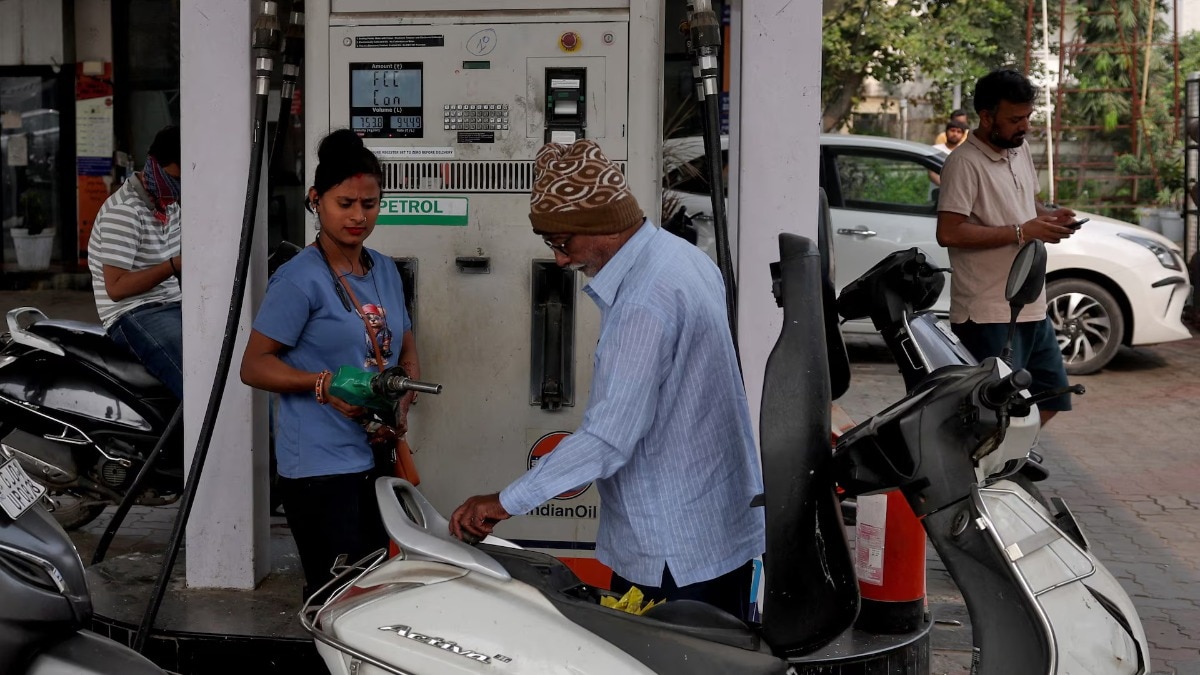
It underlined that amid the circumstances, consumers in Delhi continued to shell out just above Rs 94 per litre due to 20% ethanol blending.
“Consumers paid Rs 94.77 per litre because 20% of every litre was domestically produced ethanol… the prices were insulated from the global crude price spike,” the government said.
The result? Nearly Rs 30 per litre in savings at the pump for consumers during the crisis, the government pointed out.
The government’s E20 program – blending 80% petrol and 20% ethanol – has come under severe criticism from opposition parties and consumer groups.
Several vehicle owners (pre-2023) have claimed E20 petrol has resulted in a reduction in mileage and higher maintenance costs. However, the government has dismissed the claims, stressing that while E20 does reduce mileage, the trade-offs are far greater.
Among the biggest benefits, the government said, was a reduction in India’s exposure to volatile global oil prices. At around 85%, India is the second-largest importer of crude oil.
Petrol prices were not tinkered with for nearly two months during the Iran conflict. The government eventually raised the prices by Rs 7.5 a litre in May.
“Ethanol blending isn’t a taxpayer subsidy. It’s India’s energy insurance,” the government further stated.
SUBSIDISED FOODGRAINS USED TO PRODUCE ETHANOL?
A key concern raised by several consumer groups and activists was whether subsidised foodgrains meant for the poor were being diverted for ethanol production.
The ministry clarified that subsidised rice from the Food Corporation of India (FCI) was not being used to support ethanol manufacturing. “No compromise on food security; ethanol never comes at the cost of the poor,” the ministry asserted.
It also rejected claims that the government sold FCI rice worth Rs 37 per kg to distilleries at Rs 23 per kg, causing a loss of Rs 10,000 crore.
“Only surplus foodgrains… are approved for ethanol production,” the government said, pointing out that these include damaged grain and broken rice unfit for human consumption.
“This is not taking food away from the poor; it is turning waste into wealth, reducing imports, and putting more money into the hands of our farmers,” the government further said.
– Ends
Published By:
Abhishek De
Published On:
Aug 1, 2026 14:43 IST