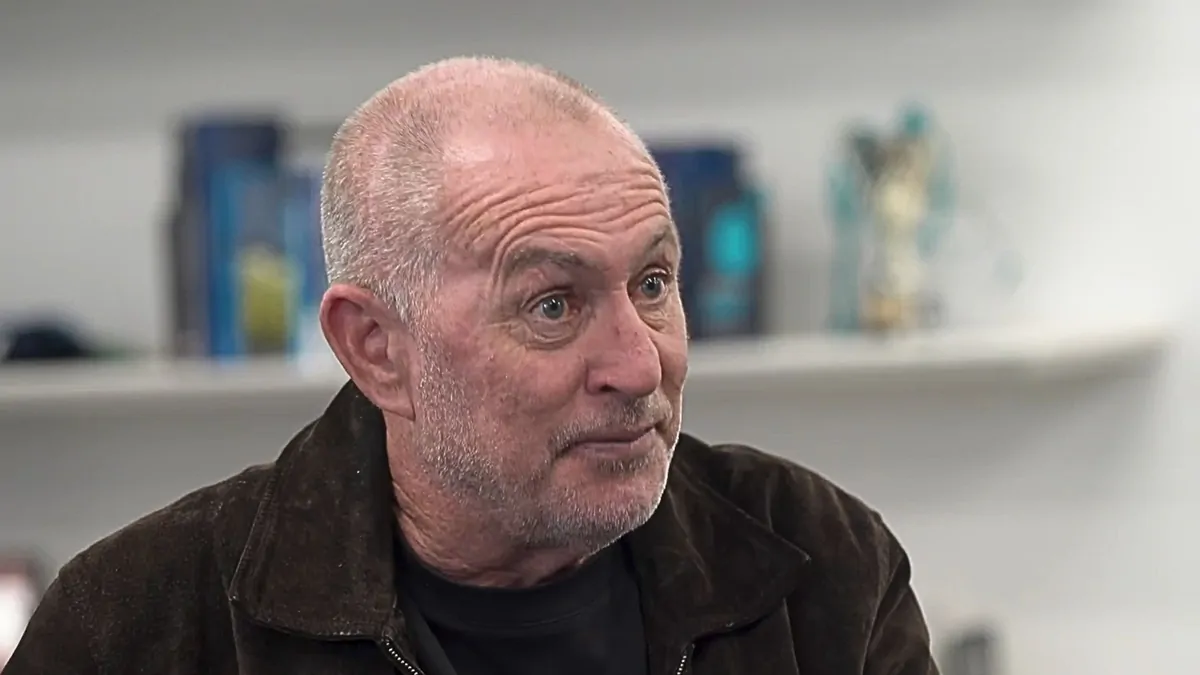
Much-loved Socceroos icon Paul Wade has opened up on a “difficult” diagnosis, revealing he has “probable” chronic traumatic encephalopathy (CTE) and his mental health his deteriorating.
The Professional Footballers Australia (PFA) has issued a fresh statement about the former Australian captain, praising the 64-year-old for his courage and leadership.
Chronic traumatic encephalopathy is a neurodegenerative brain disease and is linked to repeated head knocks. It can, however, only be properly diagnosed after death.
Sign up to The Nightly’s newsletters.
Get the first look at the digital newspaper, curated daily stories and breaking headlines delivered to your inbox.
By continuing you agree to our Terms and Privacy Policy.
Wade, who was star for the Socceroos from the late 1980s to mid-1990s, went through a series of neurological assessments and specialist evaluations in 2025, and was diagnosed by a neurologist with probable CTE at the end of last year.
He said he was sharing the news now to raise awareness about concussion and the serious effects of repeated head impacts.
He was visibly emotional when he spoke about his situation, saying, “He doesn’t feel any different (but) I know my memory is going.”
Former Socceroos captain Paul Wade has shared details about his ‘probable’ chronic traumatic encephalopathy (CTE) diagnosis. Credit: Sunrise
Wade admitted tasks that he had done so often — such as preparing for a TV gig — now took him a very long time, and he also suffered from mood swings.
“Preparing to do a gig now, and I’ve done this so many times … for me to get all my slides and all my thoughts in order takes me so long,” he told the PFA.
He said his thoughts now became jumbled, and he would suddenly think: “What was the story? It’s gone. That’s why it’s taken me so long …
“And I’ve been told by a number of people that I’ve become a little bit short-tempered, just snapped a bit.
“So mood swings were pointed out. ‘Well, you’ve never done that before,’ (they would say), and then you just think, yeah, there is something wrong here …
“You’ve just got to resign (yourself) to the fact that, you know what, I better go and get this sorted out. Something’s not right.”
As a former player and later a media favourite, he said football had given him so many incredible experiences over the years.
“But I also must be honest about the challenges I now face and the uncertainty that comes with living with a neurodegenerative condition,” he said.
“Receiving a diagnosis of probable CTE has been difficult.
“But I have decided to speak publicly because I know there may be other players and families facing similar questions.
“If sharing my experience can help someone seek support, create better education and prevention, or help the game take brain health more seriously, then it is worth doing.
“I do not want to discourage anyone from playing football, as I think there are so many positive health benefits.
“But we do need to understand more about the long-term effects of repeated head impacts and make sure that players, families and the game have the information and support they need to protect future generations.”
Wade also suffers from epilepsy and once had a seizure before a World Cup match in 1993.
On the back of Wade’s fresh announcement, his neurologist Dr Rowena Mobbs called for a reduction of headers at the junior level.
“Paul is a champion both on and off the field for talking openly about CTE. We want former players to get help as early as possible so they can live well and tackle the effect of CTE on thinking, emotion and behaviour,” Mobbs said.
“The government have acted on CTE, and help is available for former players as well as their families and loved ones via ConneCTErs Australia or Dementia Australia.
“Ultimately, it’s about being positive and progressive in football. As a neurologist, I call for a reduction in heading for players, including removing all heading (at) under-12 (level).
“We want kids entering the great sport of football today to be their brain best both on the field and throughout life. You only get one brain.”
Former Socceroos star, and Wade’s old teammate, Craig Foster said: “Very sad news for one of not only Australian football’s legends, but one of the truly great gentleman of our game.
“Wadey’s diagnosis will certainly resonate through the game, with the player’s association already planning further research into head impact.
“We need to understand the exact risks across all ball and impact sports to ensure that future generations are protected, and completely safe.
“Typical of Paul, still showing leadership, as he always did.“
PFA chief Beau Busch said Wade’s decision to go public with his news would benefit the game.
“In sharing his story, Paul has once again illustrated his truly remarkable commitment to the advancement of the game,” Busch said.
“He is doing so not only for himself, but for the players and families who are facing, or may one day face, similar questions about brain health.”