As clamour from across the border over the Indus Waters Treaty grows, India has hardened its stance, saying the 65-year-old pact will require a complete overhaul and cannot continue in its current form, PTI reported, citing government sources. India has also made it clear that any future arrangement would require Pakistan to demonstrate that it has ended cross-border terrorism.
In recent months, both Pakistan’s military and political leadership have repeatedly warned India of consequences — including the possibility of war and even the use of nuclear weapons — if New Delhi were to completely stop the flow of water following its suspension of the treaty last year.
The sources said any future reactivation of the river water-sharing provisions would require the treaty to be renegotiated in a modified format, and that such a step would depend on Islamabad permanently halting support for terrorism directed against India. They also said India is not actively looking to withdraw from the treaty at this stage, but retains the right as a sovereign state to terminate any treaty that is demonstrably against its interests.
“It would be accurate to say that the IWT in its present form will not function again. If provisions related to river water sharing have to be reactivated, they have to be done in a different form, not in the present form. And only if Pakistan abjures terrorism,” a source said. Another source said that any decision by India to revive the treaty would depend primarily on Pakistan’s actions, including whether it stops cross-border terrorism. “We haven’t seen any evidence that they are making any effort in that direction,” the source told PTI.
Pakistan is trying to push what they called a false narrative that India’s decision to keep the treaty in abeyance is causing water scarcity, reported PTI, citing sources. They said a significant volume of the water received by Pakistan is lost because of its own lack of storage infrastructure, widespread leakages and continuing water-sharing disputes among its provinces.
On the question of a possible Indian exit from the treaty, another source told PTI, “It depends on the actions that Pakistan takes going forward.” The sources said India put the Indus Waters Treaty in abeyance as part of a series of punitive diplomatic and economic measures announced soon after the Pahalgam terror attack in April last year, in which 26 civilians were killed.
Indian officials have said the attack was carried out by The Resistance Front, which they described as a proxy for the Pakistan-based Lashkar-e-Taiba. In May, India carried out Operation Sindoor to target terrorist infrastructure in Pakistan in response to the attack.
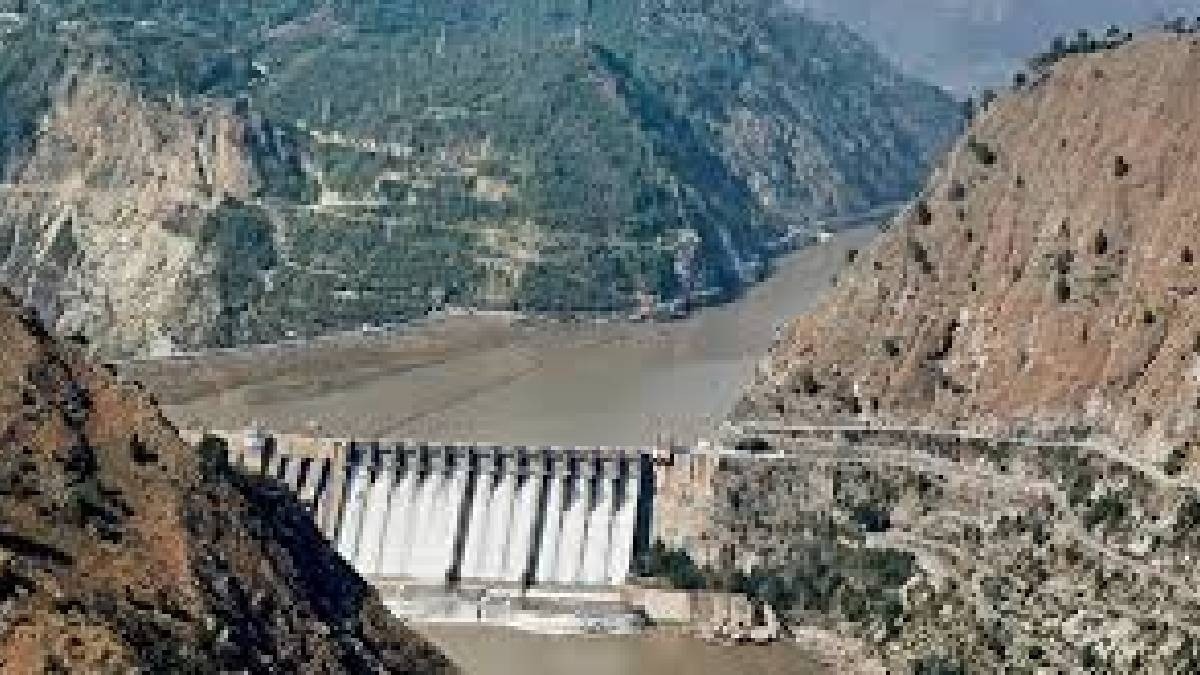
Under the World Bank-brokered Indus Waters Treaty, India has rights over the eastern rivers Ravi, Beas and Sutlej, while Pakistan controls the western rivers Indus, Jhelum and Chenab. The pact gives both countries specified usage rights over each other’s rivers, and also allows India to build run-of-river hydroelectric projects, such as Kishenganga and Ratle, on the western tributaries before they cross into Pakistan.
India and Pakistan signed the treaty on September 19, 1960, after nine years of negotiations with the sole aim of managing cross-border rivers. Before suspending the treaty, the Indian side had strongly argued for its modification, citing what it called Islamabad’s intransigence in handling certain disputes. The Indian side had also pressed for adherence to the graded mechanism laid down in the pact for dispute resolution, saying two different approaches could not be pursued at the same time.
The sources said Pakistan sought the appointment of a neutral expert in 2015 to deal with its objections to the Kishenganga and Ratle projects, but unilaterally withdrew that position in 2016 and sought a Court of Arbitration instead. In the same year, the World Bank appointed both a neutral expert and the Court of Arbitration, which India did not recognise. India attended meetings convened by the neutral expert, but stayed away from the proceedings of the Court of Arbitration.
The sources also said Pakistan’s conduct under the treaty had reflected a consistent pattern of obstruction rather than cooperation. Since the early years of implementation, they said, Pakistan had objected to virtually every Indian project on the western rivers, regardless of its size, storage capacity or technical design.
They said even a small 200 KW hydropower project meant to electrify a remote tribal area faced prolonged objections, and added that major projects including Salal, Tulbul, Baglihar, Kishanganga, Ratle and Pakal Dul had all met similar resistance. According to the sources, this use of the treaty was aimed not at ensuring compliance but at delaying and frustrating India’s legitimate developmental rights.
The sources said the treaty’s dispute resolution provisions, which were meant to serve as an exceptional mechanism for resolving genuine differences, had gradually been turned into instruments for delaying Indian projects, PTI further reported. They said Pakistan had repeatedly escalated routine technical issues to third-party forums, prolonged bilateral discussions without resolution and, in recent years, sought parallel proceedings before both the neutral expert and the Court of Arbitration, contrary to the treaty’s graded dispute resolution framework.
They also said there had been no credible steps from Pakistan to curb terrorism. “On the contrary, we continue to receive reports that proscribed individuals and entities sanctioned by the UN Security Council’s 1267 sanctions committee continue to appear at public events in Pakistan, continue to be able to have platforms that they can use to propagate their messages,” another source said. The source added that evidence available with Indian agencies about activity just across the Line of Control also suggested that no credible measures had been taken so far to control terrorist activities.
The sources said the treaty’s future would depend on Pakistan’s conduct, both on terrorism and on its approach to the pact, maintaining that the Indus Waters Treaty cannot resume in its current form and that any revival of water-sharing arrangements would require a changed framework and a permanent end to support for cross-border terrorism against India.
– Ends
Published By:
Sayan Ganguly
Published On:
Jul 21, 2026 07:34 IST