Source: Tribune Online
On a Saturday afternoon in Southwest Philadelphia, Woodland Avenue smells like jollof rice and sounds like three languages at once. A grandmother in a Liberian lappa haggles over plantains outside a corner store. Two teenagers argue in Twi about a soccer match while waiting for the bus. A barbershop blasts reggae bass loud enough to rattle the windows of the beauty supply store next to it. Locals have called this stretch Little Africa for as long as anyone can remember, and the city has finally started calling it something bigger: Philadelphia Africatown, a real district now, with real money behind it, built for a diaspora that has quietly become one of the fastest-growing communities in the entire region.
Nobody on that block is thinking about global population statistics. But they are living inside one of the most important demographic stories on the planet, whether they know it or not.
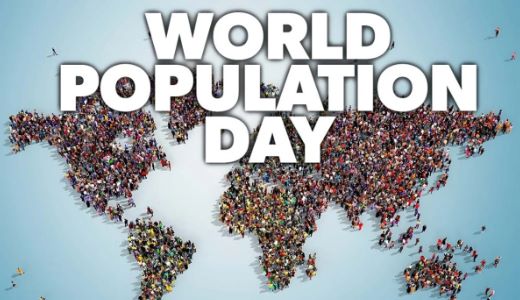
World Population Day is commemorated every July 11, and this year it arrives with the human race somewhere around 8.3 billion people, according to United Nations estimates. That headline number gets repeated every year like clockwork, usually alongside some vaguely panicked language about strain on resources and an overcrowded planet. What almost never gets said out loud is where nearly all of that growth is actually coming from. It is coming from Africa. The continent now has the youngest population on Earth, with more than 60% of Africans under the age of 25, and that single fact will shape the next century more than almost anything else happening in the world right now.
So here are the numbers that actually matter. UN population projections cited in Brookings’ Foresight Africa research put the continent’s population at roughly 1.4 billion, on track to reach as high as 2.5 billion by 2050. An estimated 830 million of those people will be between the ages of 15 and 35. By 2030, young Africans are projected to make up 42% of the entire world’s youth population.
None of this means the story is simple or that everything is fine. Cindy Kasanga, writing for Africa Is a Country, made a point recently that stuck with me: African youth have been called the continent’s greatest asset so many times that the phrase has started to feel hollow, because an asset is something you invest in, not something you just keep pointing at. She wrote that against the backdrop of the youth-led Gen Z protests that shook Kenya in 2024 over a finance bill raising taxes on essential goods, where educated young people with real skills found themselves locked out of an economy that was supposedly built around their potential. That frustration is real, and it deserves to be taken seriously rather than smoothed over with talk of a demographic dividend that has not arrived yet for most people living it.
Source: The Facts Institute
That is the honest tension sitting underneath this milestone. A continent producing more young talent than anywhere else on earth is also a continent where the informal economy sustains nearly 70% of households, according to reporting by Africa is a Country, leaving most young workers without security or a real path to savings. A demographic dividend is not a law of nature. It has to be built, deliberately, through education systems, job creation, and governments willing to actually invest in the people they keep calling their greatest resource.
And here is what the global panic narrative always leaves out. Africa’s growth was never really about scarcity in the first place. It is a demographic transition already well underway, with fertility rates falling steadily across the continent even as the overall population grows. Ethiopia’s community health workers have cut early childbearing through local family planning programs. Senegal has done something similar through reproductive health education. This has happened through investment and community trust, not through outside pressure telling African women to have fewer children. The real story is African governments and health systems doing the work, quietly, while the rest of the world keeps arguing about overpopulation.
None of this is abstract for our readers, because the same story is unfolding right here at home. Philadelphia’s African population more than doubled between 2000 and 2016, and the city’s Black immigrant population grew by well over 120% over roughly the same period, according to Pew Research data reported by Axios. Southwest Philadelphia today is home to Nigerian, Liberian, Ethiopian, Ghanaian, Sierra Leonean, and Sudanese families living block by block alongside a Caribbean community rooted in Jamaica and Haiti. It did not happen by accident, and it did not happen quietly.
Former Philadelphia City Councilmember Jannie Blackwell has spent a similar amount of energy trying to make that permanence official. As chair of the Mayor’s Commission on African and Caribbean Affairs, she pushed for years to turn what residents had already built organically into a formally recognized Africatown, complete with a trade center, a medical center, and direct commercial ties back to the continent.
This is what a demographic dividend actually looks like once it lands somewhere specific. Population growth in Lagos, Monrovia, and Accra becomes, a generation later, a thriving commercial corridor on Woodland Avenue, run by people who remember exactly what it cost to build it. The African immigrants who arrived in Philadelphia through family reunification programs in the 1990s and 2000s are old enough now to be founding institutions, and their kids are old enough to be running them.
Pew researchers project the Black immigrant population in the United States will roughly double by 2060, accounting for close to a third of the country’s total Black population growth over that period. That is not a footnote tucked into African American history. It is African American history writing its next chapter in real time, one where the lines between African and African American keep blurring through intermarriage, shared blocks, shared churches, and shared political fights.
World Population Day usually gets treated as an occasion to feel anxious about a crowded planet. For African and African American readers, it can mean something else entirely: a moment to notice where the world’s weight is actually shifting, and to ask honestly whether African governments, the diaspora, and cities like Philadelphia are ready to meet a generation that has, in truth, already arrived.
Anand Subramanian is a freelance photographer and content writer based out of Tamil Nadu, India. Having a background in Engineering always made him curious about life on the other side of the spectrum. He leapt forward towards the Photography life and never looked back. Specializing in Documentary and Portrait photography gave him an up-close and personal view into the complexities of human beings and those experiences helped him branch out from visual to words. Today he is mentoring passionate photographers and writing about the different dimensions of the art world.